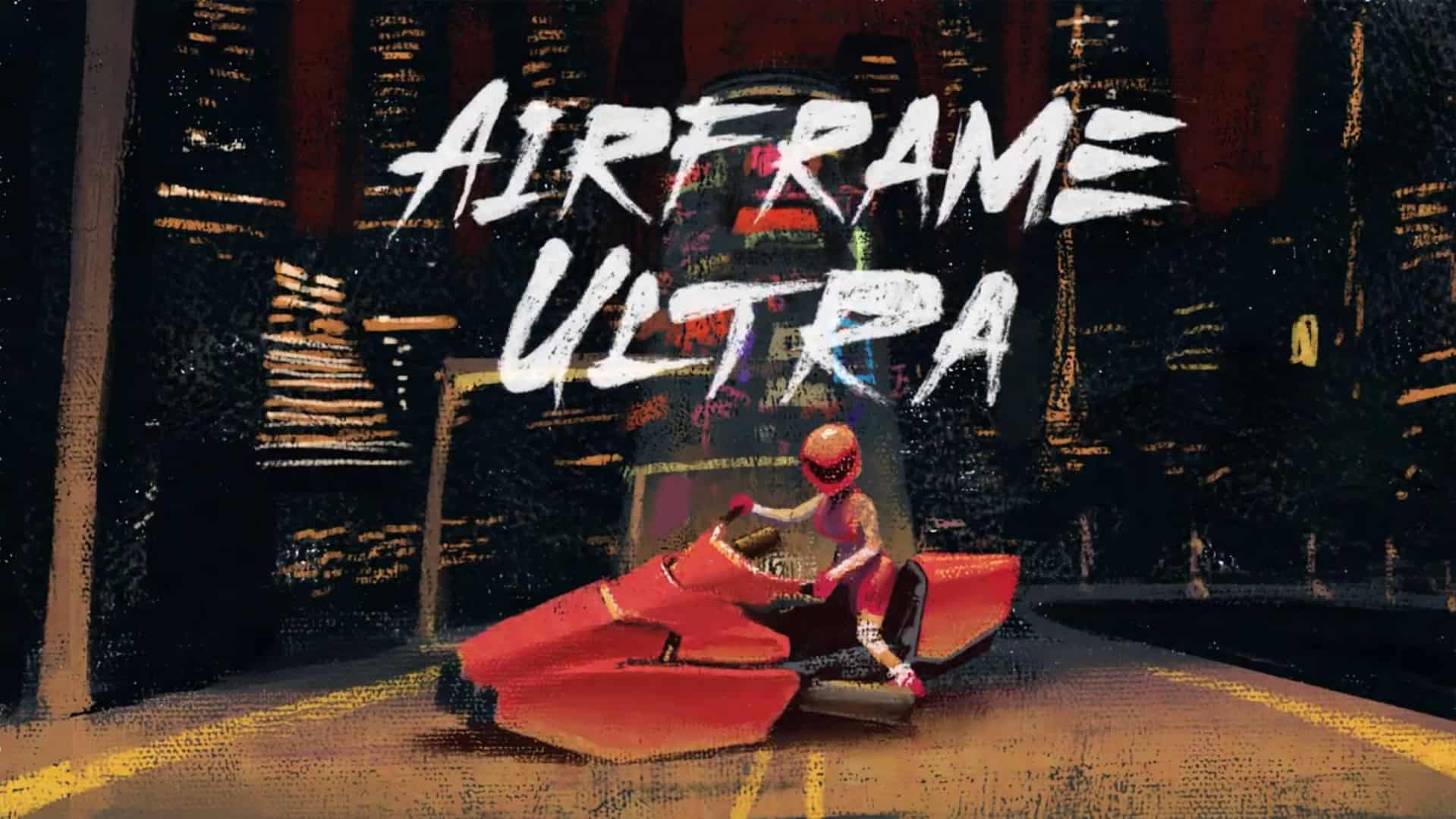
I couldn’t imagine a world where Airframe Ultra wasn’t competing for my Game of the Year. Not when it was announced—the second game from the creators of one of my all-time favorites in Rain World. Not after playing the demo during February’s Steam Next Fest—a beta so good my friend was contemplating putting the game in her top 100 list based on the few hours we played together. Not when seeing the mixed reception on release—this wouldn’t be the first time I found myself standing up for a game I love. But for a while, I was staring at the play button on Steam, dreading having to play another circuit.
How could this be? It’s not that the core of Airframe Ultra has changed much. It’s still one of the coolest racers I’ve ever played, carrying all the qualities that made Videocult’s decade of Rain World content so unforgettable: a desolate but beautiful world, a focus on weight, and making do with what you have against what’s often simply not fair. It’s Rain World that instilled in me the humility required to move to the next step in my love for the medium and begin to think about player-made stories. The scenarios that form as a result of our interactions with the world—frustrations included. Encouraged, even.
But it’s here that I have to ask myself the question that often frustrates me when reading other articles about games: how much friction is too much friction? Truthfully, at this point I hardly believe in a limit. All the barriers I, as a player, have broken these past few years as my appreciation for the medium grew have left me thinking about just how great a feeling it is to overcome those barriers. Frustration pushes me to discover what kind of relief I can find on the other end.
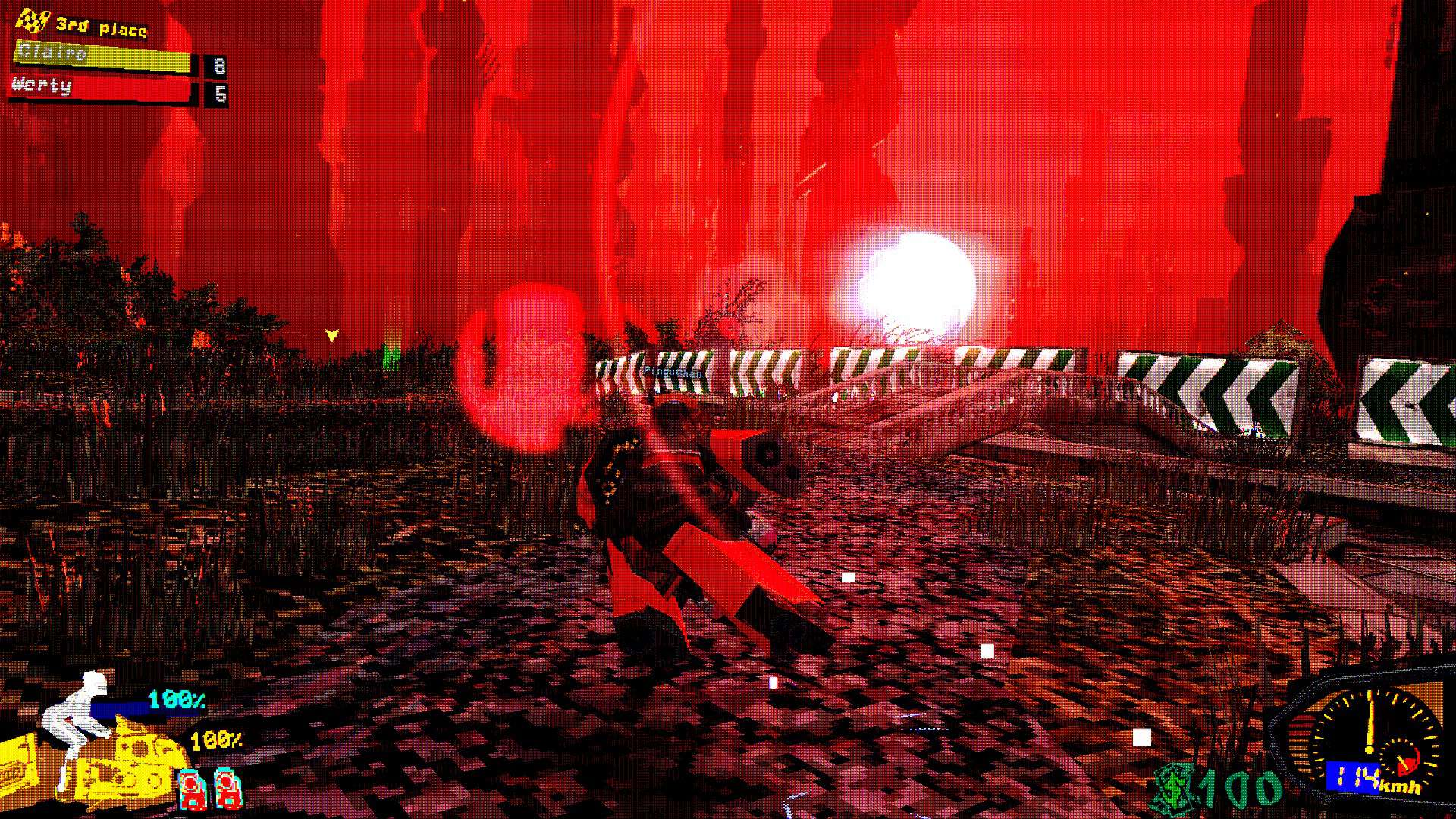
So I know some people will have a hard time navigating the controls of the front-heavy hoverbikes, or the on-ground movement and combat, but I’m all over it. Even the spectator controls are tied to a physical, flying drone! Airframe Ultra can be an extremely rich and rewarding experience once you take the time to learn what to save your boosts for, ride the waves on its ocean maps, or slide into a leg sweep in tight quarters during the combat phase. Some moves are not even part of the tutorial—you’ll have to figure them out yourself. After acquiring ten points, either by winning enough racing segments or getting enough kills, the next time you win a racing segment called sprint, you take home the point for the whole race.
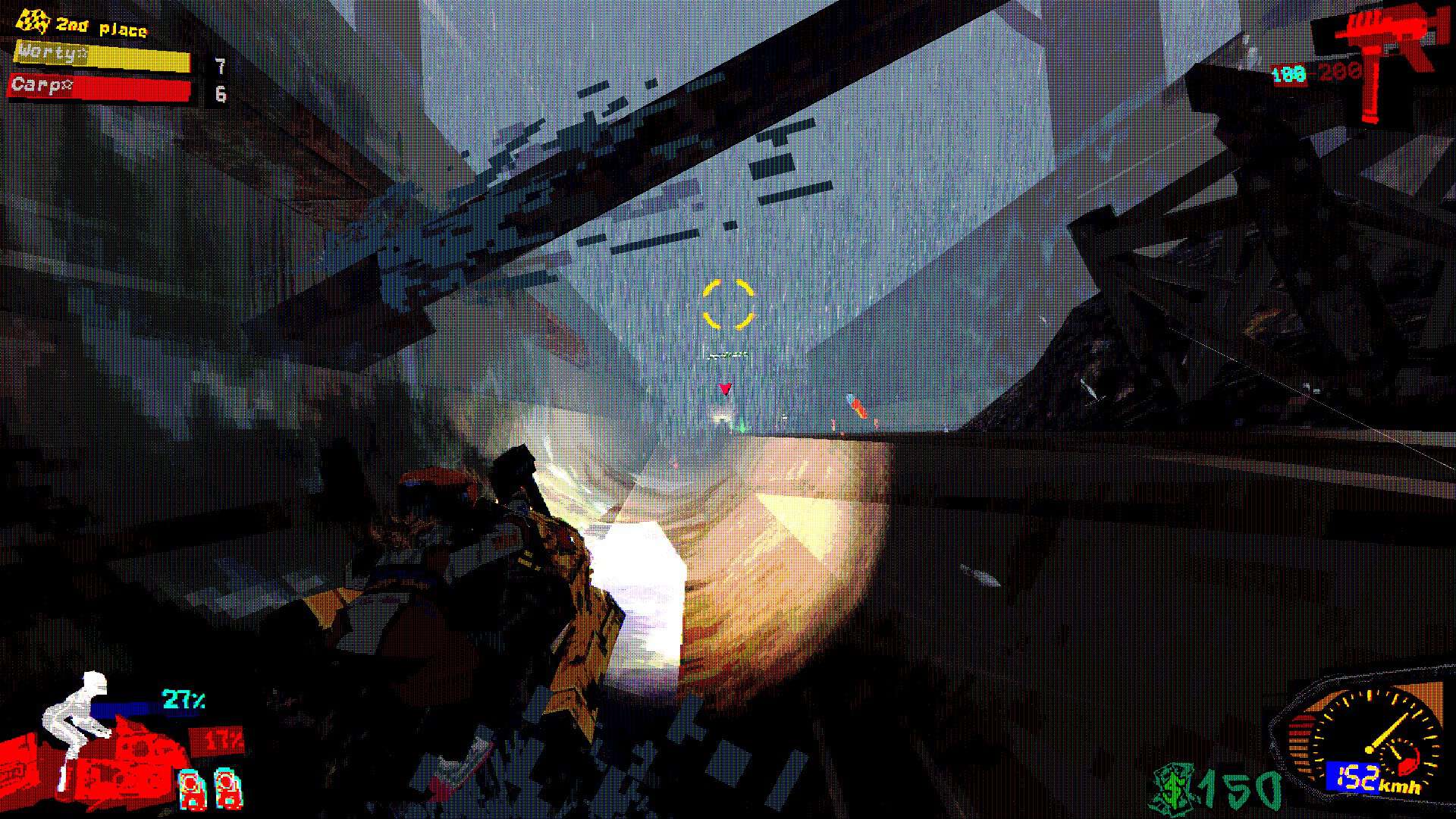
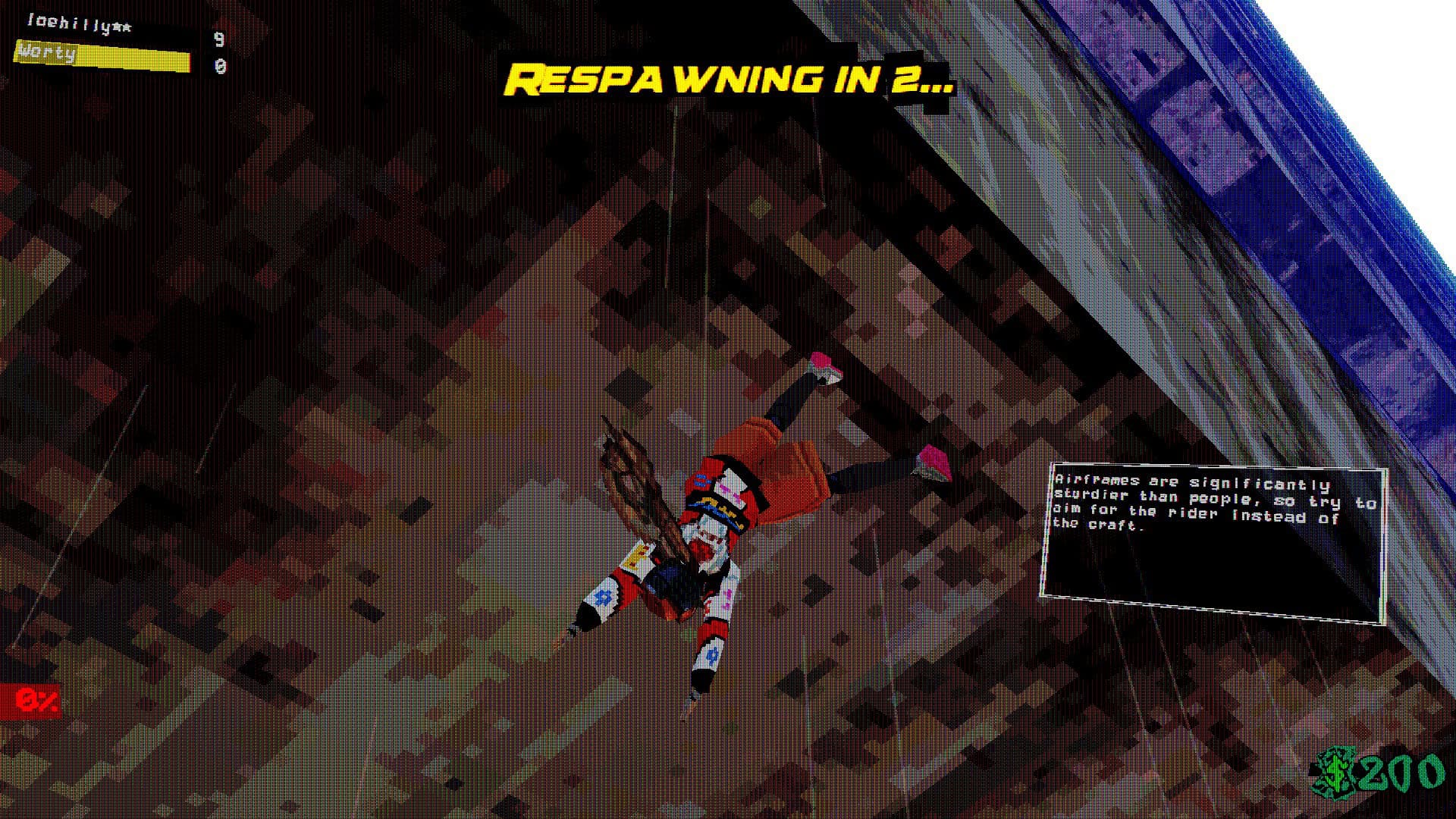
Though not quite a vehicle combat game, it still scratches that Twisted Metal itch. It ain’t your ordinary Jet Moto; we blow each other up over here! Each map is split between short but sweet racing segments that let you pick up money along the way by driving over randomly placed spots, and combat segments where you knock each other around with weapons purchasable using the money you gathered. We’ve got everything from a pipe to a rebar fastener.
Weapons often have unique, hidden properties aside from just giving someone the smackdown. The traffic sign can act as a lance while on the bike, and the chain can grab players and drag them along behind you. Some guns will only really work while aiming; others are good for hip-firing. Melee combat can involve clashing parries, but you can gain an advantage with a quick throw before finishing someone off on the ground with a bunch of kicks.
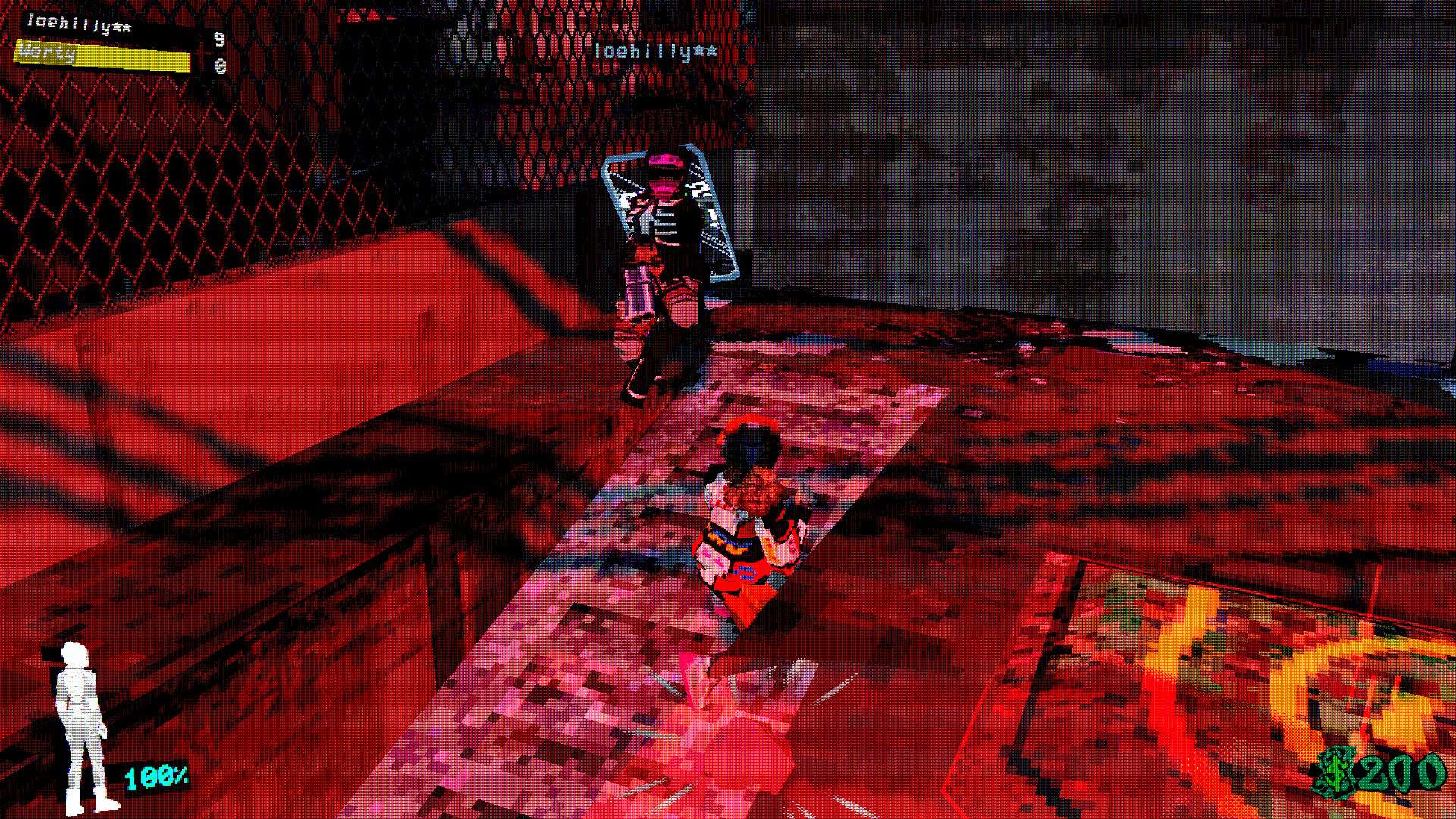
Truthfully, writing about the game’s combat felt like a distant memory because I have barely ever, in fact, purchased a weapon in Airframe Ultra over my past few hours with the game. That’s, like, half the game right there! So, why would I not be interacting with a significant part of the game then? Ah, and here’s the kind of friction I never thought I’d see from Videocult comes into play.
My first circuit, played with friends, was full of wonder. After finishing one of three races, we saw a new area that was not in the beta we played open up. It was a shopping mall! Between the violence and loud explosions, we got to go shopping with the money we had left over from the race! We could pick between cheap cosmetics, paints, helmets, tokens for creating new characters and… bike parts and blueprints. But only a few. Random ones.
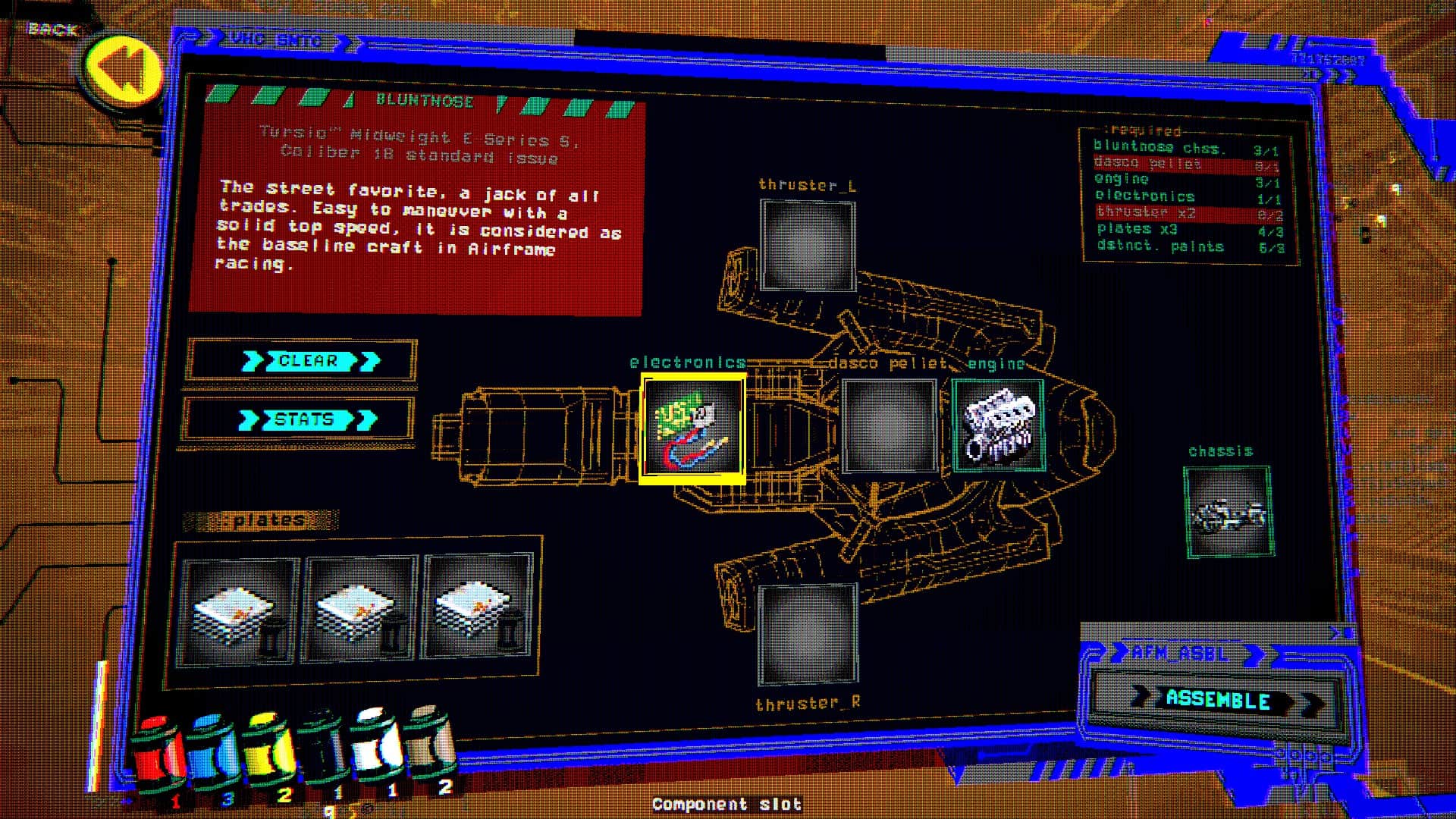
And so, each race ended with me going straight to the store to look if the part store had a part I haven’t gotten. I also noticed that, once I took a part, it was gone for everyone else. A choice, but surely, after one race of not really buying weapons and just kicking each other for fun, at least one of us would have enough parts for one new bike, right? Right?
Airframe Ultra has what’s essentially a gacha progression system where other players in the lobby can lock each other out from getting parts they’ve been waiting on for hours. Each lobby I’ve been in has since turned into a rat race, where half the players rush to the parts store in hopes of just grabbing whatever they can, while others, who already have the bike they want, destroy everyone else in the lobby during the combat phases, where they use the money they don’t care about saving anymore on machine guns and chainsaws.
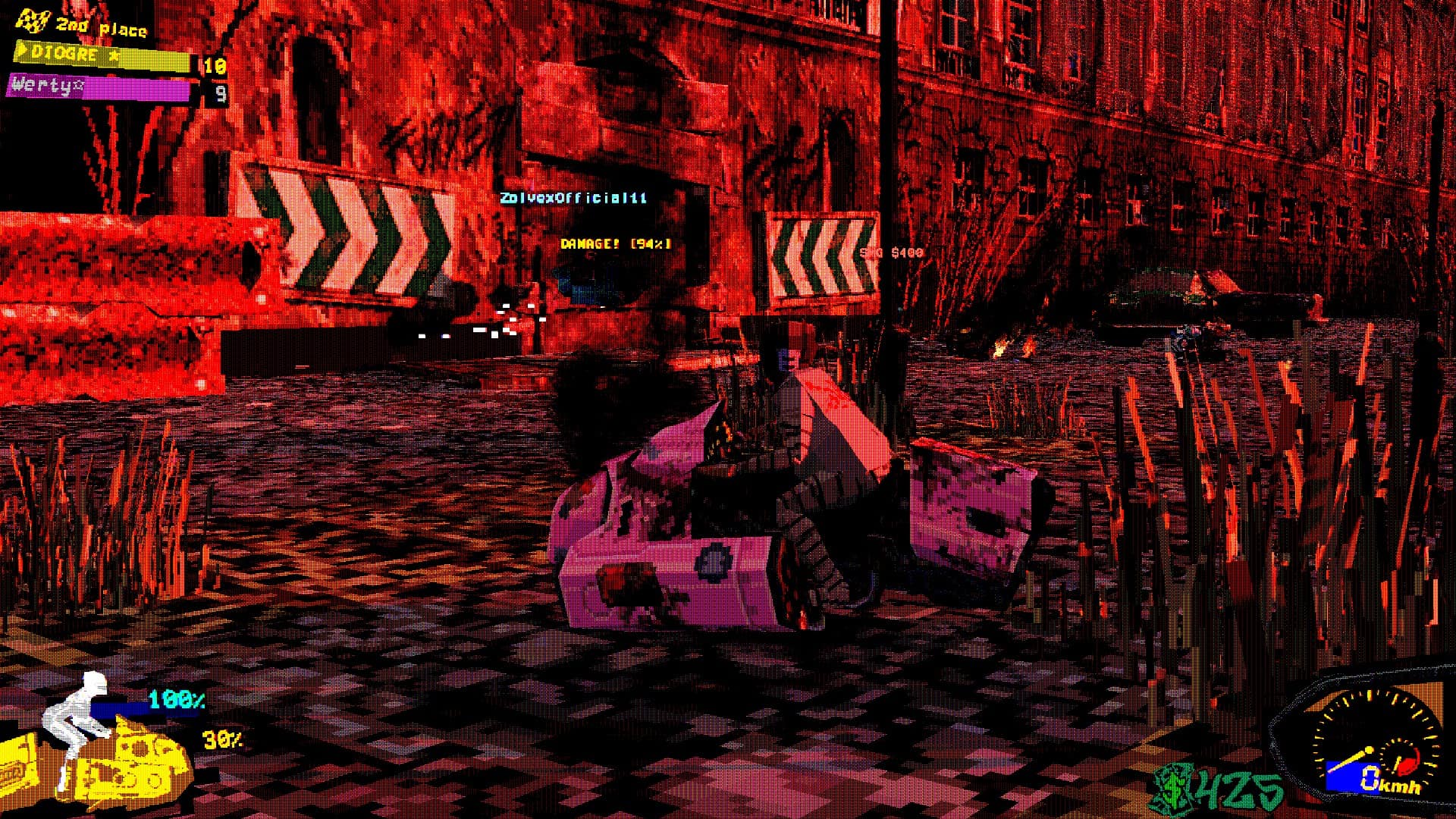
And it’s not like the parts are universal; certain machines will require specific ones, so you’re not just waiting for any one specific blueprint or chassis; you’re waiting on a certain engine, a certain kind of thrusters. When you level up, you get access to more stores across the mall, but it still can be a race to get to them. And it’s on a timer decided by the lobby creator! When a match starts and you haven’t gotten your item? Tough luck! And these are clear and straight upgrades from your basic bike too. If you want to hang with others in the lobby, you need to make one.
The worst part? If you don’t complete a circuit, you don’t get to stash your items to be used in the garage, and the game is prone to crashing. For the whole lobby. I’ve had no less than three crashes on the final race of a circuit, which not only robs you of your items, but also the EXP that will allow you to get to those specialized shops. I understand the idea of easing people in with the simplest bike, but if the game wants me to trust its progression, it should at the very least take into account its own imperfections.
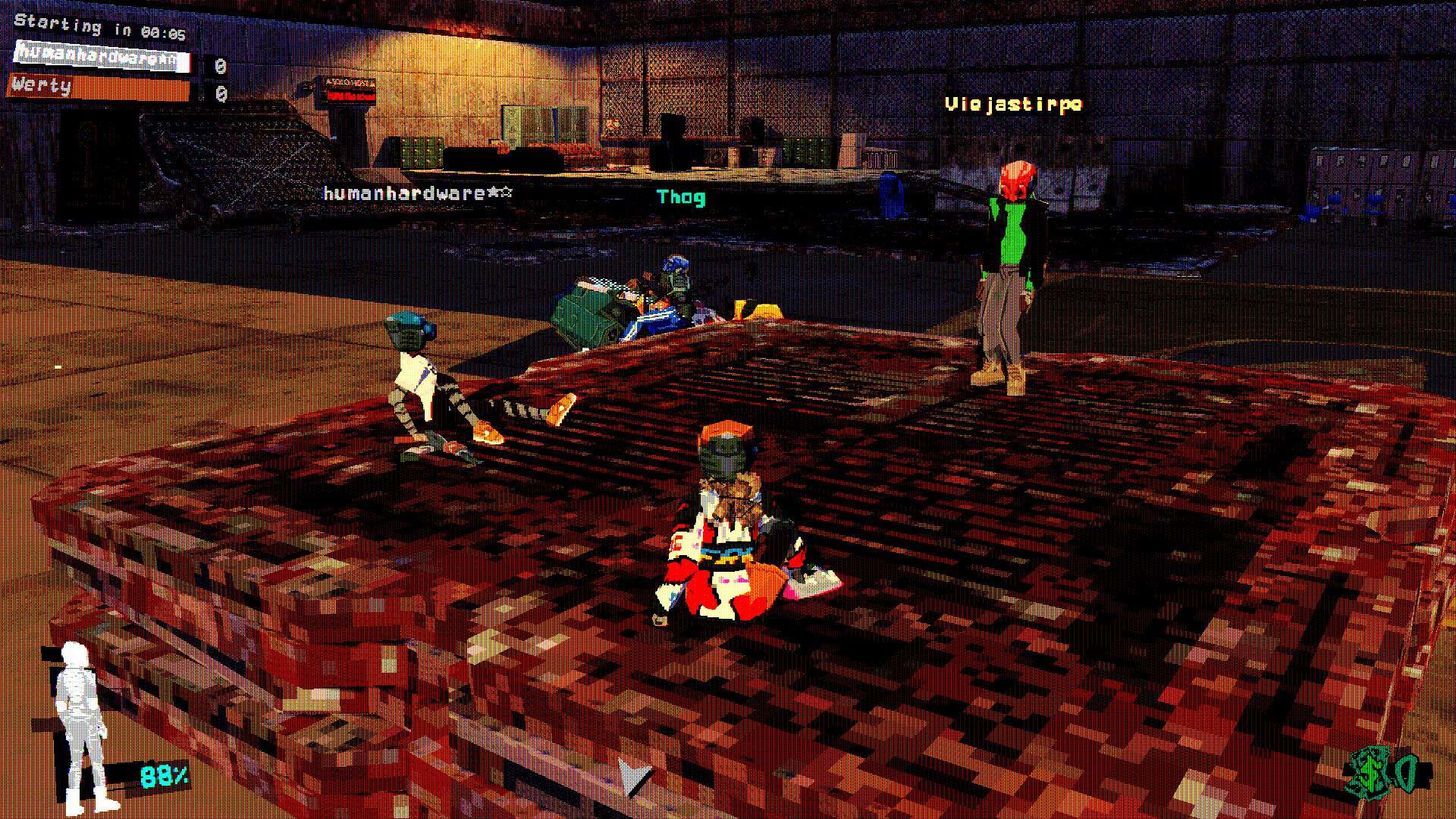
With a few more races under my belt, overcoming these meta-progression frustrations, I have found the core of Airframe Ultra again. It’s just that it’s not something I’d ever have expected from this experience. The first hours felt like a buggy live-service game, despite the fact that the developers self-admittedly are trying to avoid live service practices by providing paid quarterly updates that become free once the next one rolls in.
And the thing is, it sort of does tie into the game’s feel. Videocult’s games are all about physicality, and I, too, find the physical mall a fantastic addition in theory. The fact that you have to explore it to find secret stores on a timer fuels a sort of manic atmosphere. I’m not surprised there’s hyper-capitalism in my silly hyper-capitalism racing and murder game, but beneath that paint of irony lies all that I’ve been trying to avoid in my spare time.
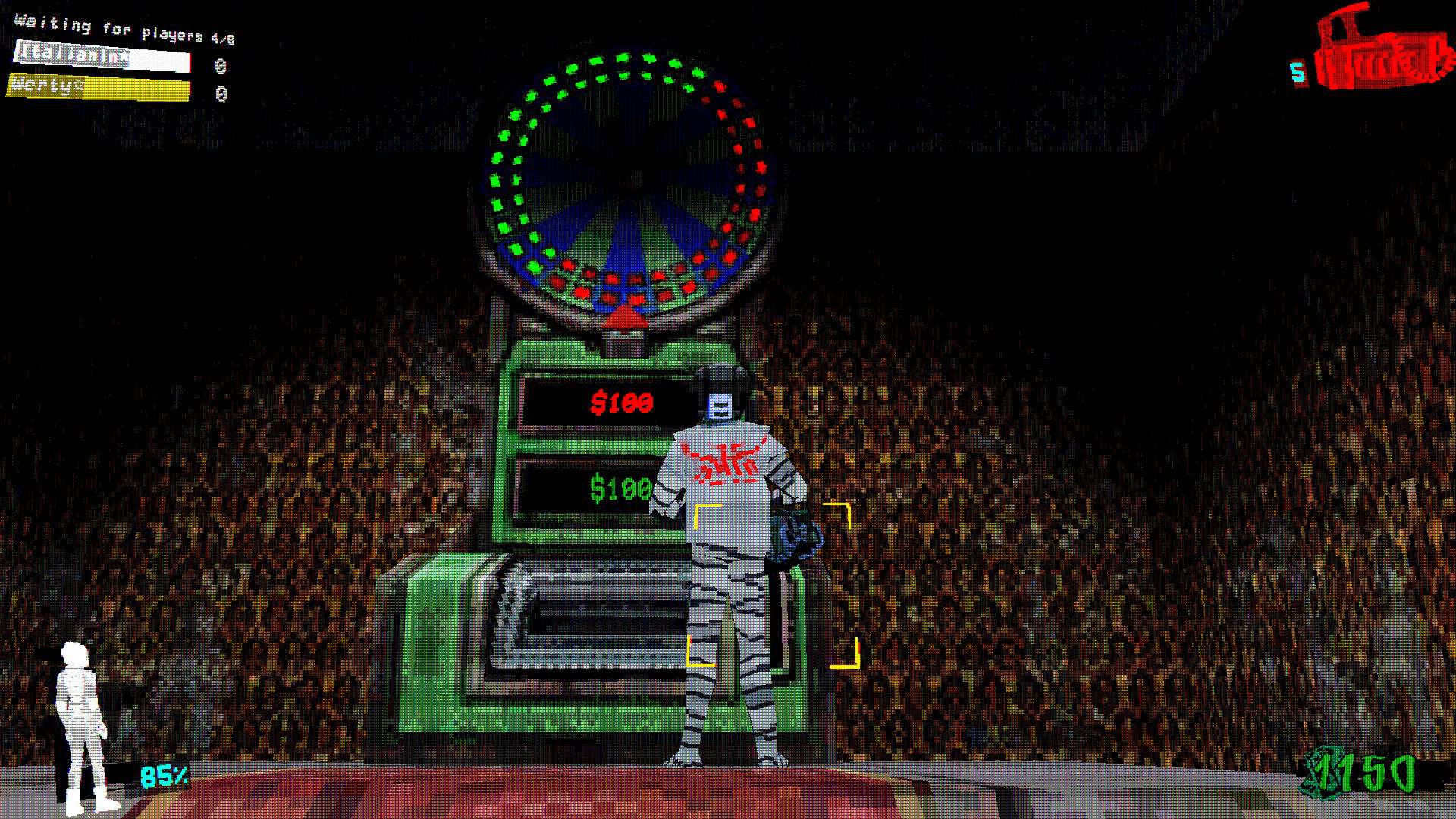
I hate that this game has this kind of progression. Honestly, I think I hate that this game has progression at all. Its identity is not about easing people in. It’s frantic and brutal, and doesn’t play like most else out these days. Hell, right now the epilepsy warning contains flashing lights, which needs to be fixed ASAP. The idea of easing someone into it feels wrong, even aside from the crashes that make this process slower than it should be. Nothing else about it makes me feel like my friends and I couldn’t handle a Hopper or a Vector on our own terms, while still racing to the shop to see if someone gets the red flannel so they can roleplay Anthony Fantano.
You don’t have to look far for games that have long and arduous grinds and communicate similar themes through the use of multiplayer. The rebirth of co-op that led to a rebirth of casual multiplayer began with Lethal Company: a game that’s often equally random, one that focuses on the weight of each object, and whose most expensive item—the jetpack—results in a player exploding into a wall ten seconds after trying to use it. And that’s fine. Crashing into a wall is a memorable moment because everything else about the game is drawing you in regardless of the frustration.
It’s something that Videocult understands so well. Rain World relies entirely on believing in itself. It knows it’s an enchanting enough experience for you to keep coming back in spite of the random deaths. So it’s shocking to see that the only way they could find to implement it was this kind of progression system. The twist, I suppose, is that the game itself is a lot more intense about restrictions. The guns that relentlessly shoot you if you try to enter the shopping area you’re not allowed into yet. The fact that to kick someone from a lobby, the owner has to shoot them with a golden gun hidden inside the lobby set-up chamber. The Videocult-isms of it all. I just wish they could have gone all the way and let a player base develop their skills at their own pace. It’s this kind of friction that I think is a step too far.
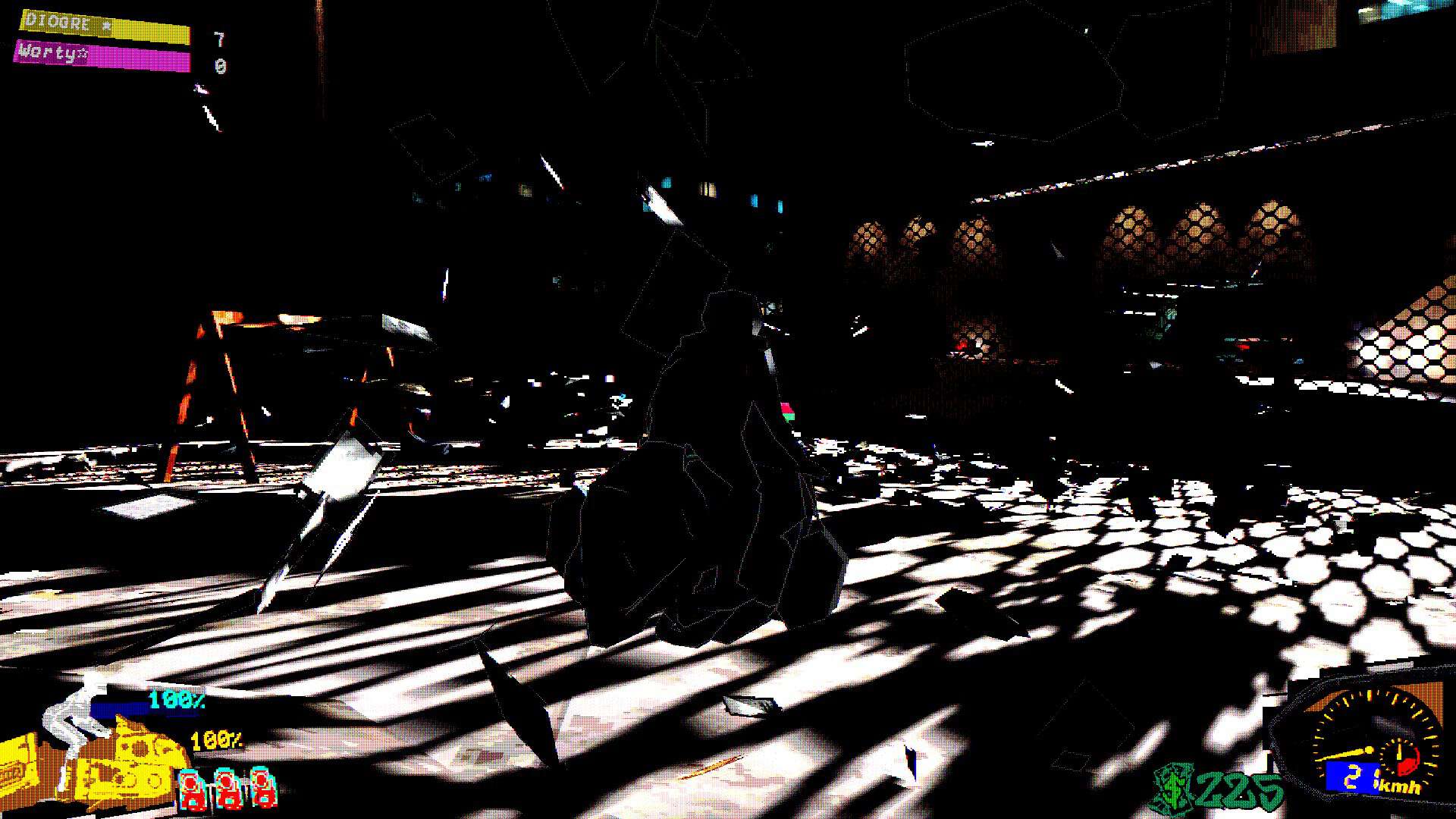
Airframe Ultra is truly great. The more I play, the more I remember this simple fact. It’s one of the most exciting multiplayer titles in recent memory, and aside from one, admittedly significant part of the game, it goes against the wave. The megastructures in the background are haunting, the popping colors addicting. The sounds of the boosting bikes are wonderful, and those moments when you’re weaving between cars on the Night Ride highway, letting everyone behind you eat dust, are just impossibly cool. The amount of paths and secrets in each map, some even transforming the playing field, will leave each match feeling different. Airframe Ultra belongs to no one era, inspired by the friction of old while providing a fast, biting alternative modern indie multiplayer. Mostly in a good way.
There are small things I’m sure will see more changes even after all the playtests. The on-bike kick feels a bit too powerful compared to the same kick during on-ground combat, the money drops when there are more than four players are too scarce, the music is way too quiet by default, and obviously the crashes and the epilepsy warning need to be looked at pronto. I liked it more in the beta, random police attacks included, but it’s still Airframe Ultra. Though I’m reviewing the current version of it, I cannot erase my memory of its full potential, and I’ll be there for the next update.
Perhaps it’s fitting that Videocult’s second title sees the same kind of initial mixed reception as their first, one that only future word of mouth could heal. Rain World is, by now, a known and beloved indie classic, one that has over a thousand people playing it as I’m typing. I don’t know if Airframe Ultra can do the same, but I know it’s a game that can reach the same heights. Just, give it time. Right now it needs about three or four friends who want to hop on and knock each other around silly, but if you can find a party, there’s few better ways to spend the next few weekends.
Mateusz reviewed Airframe Ultra on PC with a provided review code. This review is based on the version of the game available at the time of writing and our score will not be changed.
- Score
- 8/10 Excellent - GameObserver Cautiously Recommends
- Summary
-
Mateusz says: "Airframe Ultra's progression system and frequent crashes are major setbacks for an otherwise excellent racer/brawler hybrid that can still reach unbelievable heights."
- More
- GameObserver's Review Policy



 ObserverCrew Picks
 bserver
 bserver