The tower defense genre was a lot more prevalent when I was a kid. From modded game modes in Warcraft III to some early mobile games, it became an easy formula to implement and create fun experiences. Yet somehow the genre has been rather neglected since then, with occasional indie releases holding down the fort. I’ve been searching for some new and innovative tower defense games for a while, and I think I might have found one.
Emberward, developed and published by Refic Games, is a roguelite tower defense game that combines elements from multiple genres and gameplay styles to create a fresh and challenging experience. The game offers deck-building elements, modular path-building, and roguelite meta progression that all add to and enhance the core gameplay.
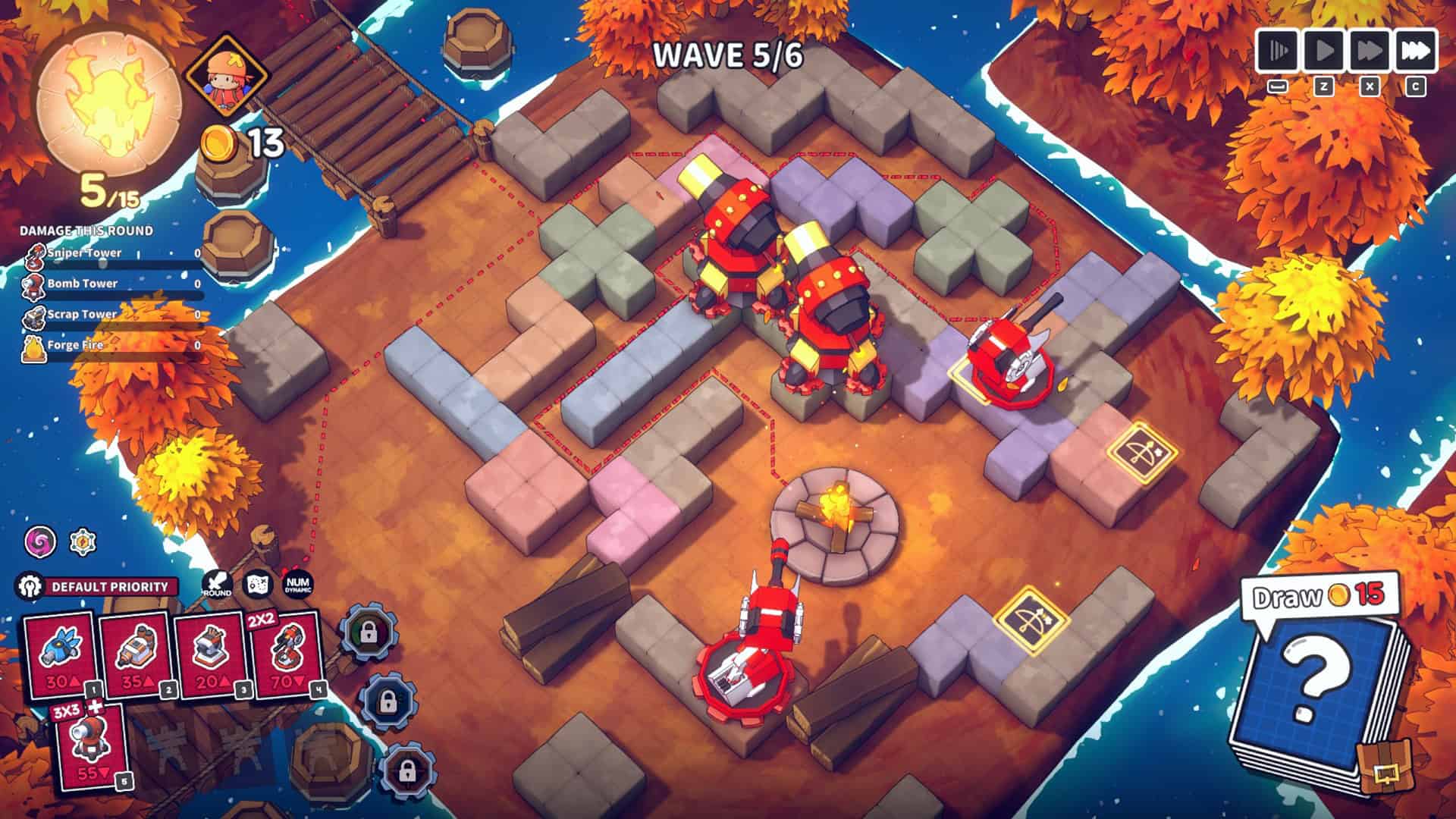
The first thing that catches the eye when starting Emberward is the visual design. I’m not gonna lie, I am not the biggest fan of the art style. The overly colorful pieces and the blocky aesthetics make it look like mobile games, but I also have to admit it gets the work done. The distinct edges and colors make visual cues clear, and the visual design can attract more fans of the genre to the game, as the most notable tower defense games in recent years have been released on phones. So even though it’s not to my personal taste, I admit it enhances the game’s experience overall.
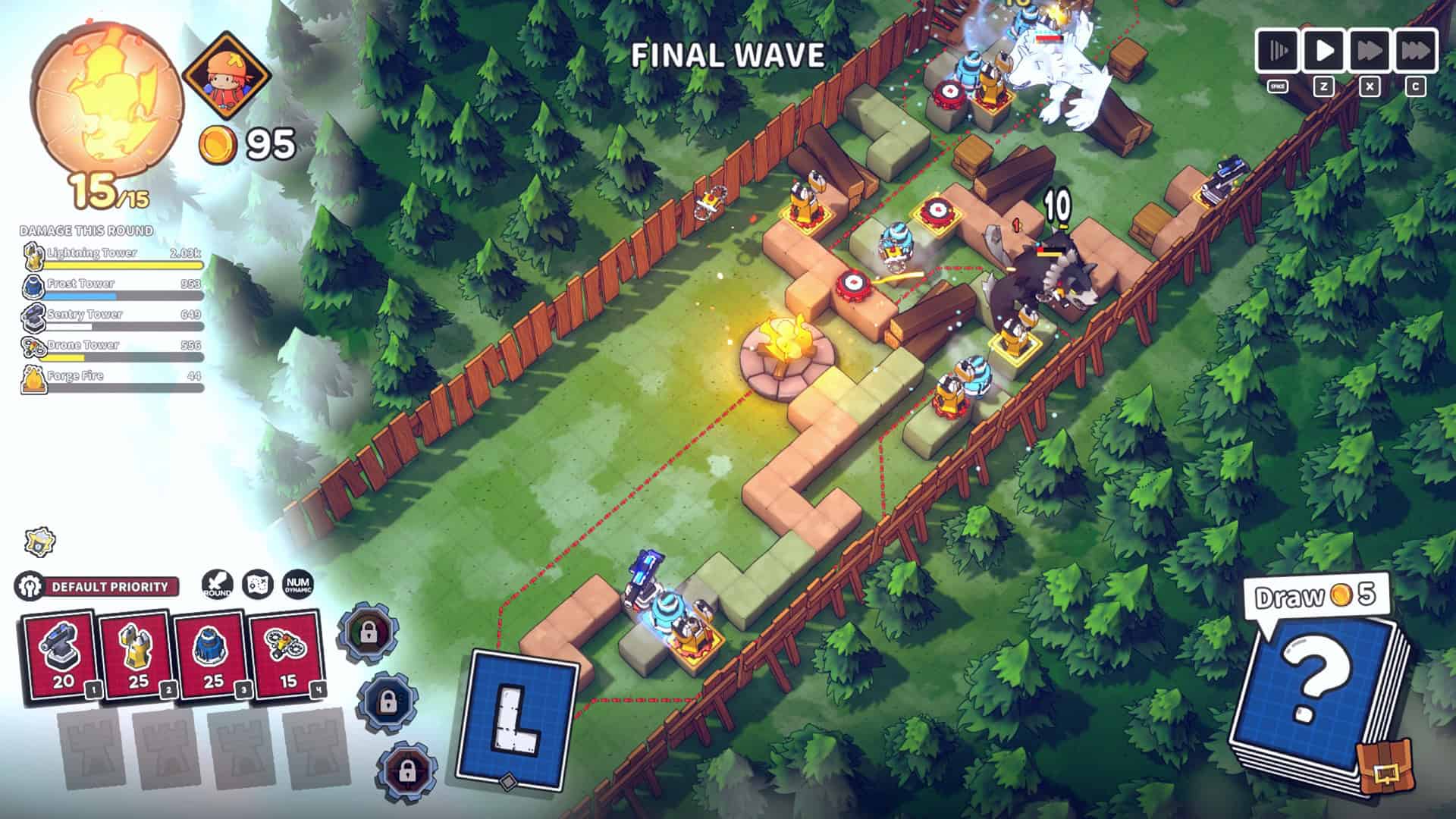
Emberward is the type of tower defense game where you have to create the path yourself, and this is where the deck-building aspect of the game comes in. We start with a few tetromino shapes that we can place on the map to block and guide the path of enemies. We also need to place our towers on these blocks so we can create long mazes and place towers on top of them to defeat the waves of enemies. After finishing a level, we might get new blocks and even modify them with buffs, and we can draw them in following fights.
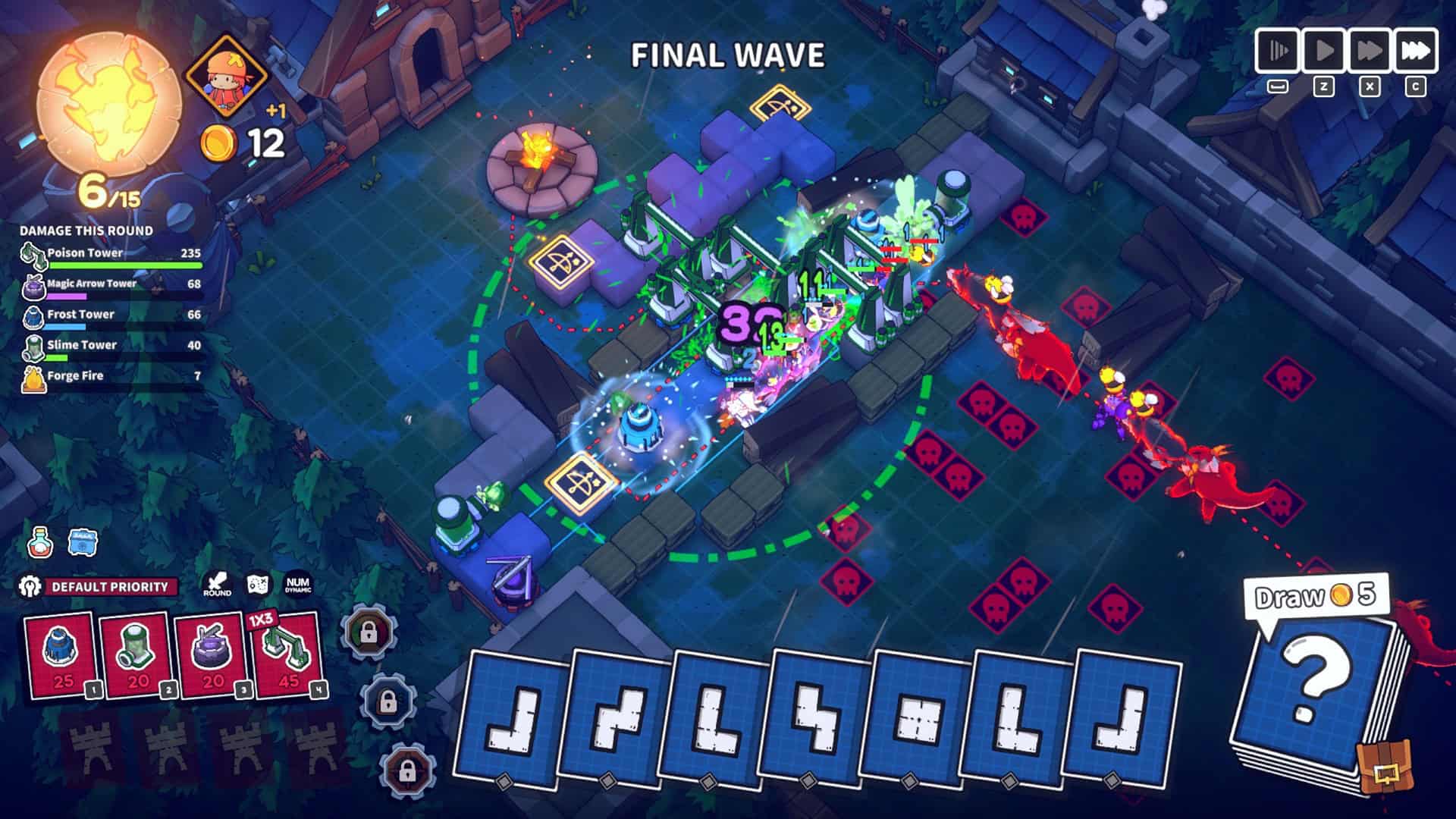
We use gold to place towers on the blocks we build and upgrade them. We get a certain amount of gold at the start of each wave, and enemies drop some as well when killed. Gold is the most direct source of power in the game. More and better towers help us advance further in each run, and even if we have enough towers, we can use gold to draw extra cards and make our maze longer and safer.
There are a lot of ways to get stronger during a run. We can find relics, new towers, and abilities that help us synergize different towers and damage types. We can find shops or fight bosses for better rewards, and slowly build up a strategy that can defeat the final boss. Enemies that get past our defenses damage our campfire, and if the campfire reaches zero hit points, the run is over. After playing for a couple of hours, I felt like the upgrades I was finding during a run played a much more important role in my success than the meta progression, which is a nice bit of balance for a roguelite title.
The meta progression in Emberward, while effective, doesn’t feel essential for having a good run. You can defeat the final boss of the first zone on your very first try, which I really appreciate compared to roguelite titles that rely heavily on meta progression. Unlocking talents or new characters, while helping with power level, more than anything increases our ability to customize our run and build strategies that seem fun. Unlocking these extra features is relatively fast and doesn’t require any excessive grind or sacrifice during the runs.
The aspect of Emberward that feels the most refreshing compared to other games in the genre is that towers can only be upgraded once. What makes us stronger is the synergies that we create between various towers and damage types, and how we utilize the paths and create long, sprawling mazes that force enemies to pass by our towers multiple times. We can’t just create one strong tower and upgrade it dozens of times so it clears every wave, but we have to plan and build an optimal layout. The towers themselves also have different sizes, ranges, and aiming behaviors. Some towers are simple, shooting any enemy in range. Some leave mines on the path tiles next to them, and some only shoot in a straight path, bouncing between enemies.
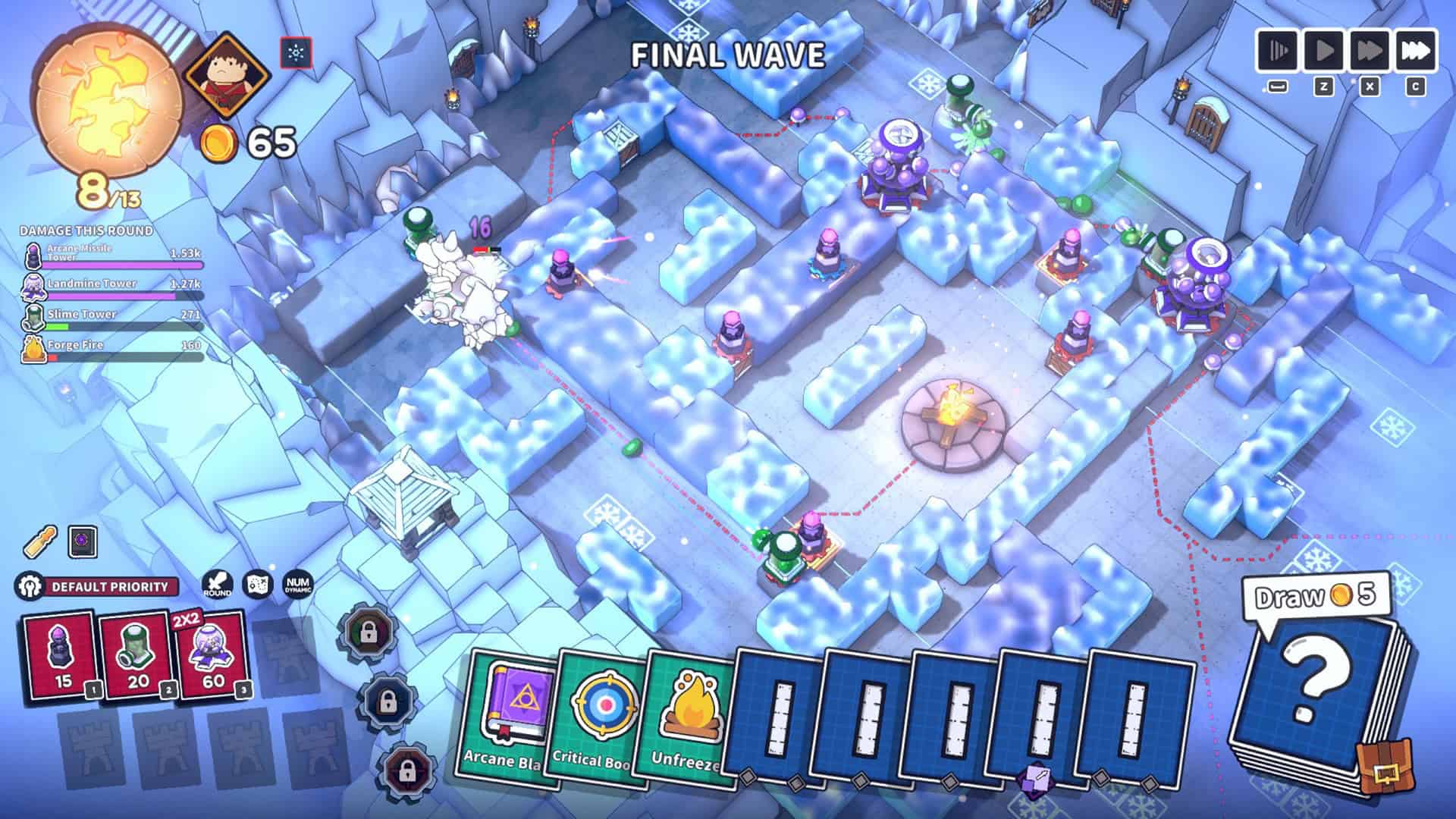
Aiming priority is also an important aspect once we get to higher difficulties. Towers by default target the enemies that are further along on their path, but based on our setup, we might need to focus enemies with certain conditions on different sections of the maze. There’s a lot of strategy that goes into each run. Even if we don’t get a fully optimized, synergistic build, we can push a lot more than expected if we play our cards right.
Emberward fulfills my desire for a fun, challenging, and replayable tower defense game almost perfectly. It combines all the different gameplay elements into a cohesive roguelite experience and can offer dozens of hours of engaging and fresh gameplay before you have seen everything the game has to offer. My only true gripe with the game was the art style, which is mostly a matter of personal preference, and it fits the genre and the atmosphere of the game regardless.
Nima reviewed Emberward on PC with a provided review code. This review is based on the version of the game that was available at the time of writing, and our score will not be changed.
- Score
- 9/10 OUTSTANDING - GAMEOBSERVER RECOMMENDS
- Summary
-
Nima says: Emberward combines aspects of deck-building, base planning, and roguelite progression into a satisfying and challenging tower defense experience. The game prioritizes creating fun and complicated synergies with different towers that make each run feel unique, and it offers a ton of variety in strategies and layouts.
- More
- GameObserver's Review Policy





 ObserverCrew Picks
 bserver
 bserver