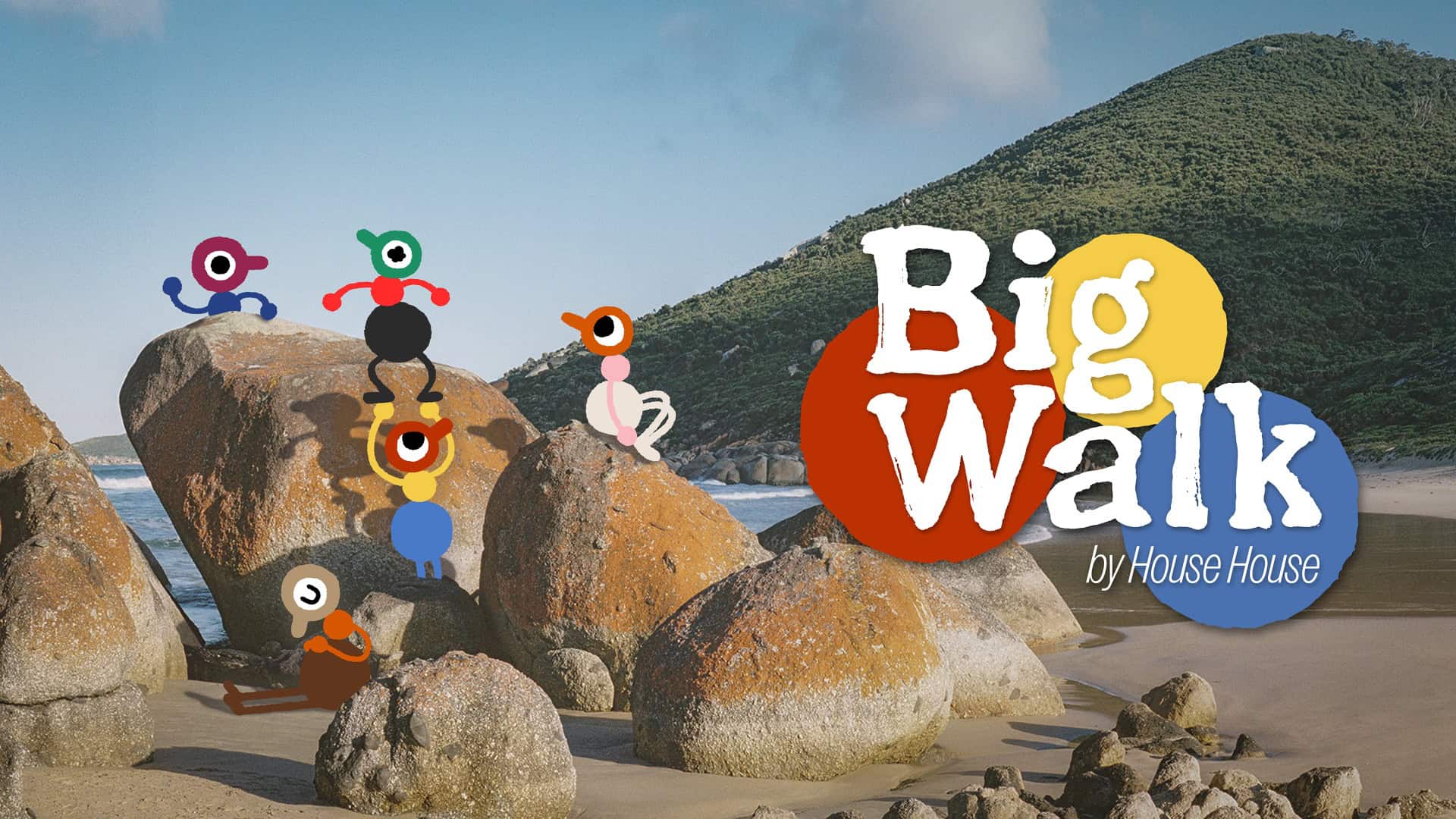
Australian indie developer HouseHouse has been very clear from the start at what they intend Big Walk to be: an opportunity for you to chat with your friends. It is so, so important that you play with your friends, which is why there is no matchmaking in Big Walk and a minimum of two people must play it together. You can play with up to 12 friends, but the game is only balanced for two to four players and I absolutely do not recommend playing with more than a team of four; it would be unmitigated chaos.
There is no solo mode, which would defeat the purpose as much as it would in It Takes Two. I played with a close friend who has played dozens of co-op games with me over the years, but anyone will do. The hook is that each puzzle does not test how smart you are, but how well you and your partner can learn to communicate – often without words.
Big Walk has some of the best ramp up and tutorializing I have ever seen. There are no words in the game beyond small signs showing you the controls. You can individually move each arm up, out, and forward, which is important for puzzle solving. There are no instructions, no descriptions, no quest log to follow. It is a game about exploring. After leaving your little home base and meeting up with your teammates, you simply look across the horizon for a point of interest and walk to it. In light of that, I actually encourage anyone interested in playing to leave the review here and go play it. You should go in as blind as possible, without even a basic understanding of what Big Walk is about, to get the most out of it.
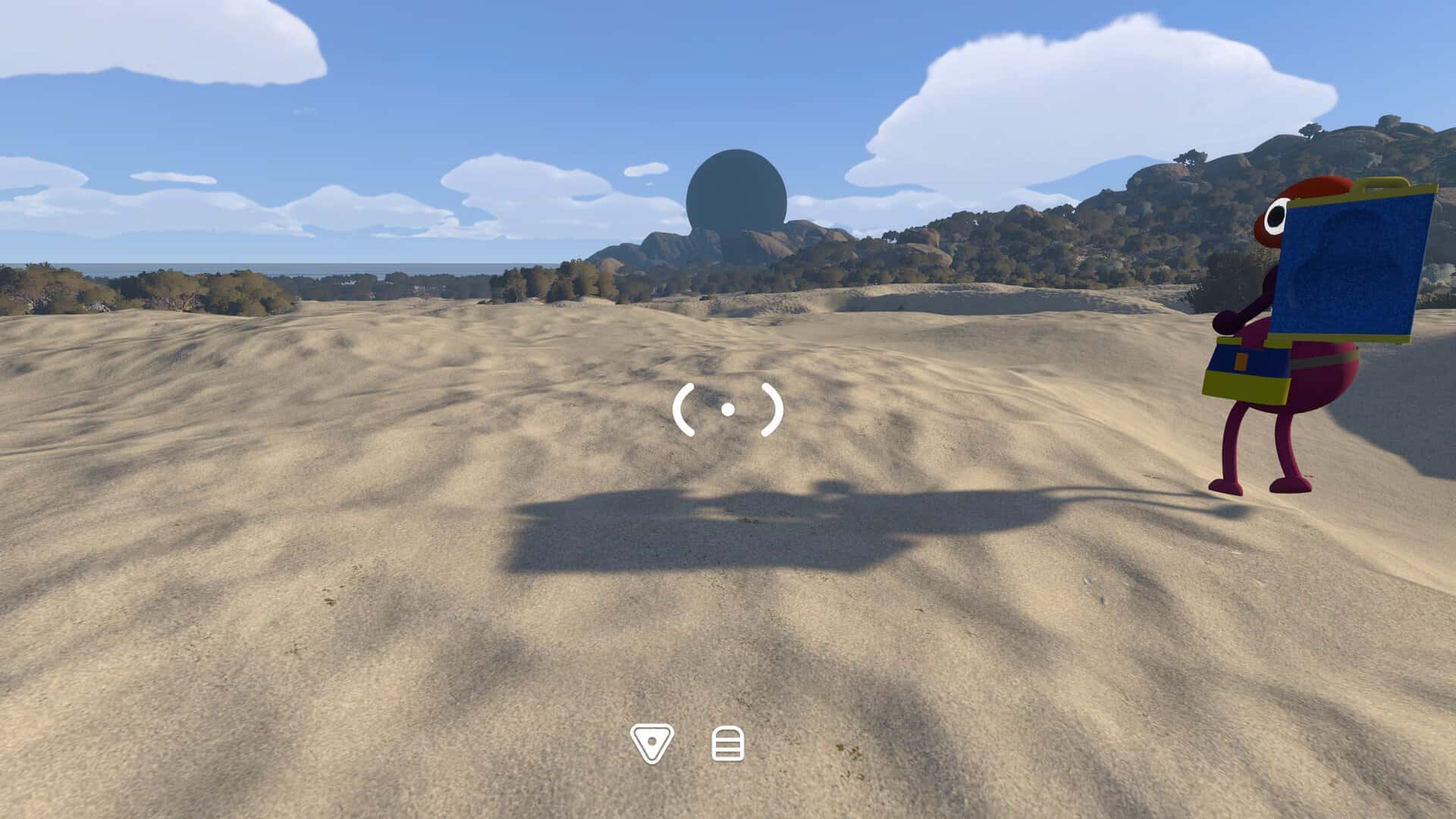
I love the look of Big Walk; despite the goofy cartoon polygons that serve as your characters, most of the world is designed to be more photorealistic. In fact, the water looks incredible and a lot of the vegetation, especially when seen from afar, could be a real picture. The clash with these giant, solid colored polygonal structures in the middle of the Australian brush shouldn’t visually work. It works very well. You can always see points of interest through the dense forest, or on top of hills, or down on the beach, and are naturally drawn to them not just because you want to complete more puzzles and progress – but because they are simply interesting and warrant exploring.
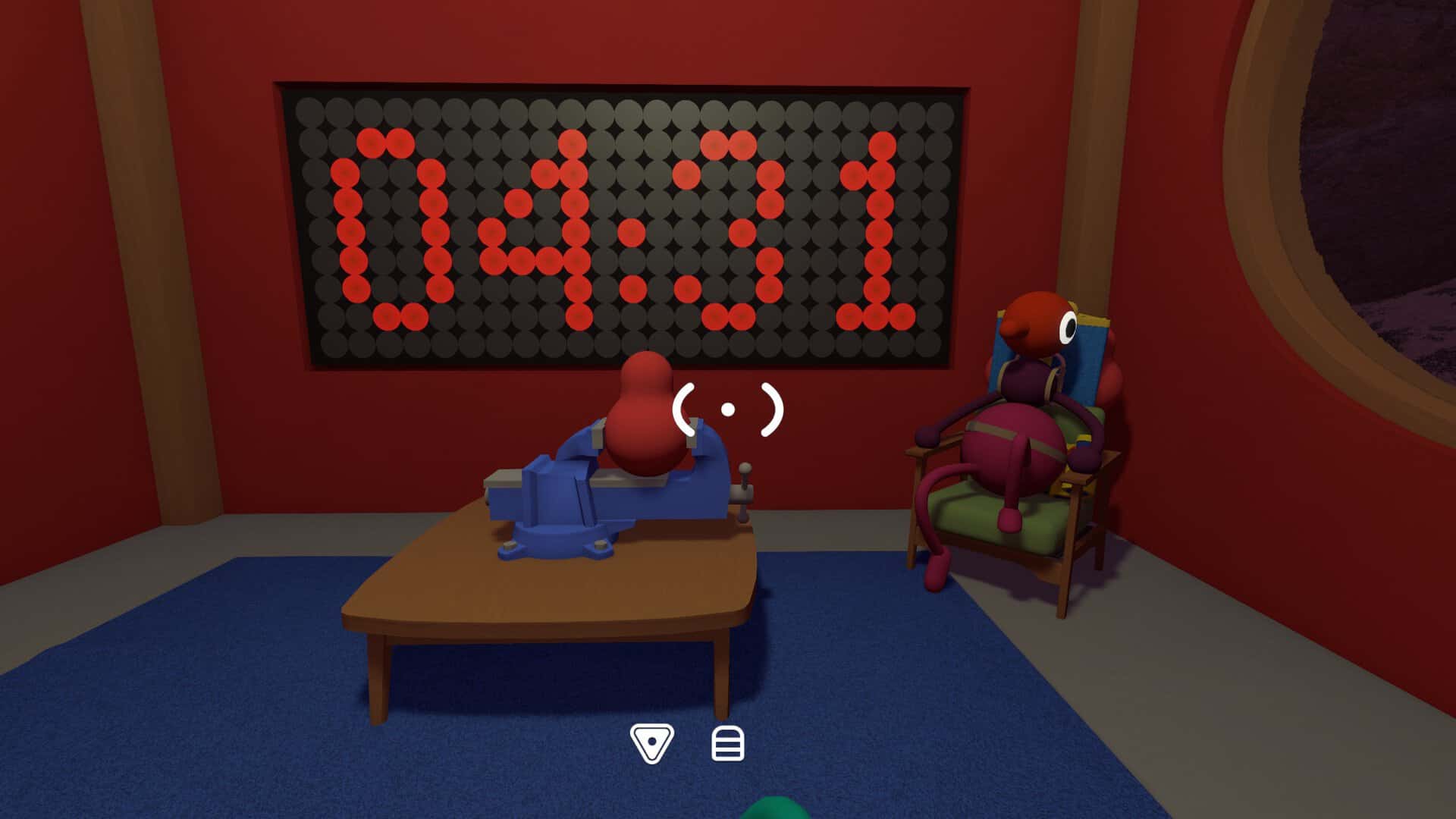
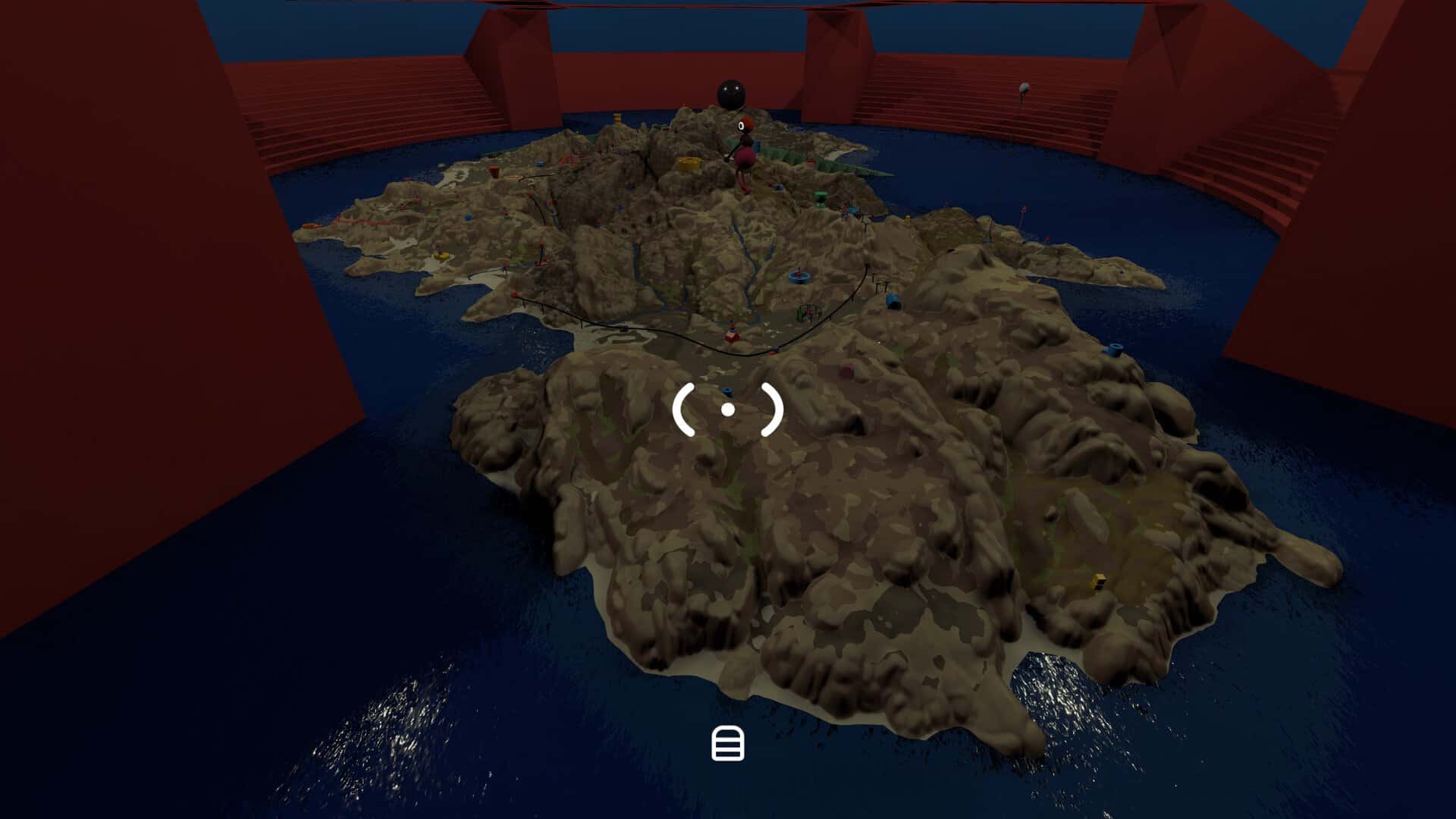
At first, the world feels huge – just clearing the tutorial area requires you to complete some simple puzzles, but the beauty of it is that you are simply finding things and excitedly telling your friend about it. After finishing the first area, you’ll realize that it was just a tiny corner of the map. But it’s not like Assassin’s Creed where the full map finally shows up and you sigh, wondering how many bandit camps you can possibly raid. It all opens up very slowly, but with a clear limiter on how big it’ll get from the start. I also will declare Big Walk might have the best player map in video game history, as it is a physical miniature of the real island that you can walk around that changes in real time.
It is very easy to get separated in Big Walk, and with its proximity-based voice chat in-game that means you must actually work to find each other. Sending up flares, turning on lights to leave a trail, whatever you need to do to find each other. There is quite literally nothing you can do without your partner; you can’t even access your own inventory. Often, someone will take one wrong turn, or fall off a cliff, and then bam – they’re gone. I think the moments when my partner and I got separated were actually some of the strongest, because the joy of finding each other again is pure and true. It strongly reminded me of the all-time classic Journey.
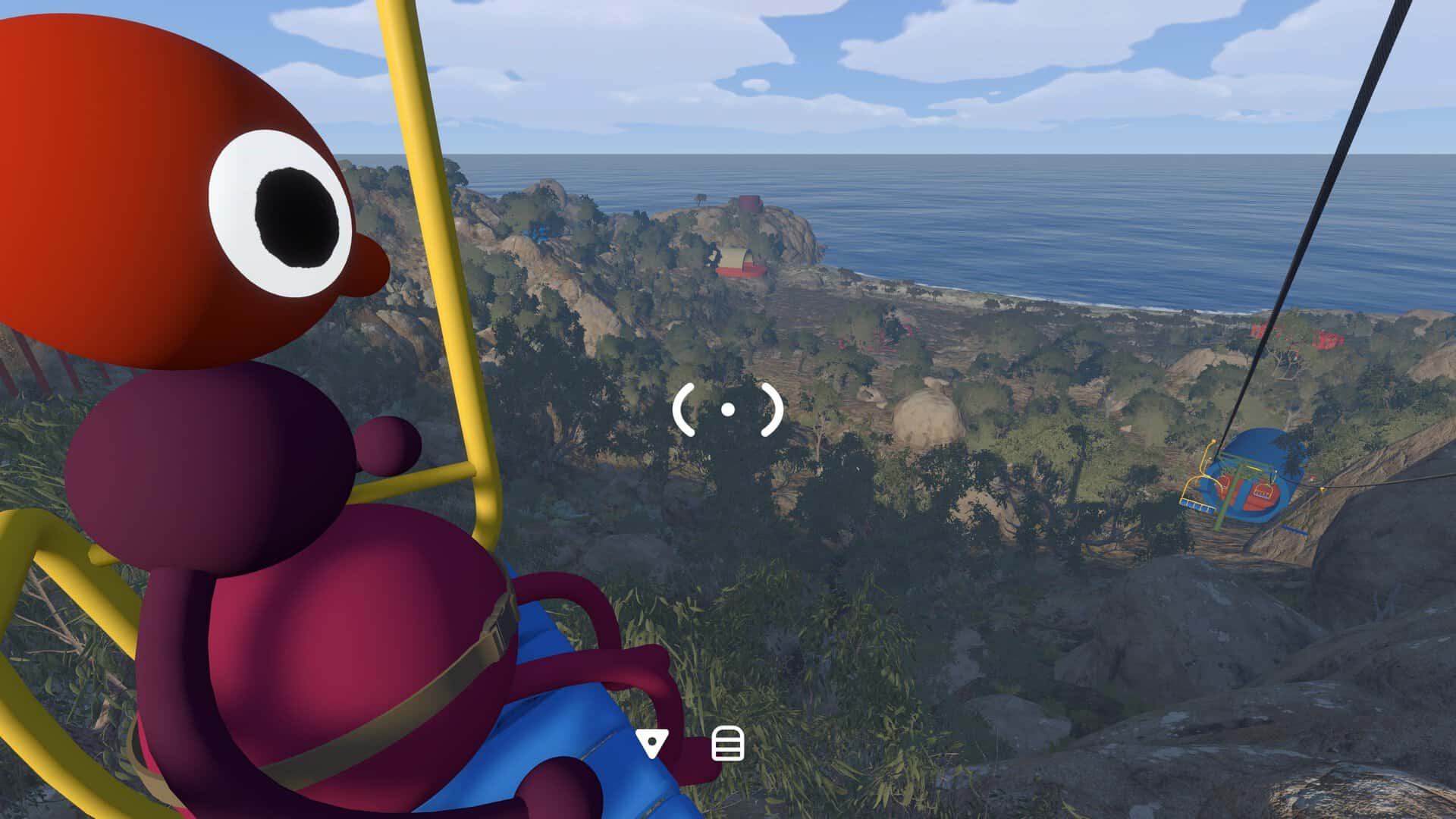
To be as vague as possible, the gameplay loop consists of tracking down what we were calling “heads”, but others seem to be calling “gourds.” Regardless, these round, red chunky items are the rewards for completing puzzles in the open world, and then must be brought back to one of the four colored towers to plug it in. Getting five heads to a tower completes it and results in a key that unlocks a new method of transportation, including the ski lift and the train. So as you progress, the island does feel like it’s getting bigger, but it also feels very manageable because you’re constantly finding new ways to travel more efficiently. The tools are only situationally useful, and you have very limited space to carry things, so its not really worth worrying too much about them. I like this, because it removes the stress of having to think about whether I should carry a head back to a tower or a tool. Or do whatever you like, the game won’t bite back.
Here is the crux of the game. My partner and I leave the home base with our tools and backpacks. One of us says “Look! A red thing!” and the other says “Yes dude, let’s get this bread.” And then we take a short hike to the red thing, chatting about Hadestown, our relationships with our grandmothers, and everything in between. Every puzzle, which I again will try to describe as little as possible to not spoil, is based around communication. You can retry puzzles infinitely, and easy ones can take just a minute with harder ones taking up to 20. Some of them are extremely hard, but none felt impossible. The key thing is that with one single exception, every puzzle we encountered was absurdly fun. Each one tests a different method of communicating, whether by using your voice, blinking lights, body motions or just your trust in your partner. Again, not a test of intelligence. A test of trust.
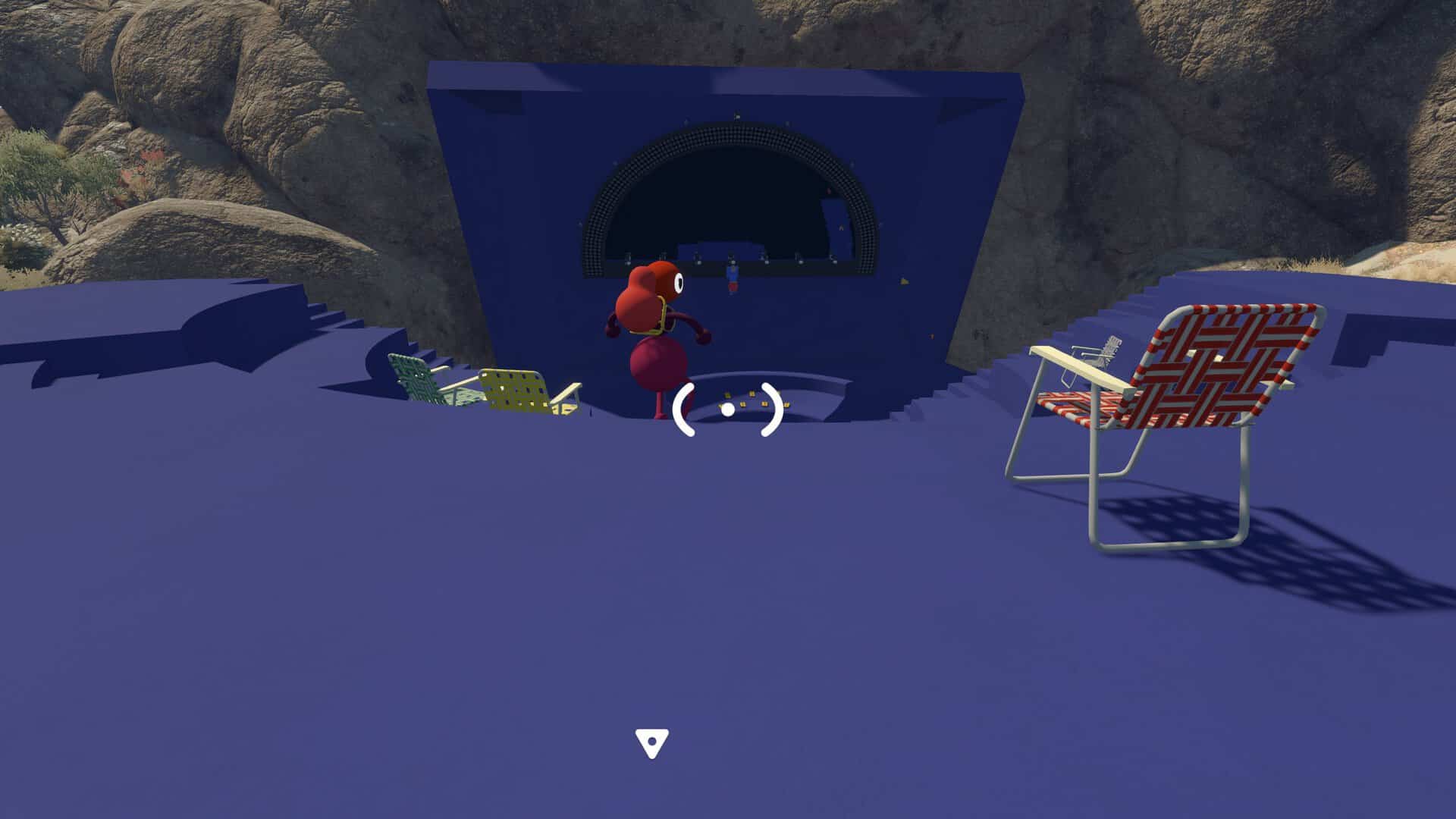
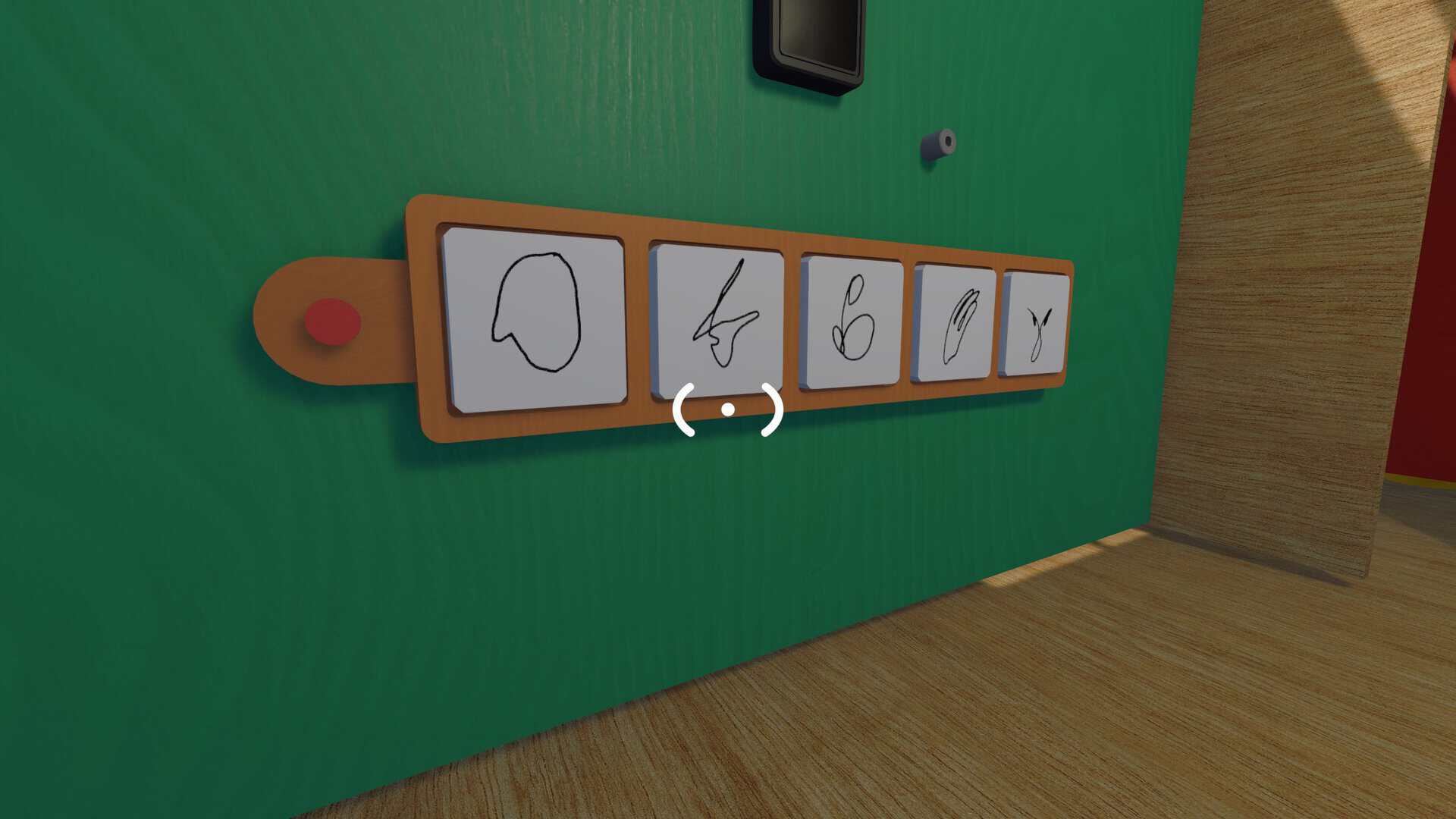
To detail one specific puzzle, we arrived at a large building with two doors. One led to a room with a bunch of screens that, once the puzzle started, would display dots or blanks. The other side of the building was a room that had peg boards displaying dots and blanks and about 20 peg holes on the wall in different configurations. In the middle, there was a large “playroom” of color coded polygonal objects on a tile floor and six bright yellow kettles. The puzzle activated once we were both locked in opposite rooms. My partner was on the side receiving the info, and could go into the playroom to leave clues for me on which peg holes needed to be filled on my end. However, during the puzzle we could not talk or see each other, and once she was done with the room it was my turn to read the cryptic writings my friend had made by arranging kettles.
This one really got to me, because, like many of the puzzles, it kind of required us to create our own language between each other, with some of it only being possible to create after we were locked in separate rooms. But for some reason my brain was not locking in to what was happening, and the abstractness of it all was getting to me. We were going back and forth trying to plan how to do it, having failed once, and my partner said “just trust me, you’ll get it.” I was too tired to argue I wouldn’t get it. By some miracle, when I stepped into the playroom a few minutes later and saw the kettles in her specific arrangements along the shapes, I understood which of the 20 peg holes needed dots and which were blank, despite none of those things matching. Big Walk is all about these scenarios, using abstract shapes and colors and sounds to give you and your friends tools to create your own languages.
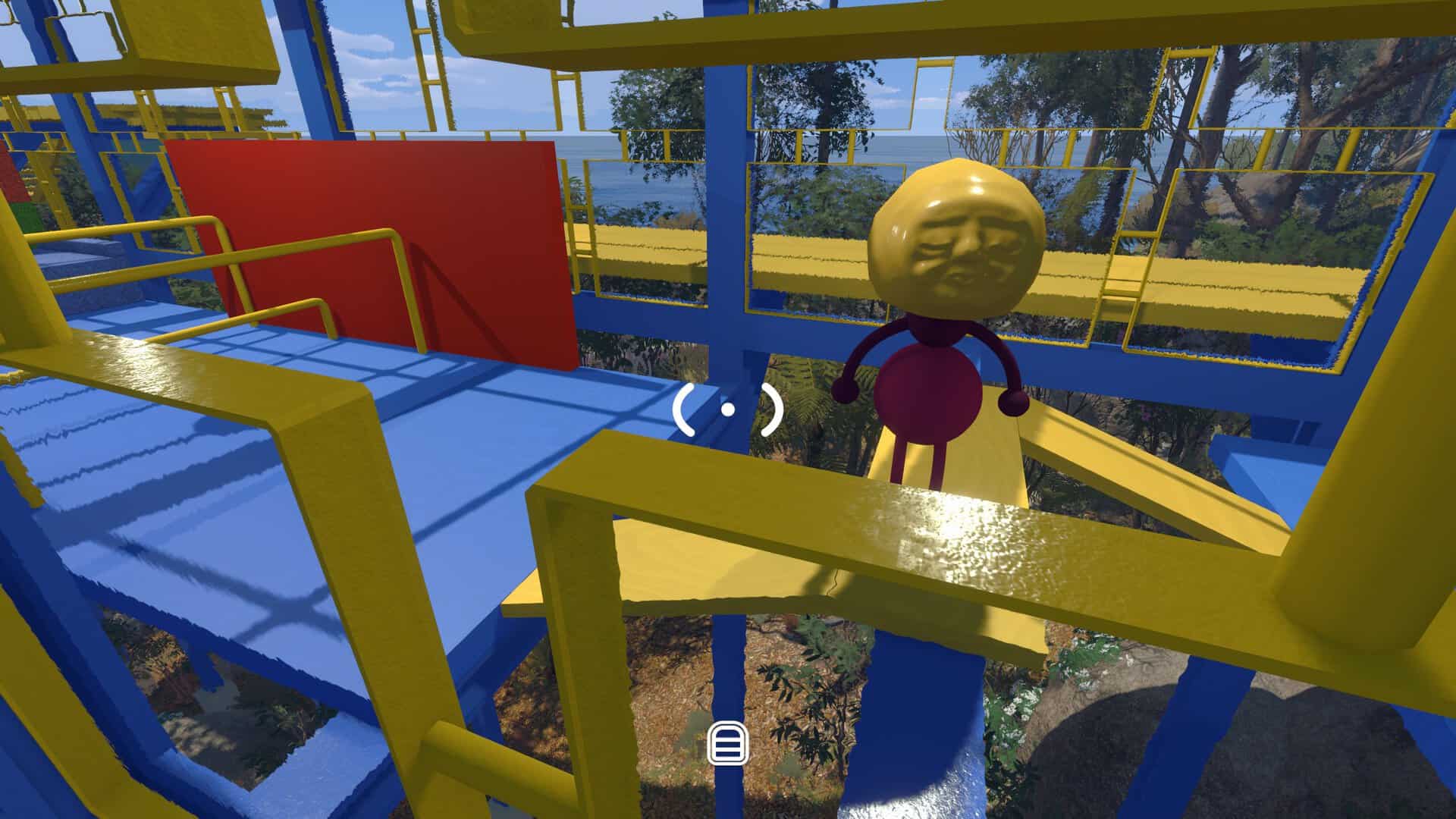
Big Walk is significant among co-op games in that every piece of it encourages you to continue communicating. While the puzzles certainly did not get easier, as we stumbled forward near the beginning we started to develop an unspoken rapport not just in how we would describe puzzle answers to each other, but in how we would approach them. Near the beginning, we ran into a puzzle where my partner had to put a weird golden head over her own that made it so she could not see anything at all. I had to stand outside of a glass obstacle course that went on a very long time and shout instructions to her every second, and if she took a wrong step she’d fall and we had to start over. My friend was very slow to walk anywhere for fear of falling, so there were about 20 minutes of me running in circles around the house yelling instructions like “WALK ONE STEP TO THE LEFT BUT NOT TWO STEPS OR WE ALL DIE!” It required not only cooperation, but trust.
We also had some great moments desperately trying to get the train to start running for the first eight hours. Eventually, when we turned it on after completing a tower, it began to run at a slower pace than our own run speed. We decided to ride it anyway out of spite. I fell off a cliff as we were loading in, and spent nearly 10 minutes running 500 feet below the train on the forest floor screaming through a megaphone while my partner rode the train smashing the horn button like I didn’t know where she was. It was frustrating in the funniest way, with me trying to toss lamps into the air to indicate where I was and being unable to shoot the flare gun that was on my own hip.
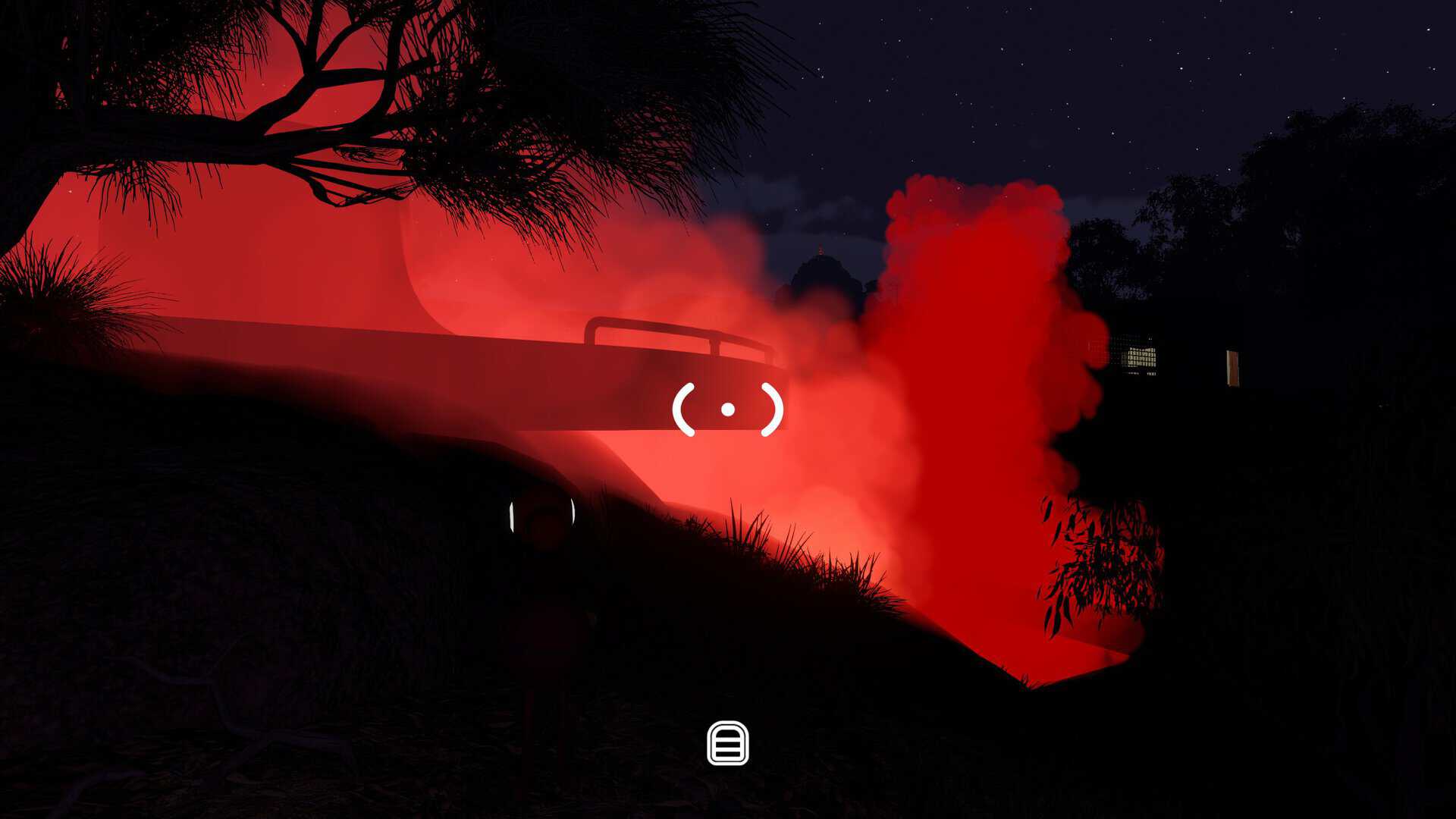
In retrospect, our funniest moment was when we finally got a key we had been working to unlock for hours, and my partner pressed the wrong button on the controller. Instead of handing it to me, she punted it off the tower hundreds of feet into the brush where it lay, invisible. This annoyance quickly turned funny as we spent a half hour using every tool at our disposal trying to track down this key, trying to retrace its footsteps like it was a lost dog. After finally finding it, I said “I’m holding the key from now on.” I turned around, and about four seconds later fell off a cliff and found myself sliding hundreds of feet down a mountain, the key flung from my own hands in the middle of the night. This led to another 15 minute search for the elusive key where our exasperation turned to good humor. During this time we had a lot of talk about our own cats, from my friend’s cat rejecting her medical wet food and my own tearing open the treat bag in the closet and eating the entire thing in one sitting. From then on, we had a staunch rule: keys go in the backpack. No one EVER holds the key.
The world of Big Walk feels purposefully empty; although it is filled with tons of animal sounds, there are no animals to be found. I think my biggest complaint is that for the entire 14 hours it took us to finish the campaign, we were eagerly hoping to catch a glimpse of a kangaroo or deer. No such luck. I think seeing an animal or two in the distance eight hours into this game could have been the most hype moment in my gaming career, so just some food for thought to the developers. Regardless, the Australian brush is beautiful in a way that is hard to describe. It feels good being there, and it feels good seeing it interrupted by vast, smooth structures that promise new adventures.
Big Walk ran on both my gaming PC and my partner’s Steam Deck very well. On my PC, it never dipped below 60 FPS, though without manually capping it by way of my drivers it would bounce between 70 and 90 frequently. I found no glitches, no softlocks, no bugs, and not a hair out of place in the game. Everything ran super smoothly and exactly as intended. The online functionality was easy to use and never dropped connection.
I have been very vague purposefully, as the act of discovering what this game is even about is the game. The final area was so smartly designed, so powerfully done, and so triumphant that I have lost the words to describe the sensation. Big Walk is excellent at not just teaching you to communicate, but teaching you how essential communication is. Especially after the ending, which required more synchronization between me and my partner than any of the many co-op games we’ve played, I feel that I finally get why we went on a big walk in the first place.
We exist to communicate. It is not just joyful, but essential, and honest. It is the most powerful tool we have. And speaking with our mouths is just one tool in the massive tool belt we never realize we’re wearing. Big Walk is about finding that friendships cannot be bound by words. There is so much more to our relationships with each other as humans. There has never been a co-op game in my life that made me feel more in sync with my partner, and in that I think Big Walk has done its job and then some. I recommend Big Walk to all humans of all kinds. You can grab some friends you are already close to, or maybe an acquaintance you want to get to know better; either way, when you finish your walk, you will feel the specific peace that comes with perfect harmony between two people.
Nirav reviewed Big Walk on PC with a provided review code. This review is based on the version of the game available at the time of writing and our score will not be changed.
- Score
- 9/10 Outstanding - GAMEOBSERVER RECOMMENDS
- Summary
-
Nirav says: There has never been a co-op game in my life that made me feel more in sync with my partner; Big Walk is a beautiful exercise in the power of human communication, and often just how much we can say without words.
- More
- GameObserver's Review Policy
 ObserverCrew Picks
 bserver
 bserver