One of the reasons I love to play indie or AA games is the limitations the teams often work within. They don’t have massive budgets to create games with large scopes or crazy moments of spectacle. They don’t stray into hyperrealism or bloated systems that tend to draw out the experience for the sake of simply extending the play time and justifying the cost. Instead, they have to operate within their defined restrictions, refining a core, often simple, game-loop and adhering to pure design principles to produce a compelling experience that slowly builds upon itself as the player advances. And that’s exactly what Sad Socket, the team behind 9 Kings, has done in the past year since releasing the game in Early Access. 9 Kings is a polished auto battler roguelite that gives the player a sandbox to explore and manipulate. It’s addictive, highly engaging, and one of the best roguelites I’ve played this year.
There are three core modes to 9 Kings: single player, multiplayer, and a separate quest mode with stricter win conditions. In all modes, the player will pick one of the nine kingdoms, all of which have a unique play style built around the King’s main theme, and do their best to survive for 33 years. Every year counts as a turn, and every turn the player will draw and play at least one card. Once the player has two cards left in their hand, the next battle will commence, pitting their kingdom against the opposing forces, until conquering all warring kingdoms by the 33rd turn. There is a timeline displayed above the player’s kingdom that dictates when certain events will happen. For example, one year the kingdom will have a new royal decree to choose from that could apply a building’s effect nine times. Another year will give a specific blessing to a tile that triples its health. The player will have to learn to grow their empire strategically and take advantage of the exponential, often chaotic, growth the sandbox encourages.
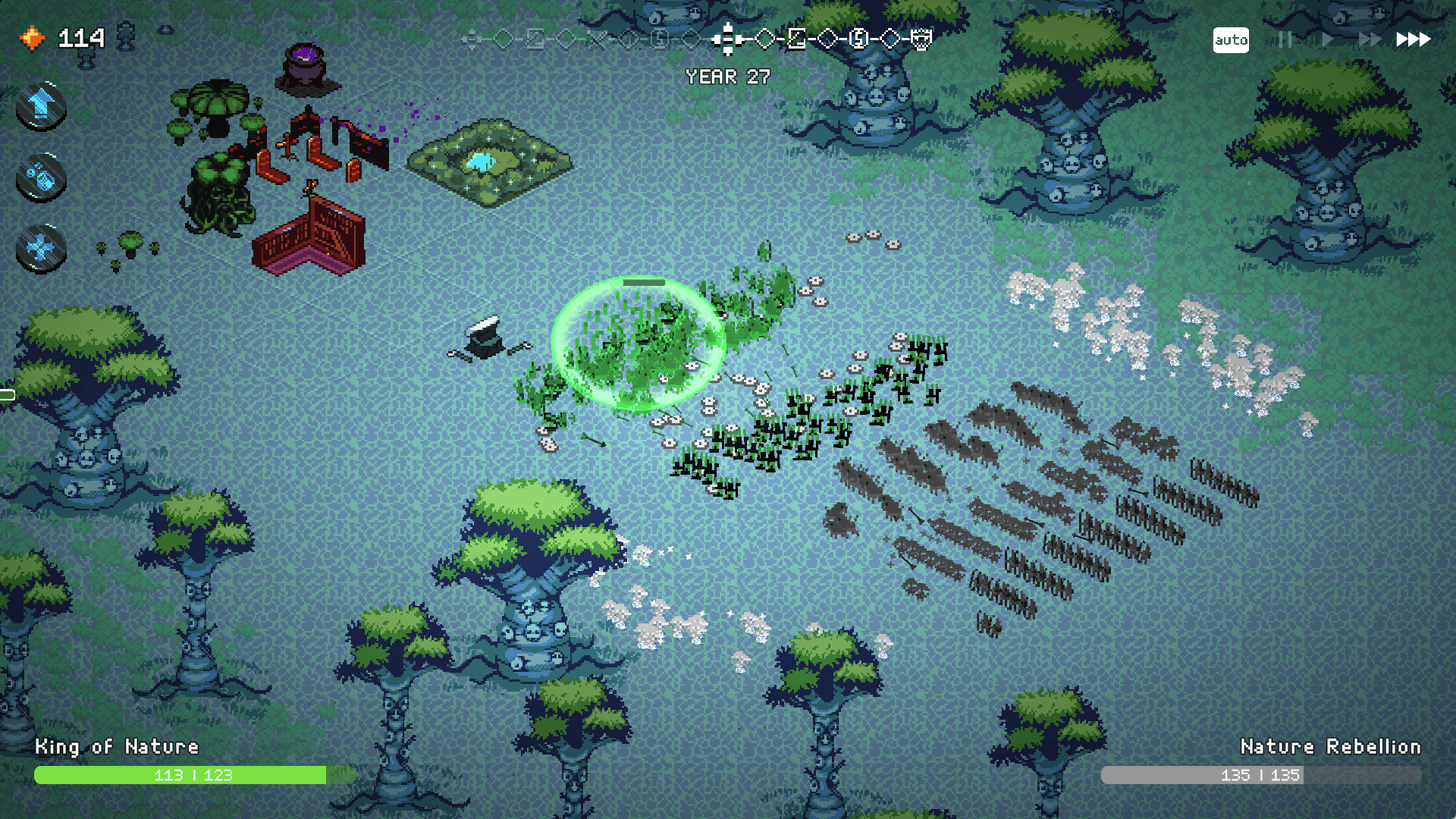
Like all excellent roguelites, it’s about taking the time to understand every variable, each possible outcome, and maximizing the kingdom’s efficiency. And that process looks different depending on which King is being played. For instance, the King of Blood relishes in sacrificing his own units to produce an army of ghosts and ghouls that punish the enemy for being too strong. The King of Nature can use his harmony with the forests to increase every adjacent unit’s maximum health with each passing turn. The King of Greed, my personal favorite, thrives on collecting gold every year, which he can then use to exponentially increase the attack speed of each golden tower and rapidly recruit new and eager mercenaries.
Another variable is the city’s tile system. At the start of each game, no matter the mode, the player will only have access to nine tiles to operate with. It’s an important limitation that helps enforce the thoughtfulness needed when constructing the perfect kingdom. If the Blacksmith card buffs adjacent tiles, it might be best to keep it in the very center of the kingdom. Or, for the King of Greed, placing the Beacon card in the center, which adds a +2% attack speed to adjacent plots, could be a more viable strategy as it pairs nicely with the existing towers that see a buff to attack speed based on the kingdom’s currency.
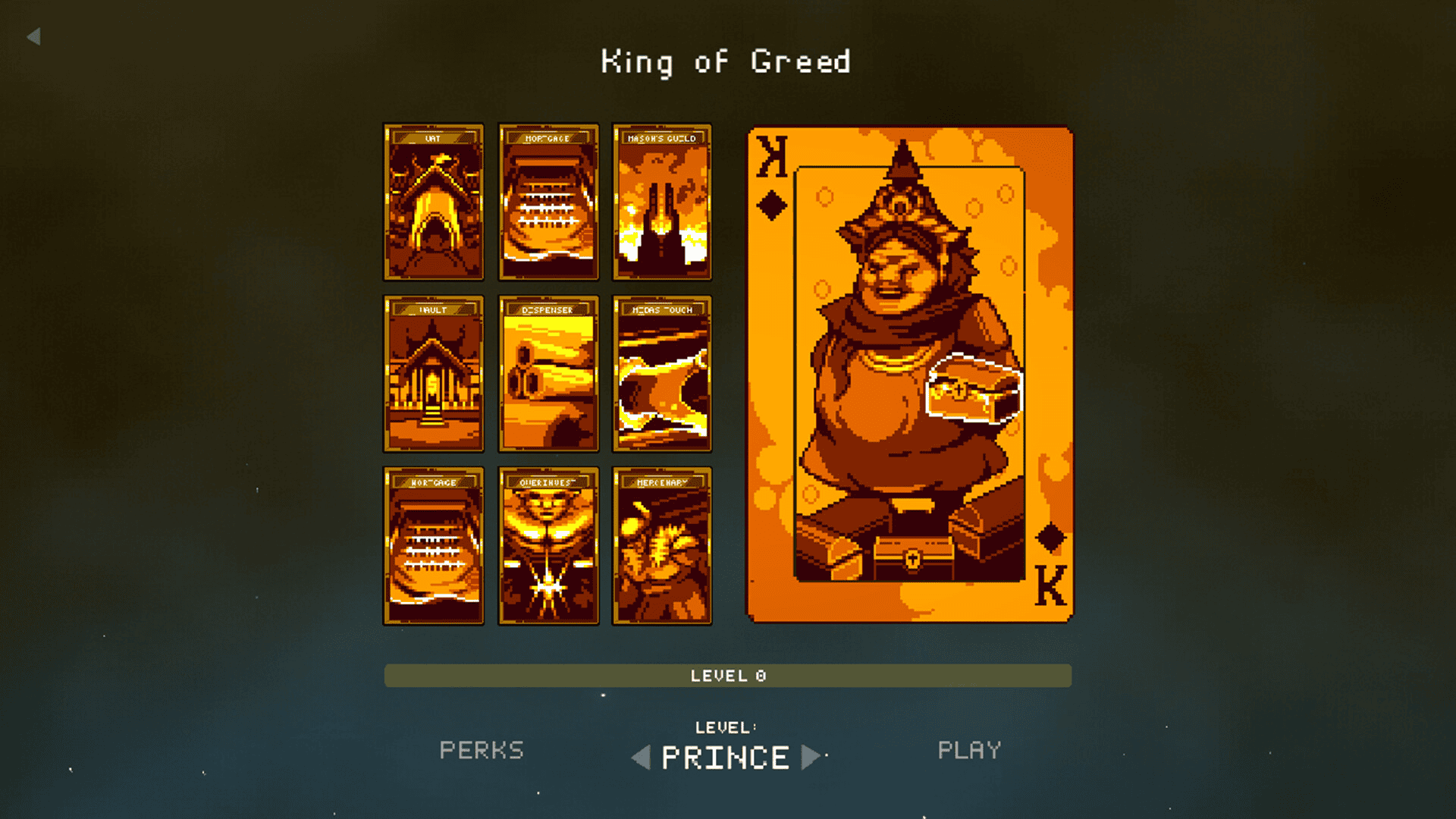
Player choice is one of 9 King’s strongest elements. Deciding which kingdom to play is important, but often considering which kingdoms to oppose can be the determining factor between a successful or failed run. By picking the King of Greed, I’d get nine specific cards and perks based on the kingdom’s theme. However, in each run, there will be certain years that require the kingdom to decide who to wage war against and who to sign a peace treaty with. That means if I chose to declare war against the King of Stone, I’d get access to his specific deck of cards. In this scenario, perhaps I’ve built my kingdom solely around towers and beacons. I do hefty, quick damage from a distance, but I don’t have any troops on the ground to protect my kingdom from invasion. This might present a problem if I go up against a kingdom that’s built its strategy purely around an overwhelming number of weak units. Now that I’ve selected to fight the King of Stones, I can utilize his ability to create walls around my nine plots of land for additional protection. And perhaps down the line, I’ll declare war on the King of Nature and use his ability to increase the maximum health of my kingdom’s walls, ultimately making me an impenetrable fortress that deals highly effective damage from long range.
Another example could be pairing the King of Blood with the King of Greed. Say in this build I’m reliant on my mercenaries, who multiply in number based on my income per turn, instead of towers. I could link the synergy between the two kings by using the Mercenary, Vault, and Cemetery cards. The Vault produces three coins per turn, the mercenaries increase in number per coin, and the Cemetery summons a skeleton whenever an adjacent unit dies—in this case, I’ve positioned it directly next to my expanding mercenaries. If I recall the specific blessing my kingdom was destined to receive, I could strategically place my Mercenary card on the tile that triples their overall health. By year 33, I could have over 1,000 sellswords that respawn on death—an endless wave of gold, rebirth, and victory. And these are just two examples of fairly simple combinations.
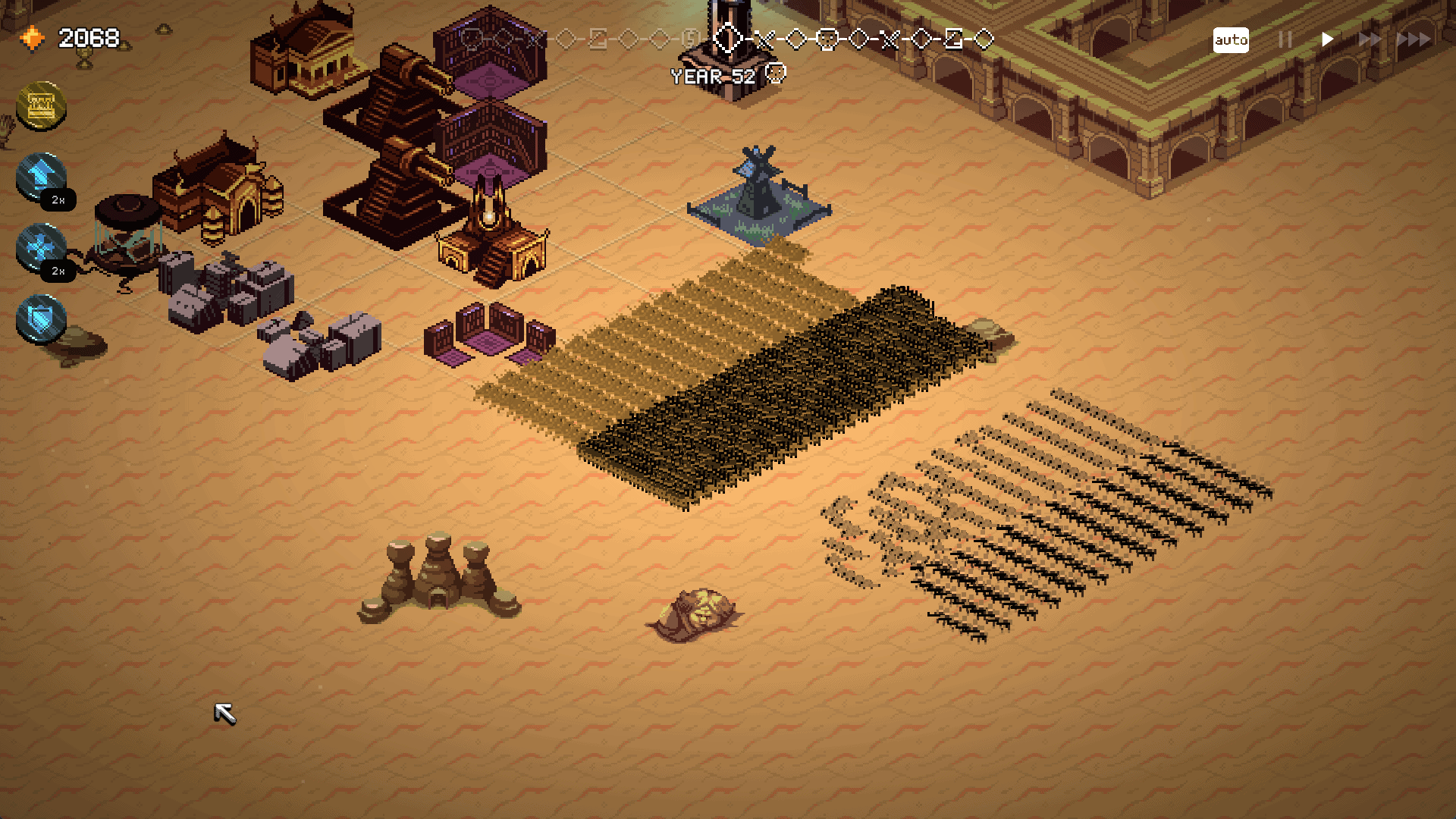
9 Kings is a masterclass of a sandbox. It allows the player to spend an endless amount of hours tinkering with their builds, only to find out a new and viable way to approach each session. And these sessions vary depending on which game mode the player chooses. Single player highlights the flexibility and creativity of the sandbox. It has nine difficulty modes, allowing the player to decide how they’d like to experience the game. This mode is specifically built around defending your kingdom, since the win condition is simply defeating the other King’s troops. Multiplayer, on the other hand, is a much more competitive scene that requires the player to actually infiltrate and destroy the other King’s base. This can be accomplished by eliminating all of the enemies’ troops, or avoiding them and going straight to the kingdom’s hearth. That means builds will look a little different here. Single player is a war of attrition, multiplayer is a war of efficiency.
Multiplayer is also highly dependent on the current meta, which is determined by 9 King’s most recent patches, and the rotating rainbow cards that are available. Rainbow cards are extremely powerful effects or units that can drastically change the battlefield. They can range from summoning the King himself to the war, a towering beast that casts his shadow over more mundane units, or applying a +999% increase to a plot’s damage. Because these rotate on a season-by-season basis, strategies will inherently change. As said before, it all comes down to player choice and preference. Single player offers a more casual experience for experimentation, and multiplayer presents a more competitive scene for those who crave intense competition.
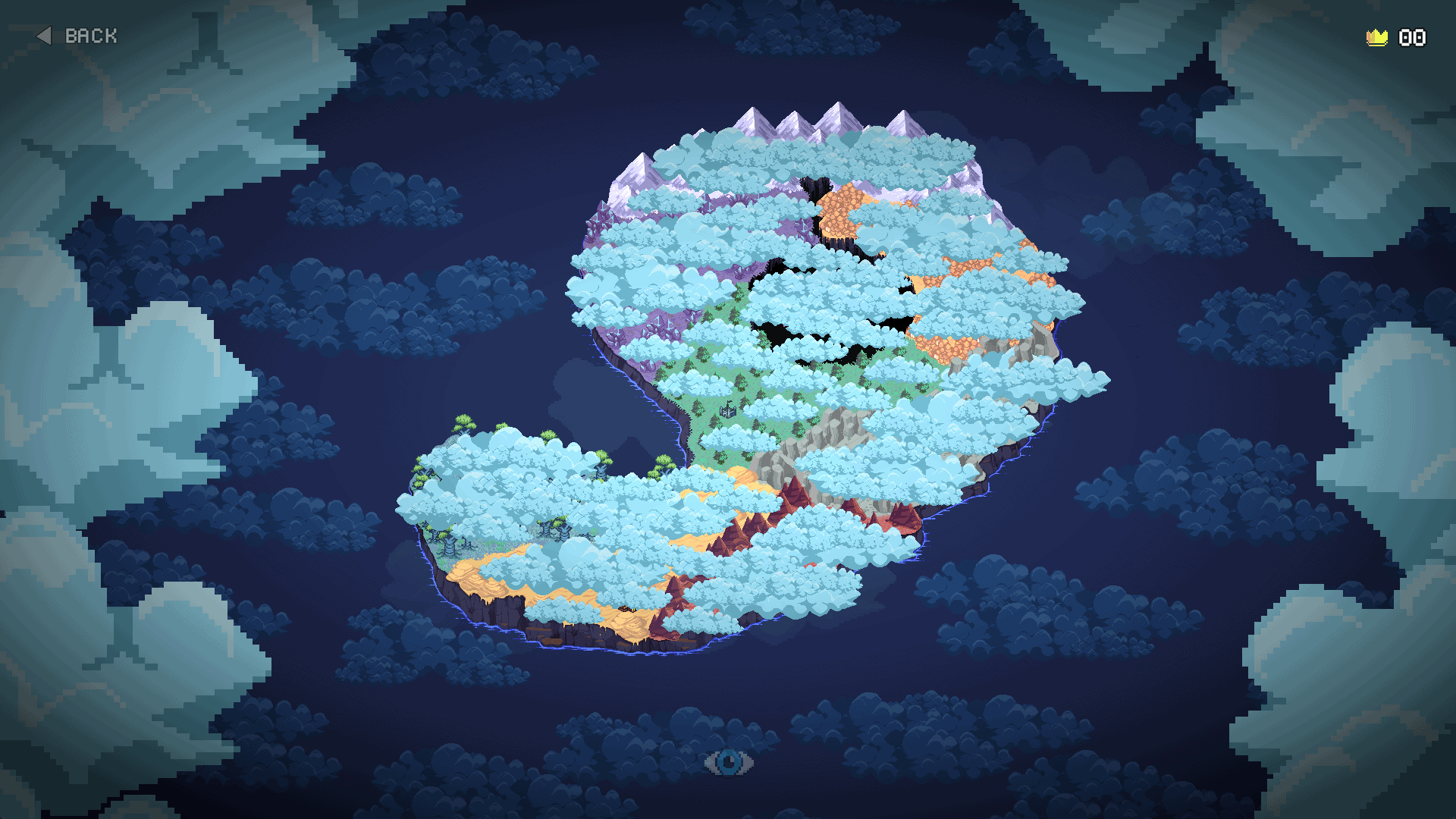
On the other hand, the Quest Mode, which is the final of the three, lets players take on missions that are kingdom dependent. These missions come with strict rules, such as only allowing the player to draw boar cards while playing the Kingdom of Nature, or fight a solo war against the Kingdom of Rainbows, which only utilizes the exceptionally powerful cards mentioned above. I view it as the final step to truly mastering 9 King’s systems. I naturally went from completing single player with my chosen Kings, to then challenging myself with multiplayer, and then conquering the quests as the final challenge. That said, both multiplayer and quest mode are optional, and single player has enough diversity for hundreds of hours of content alone.
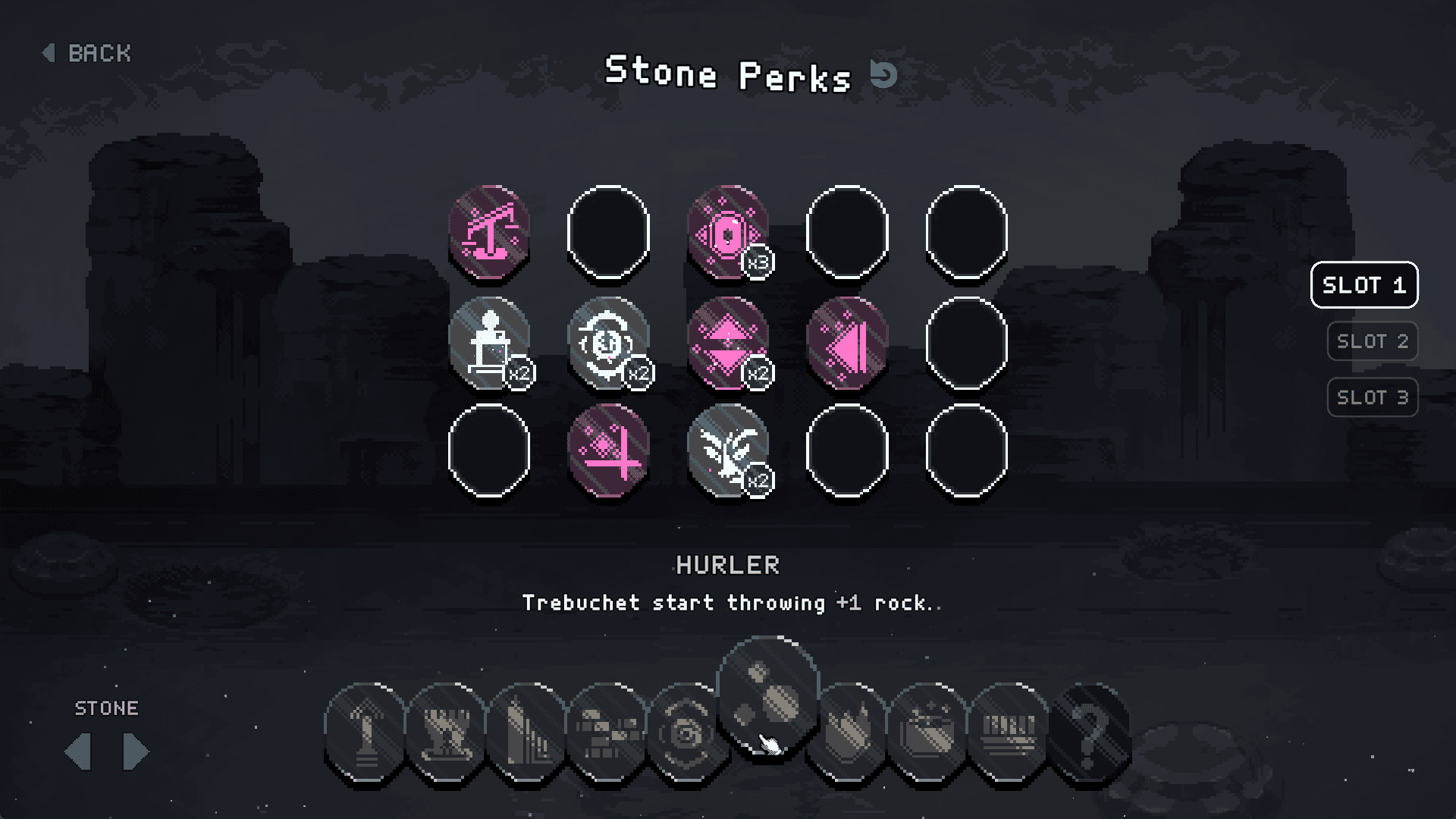
No matter where the player invests their time, they’ll be rewarded with new perks as they level up each individual King. Perks are crucial for developing the perfect build, as each influences an individual’s King’s efficiency and capabilities. This adds a nice layer of motivation and rewards players for staying invested. And as every system before it, each new perk creates another avenue to experiment and manipulate a kingdom’s build.
9 Kings is an outstanding auto battler roguelite, that is by no means a passive experience. Sad Socket has refined a perfect sandbox that emboldens players to explore the possibilities with different builds and reap the rewards of developing a ridiculously overpowered kingdom. Its systems and variables guarantee a dynamic experience, no matter if it’s your first run or your hundredth. It’s an easy recommendation for roguelite fans or anyone who loves to challenge their creativity and strategic thinking.
Daniel reviewed 9 Kings on PC with a provided review code. This review is based on the version of the game that was available at the time of writing, and our score will not be changed.
- Score
- 9/10 Outstanding - GameObserver Recommends
- Summary
-
Daniel says: "9 Kings is a polished auto battler roguelite that gives the player ultimate control over its sandbox and encourages them to explore and manipulate its systems. It's addictive, highly engaging, and one of the best roguelites I’ve played this year."
- More
- GameObserver's Review Policy

 ObserverCrew Picks
 bserver
 bserver