The relationship between video game narratives and game mechanics is an interesting one. After all, what makes a game unique from other mediums? Is it the story alongside the systems? Is it the systems alone? Stories have existed for thousands of years—matured, perfected, and reproduced. On the other hand, game systems, scripts applied to game objects, art turned into digital assets, and environments made active are all emerging fields that only video games tie together. In theory, it makes sense to weigh a game’s mechanics more heavily when evaluating its holistic execution. It makes sense, until you play games like Curse of Resthaven, that have such a strong handle on its characters, writing, and voice acting that the mechanics slowly shift into the rearview mirror, until you forget you’re playing a video game.
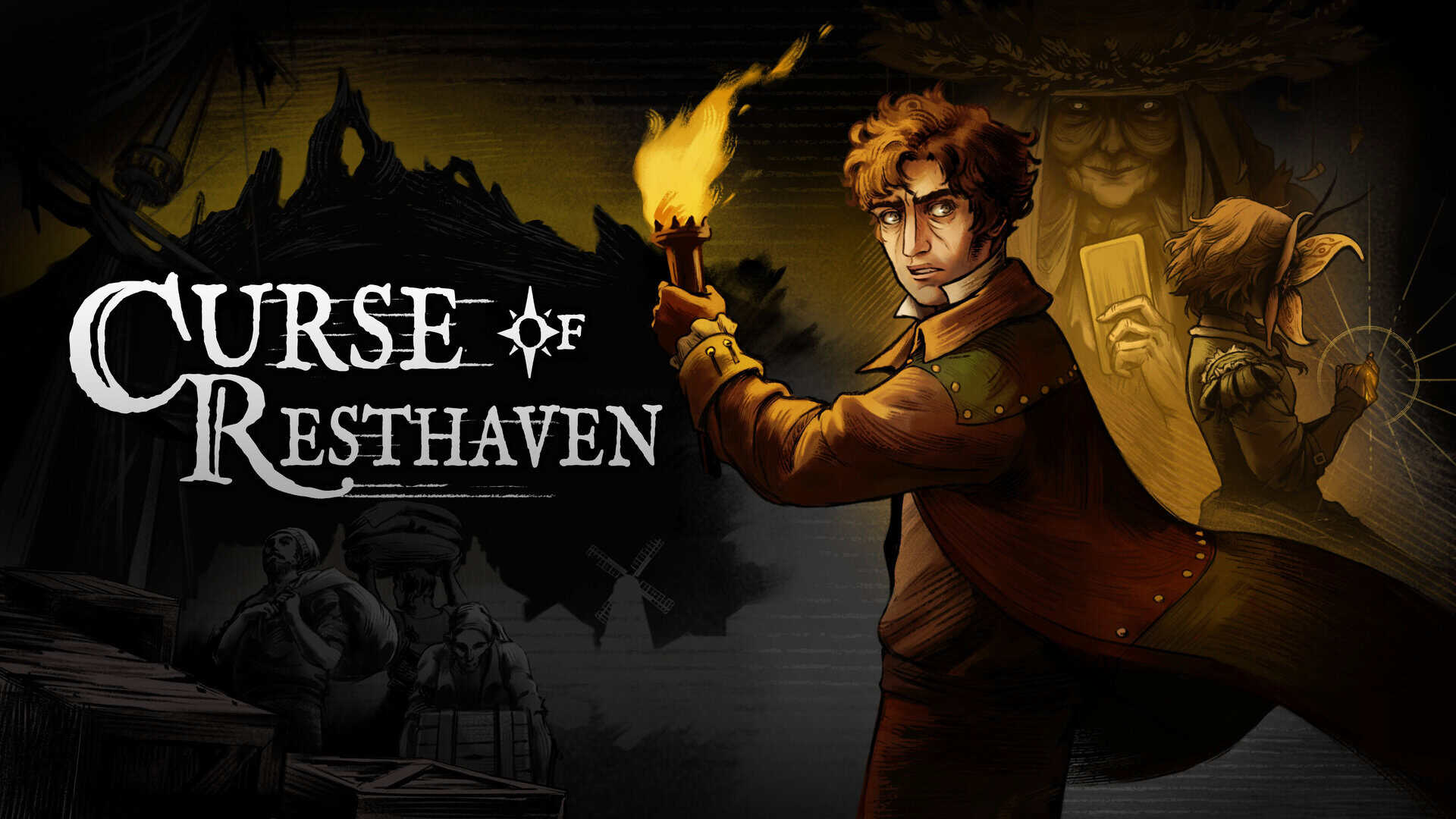
Curse of Resthaven is a single-player narrative roguelite set on a colonized island that hosts a bevy of highly characterized residents, occult mysteries, and diplomatic tensions. The player will control Ambrose, the new governor of Resthaven, as he settles in and searches for his missing niece. His niece and her whereabouts are the crux of the entire story. That, and the bizarre mystery of the island that has forced Ambrose to continuously keep reliving the same six days over and over again. As he arrives at Resthaven, it’s quickly established that something is amiss. There’s a plague, a missing doctor, a potential murder, an abrasive general that refuses to meet with the governor to discuss what could be going on, as well as much more.
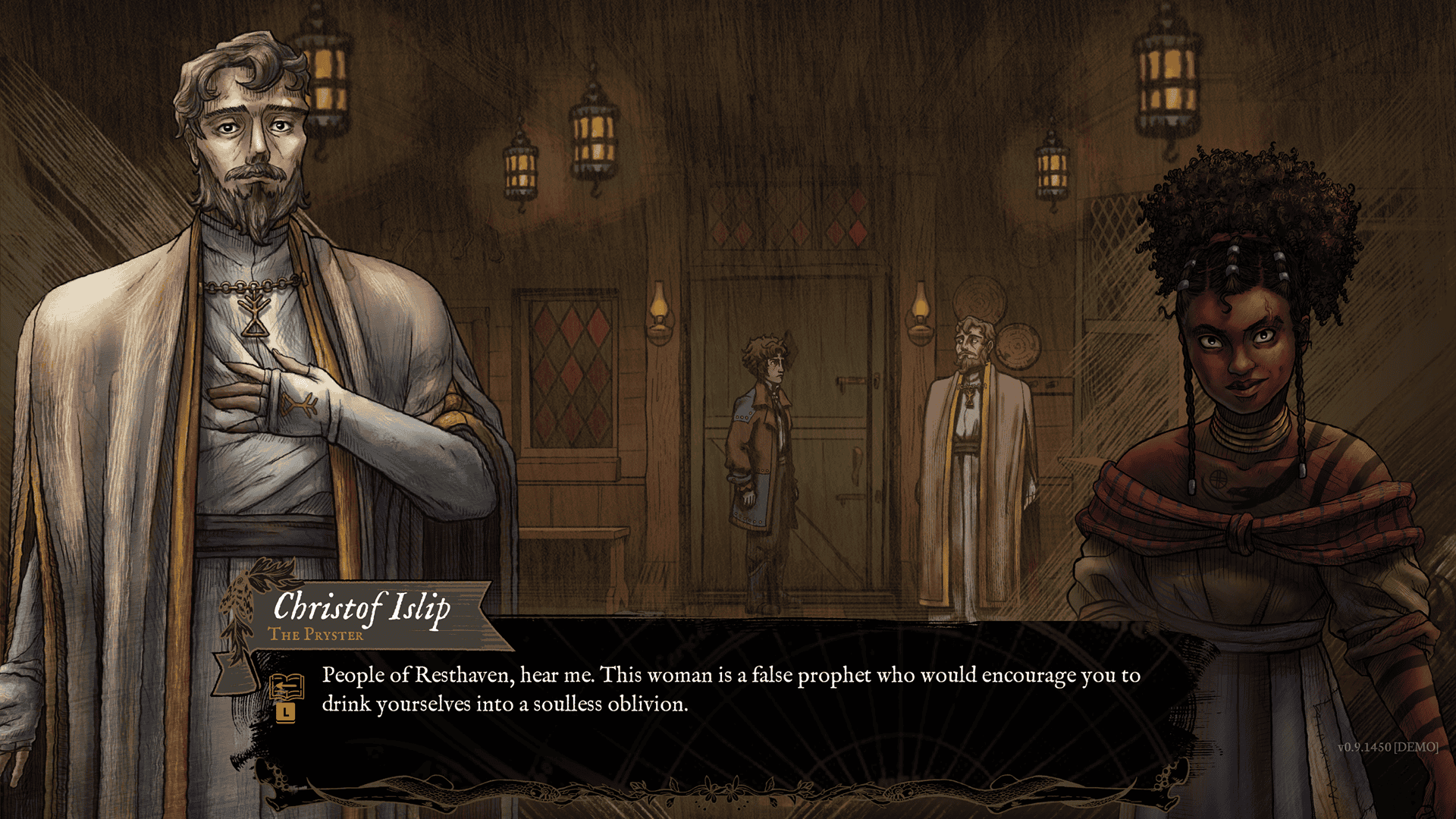
Curse of Resthaven is an investigation game at its heart, and shares some hefty overlap with point-and-click adventures, despite Hilltop Studios, the development team behind the game, not advertising it as such. The player will discover clues throughout every day, where they will manage their time and talk with the island’s residents to unearth new evidence. The ultimate goal is to find Ambrose’s niece, but the game has plenty of subplots and branching story paths that fill up the 15 to 20 hour experience.
The core gameloop is structured around time, and every action takes a specific amount of time per day. For example, if you want to interrogate the tavern’s barkeeper, you’ll need to be okay with losing a few hours in the day to do so. If you want to trade with incoming merchants, as the player has responsibilities as the governor, you’ll need to be okay taking most of the morning to do so. Every day is broken down into hours, and every time loop is broken down into six total days. The player will need to work inside these confines to advance their investigation and their relationships with the citizens of Resthaven. The restrictions of the time loop help establish tension early on in the story. What happens if Ambrose doesn’t figure out the mystery this run? What happens if another missed run takes place?
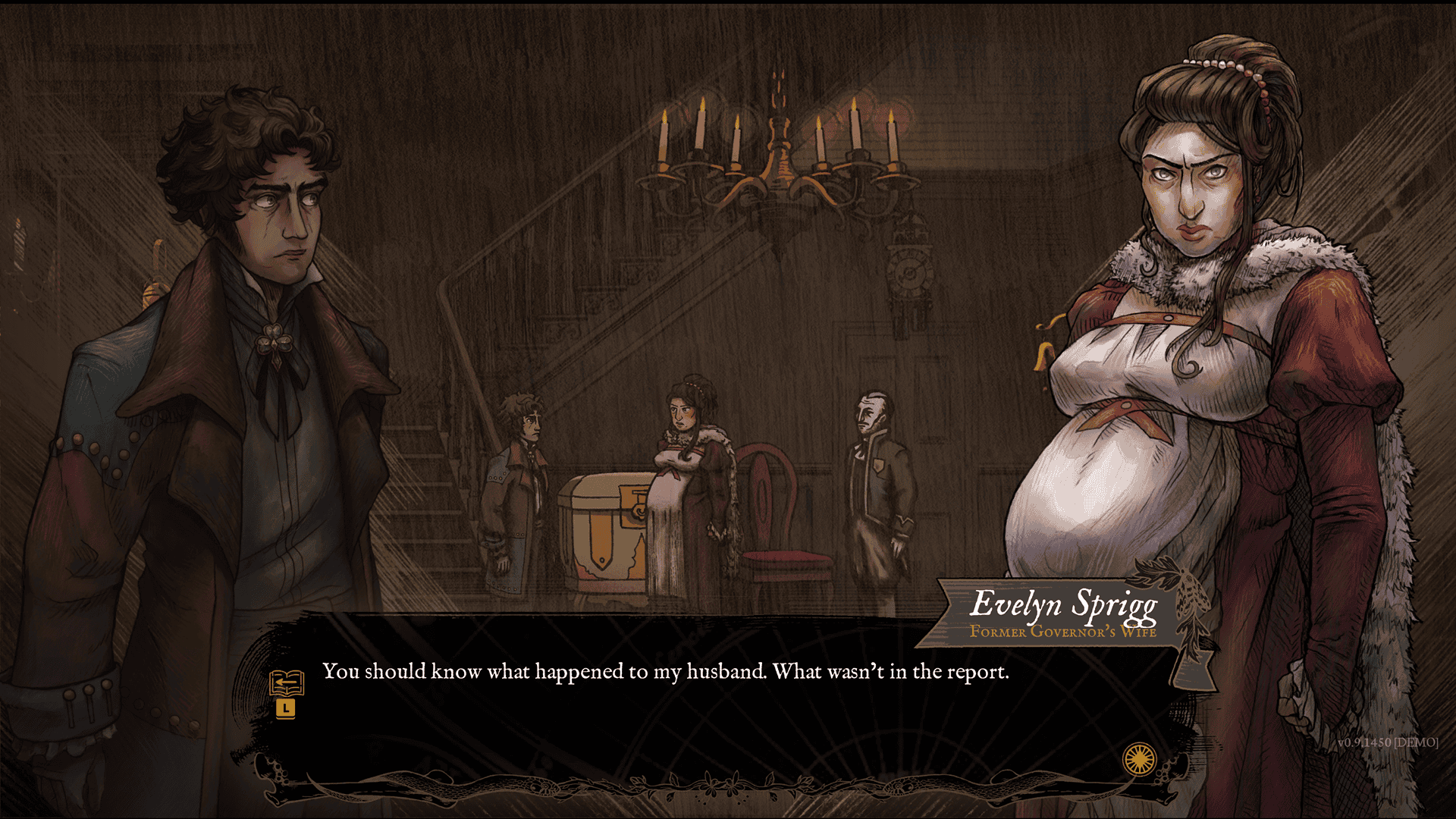
The downside to Curse of Resthaven is that the answer to the consequences of not finishing within the time constraints is, well, nothing. The player has the ability to do as many runs as needed to solve the mystery. It’s not a major flaw, but it does serve as an example of how intentional the player needs to be, or doesn’t need to, with the game’s mechanics. After completing a few runs I realized that outside of the compelling story, I didn’t really need to focus too much on perfecting the town’s income or the dangerous expeditions.
Let me break this down. Outside of the clues, there are two key areas the player will manage. The first is the town’s merchants and the incoming trades, and the second is expeditions, which allow Ambrose to explore the island. I’ll start with the first. Trading in Resthaven is the main way to increase the town’s monetary gains, and to trade Ambrose will need to upgrade the various merchant establishments. These range from a weapon factory to the local food market, and even a hidden spot for illegal goods. The more you upgrade, the more goods Ambrose will have to trade, and the more money you’ll have to upgrade your buildings. It’s a symbiotic system, but in practice it’s extremely simple. Traders, on the other hand, have preferences that Ambrose can uncover through continuously positive deals. When trading, Ambrose can haggle for a better price. Go too far, and the merchants will deny the trade and leave the island empty-handed.
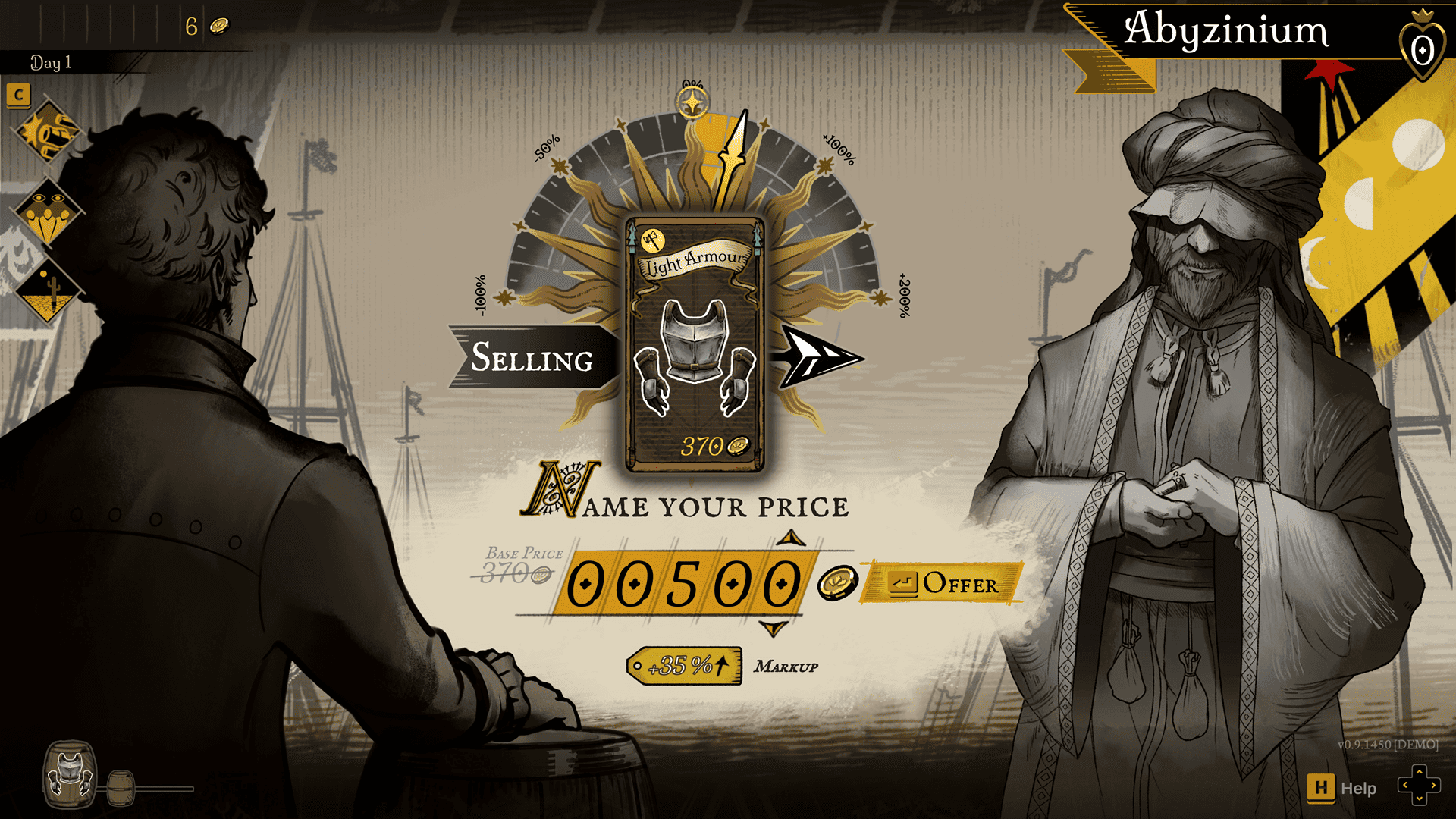
This all sounds well and good, but after a few runs, I realized I didn’t need to pay attention to their preferences, I didn’t need to offer aggressive trades, and I didn’t need to spend too much time thinking about what item to trade. At the end of the day, all I needed to do was trade the most valuable goods, which are simply shown by the price in the trade menu. If I kept doing that, money would keep coming in, and I would keep upgrading the town. It was as simple as that.
Expeditions were similar. These events have Ambrose recruit and send out members of the town to investigate strange events on the island. Every event acquires a specific character trait to complete. Initially, there is ambiguity about what this trait is, but the player can spend money to unlock the ability to see what specific trait is needed for each expedition. Since money is not hard to come by, the secrecy of each trait didn’t really matter. I could buy my way through and continue to have successful expeditions each day.
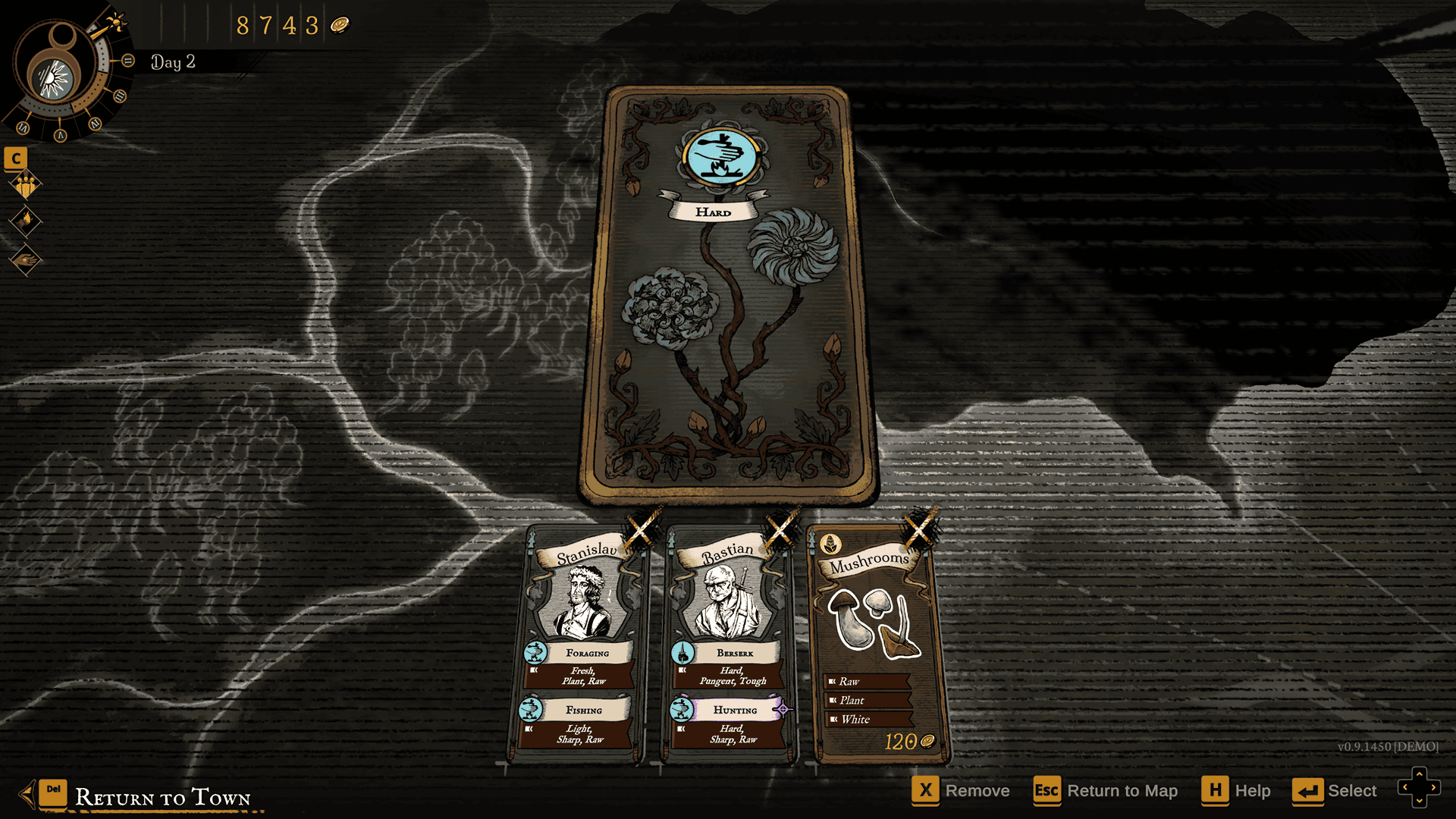
My point is that the mechanics may present as complex, but in reality they are easy and frictionless to deal with. So much so that they downplay their importance, and ultimately put the value of Curse of Resthaven solely on the investigation and its characters. The slight imbalance in the game’s economy didn’t sour my overall experience, but it is what holds back Hilltop Studios’ second game from being truly amazing.
To loop back to my point on narrative, Curse of Resthaven is extremely well written and has exceptional voice acting. The game mechanics might be simple, but the story meticulously builds upon itself, casting a thicker veil over what is truly happening, using every clue as a method to amp up the tension, until after weeks of investigation, the player finally discovers the truth. Or do they? Every clue points to a different conclusion, until a new lead contradicts the last, and a new citizen becomes a threat to Ambrose’s ambitions.
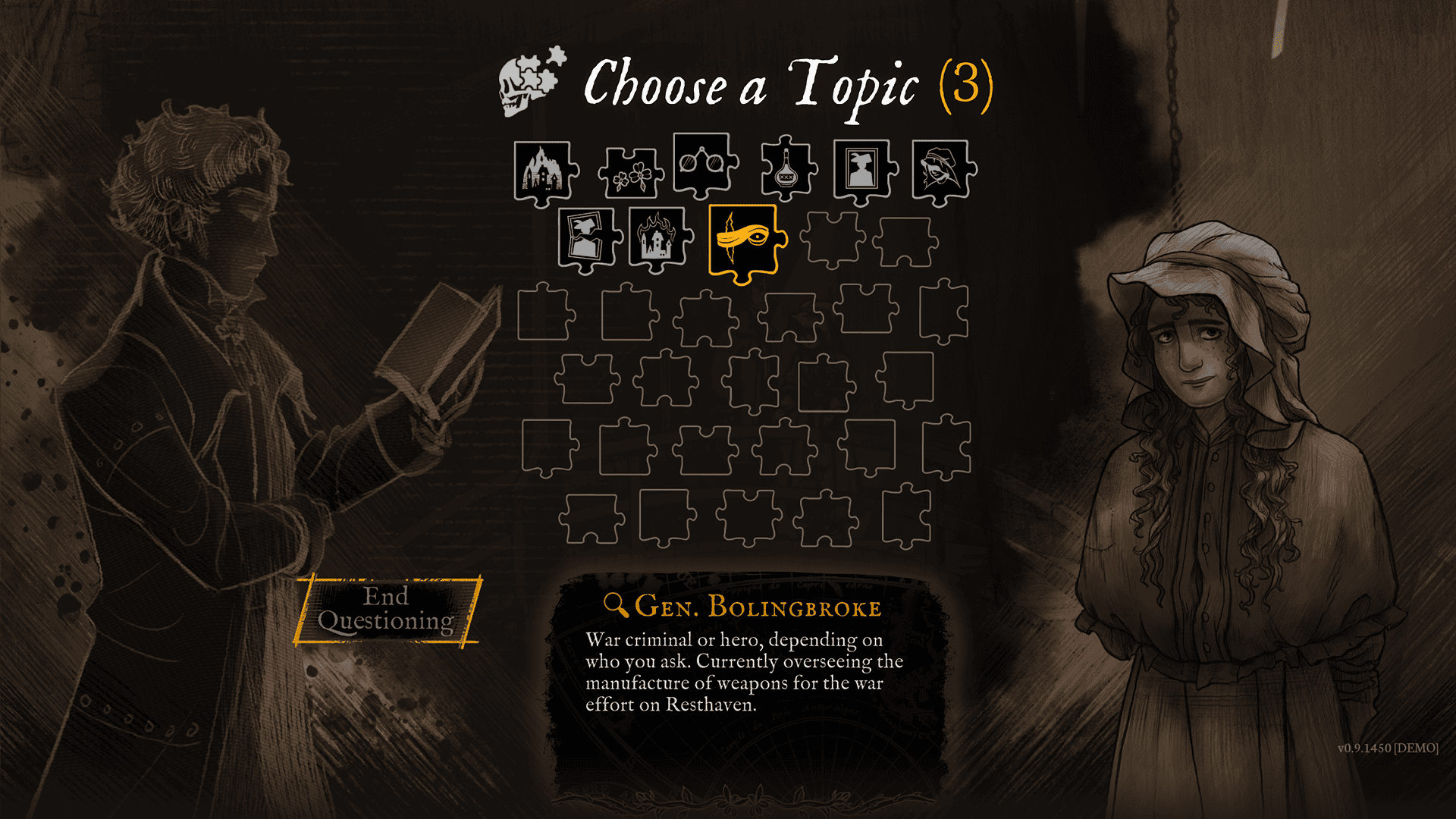
The narrative is the reason to play Curse of Resthaven. In a year’s time, I won’t forget the secrets I learned about the estranged doctor and her experiments. I won’t forget General Bolingbroke’s hard exterior, and learning of his habits of confessing to the priest on their nightly walks by the water of his dubious actions as a war general, or Adam and his doomed young love story, or the hermit who lived on the peak of Resthaven’s crest and the horrific sacrifice of his family. The tension of a failed run might disappear by the third or fourth week, but the tension of what could happen to Ambrose, the island, and his niece takes its place. There’s a Lovecraftian aesthetic to the island’s unknowns. There are grotesque and godless stories to discover, tortured souls and lost loved ones to find, and an art direction that helps solidify the game’s identity. By the end, I wasn’t focused on the core mechanics; I was engrossed in the investigation and determined to figure out what in the world was going on at Resthaven. The best part is that in true roguelite fashion, you can’t figure out the true ending with one successful run. You’ll need to stay patient, learn more, and continuously piece together all leads to understand the real conclusion of Resthaven.
I have to give another strong shoutout to the game’s art and voice acting. Both work hand in hand to create an immersive and bespoke world. Every time I stumbled upon another plagued human, or a mysterious lamb alone atop a stoned mountain, I was genuinely on edge because of the art direction. The team specifically uses greyscale during expedition cutscenes that help emphasize the preternatural nature of Resthaven. The voice acting, on the other hand, really defines who these characters are. The writing is great, but the voice actors bring every moment to life.
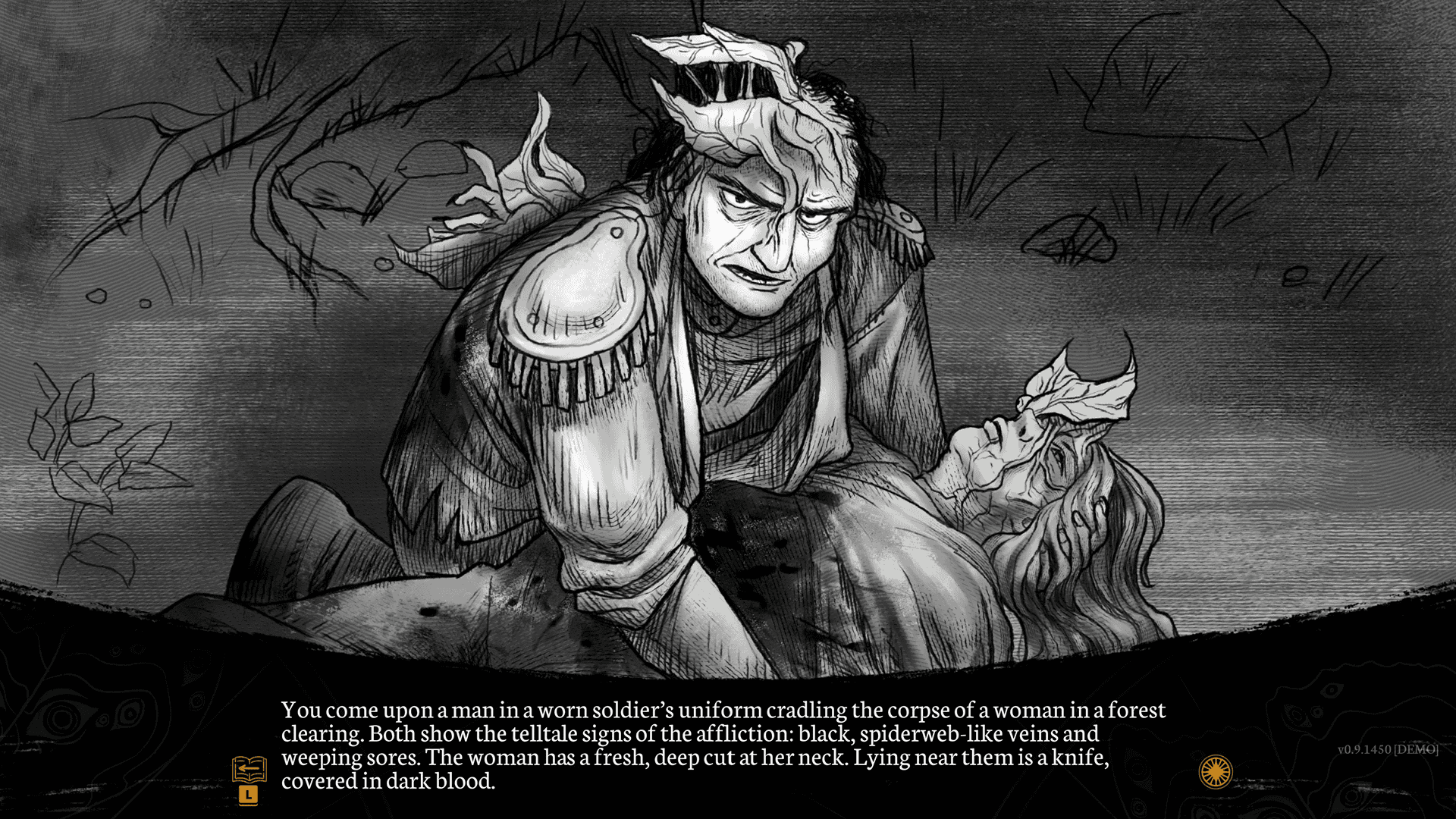
If you are a player who loves games for their story, for rich and developed characters, Curse of Resthaven is an easy recommendation. Even if you are a player who prefers roguelites with deep mechanics, I’d still encourage you to check out the game. Hilltop Studios has crafted an exceptional and horrific tale, and the mystery of the island is well worth the tribulations and simple mechanics to find out the true ending.
Daniel reviewed Curse of Resthaven on PC with a provided review code. This review is based on the version of the game that was available at the time of writing, and our score will not be changed.
- Score
- 7/10 SOLID - GAMEOBSERVER RECOMMENDS
- Summary
-
Daniel Says: "While Curse of Resthaven’s mechanics are simple, its compelling and harrowing story of Resthaven’s new governor picks up the slack. Every clue builds upon the last, until Ambrose has to accept the haunting truth of the island, its strange residents, and his lost niece."
- More
- GameObserver's Review Policy



 ObserverCrew Picks
 bserver
 bserver