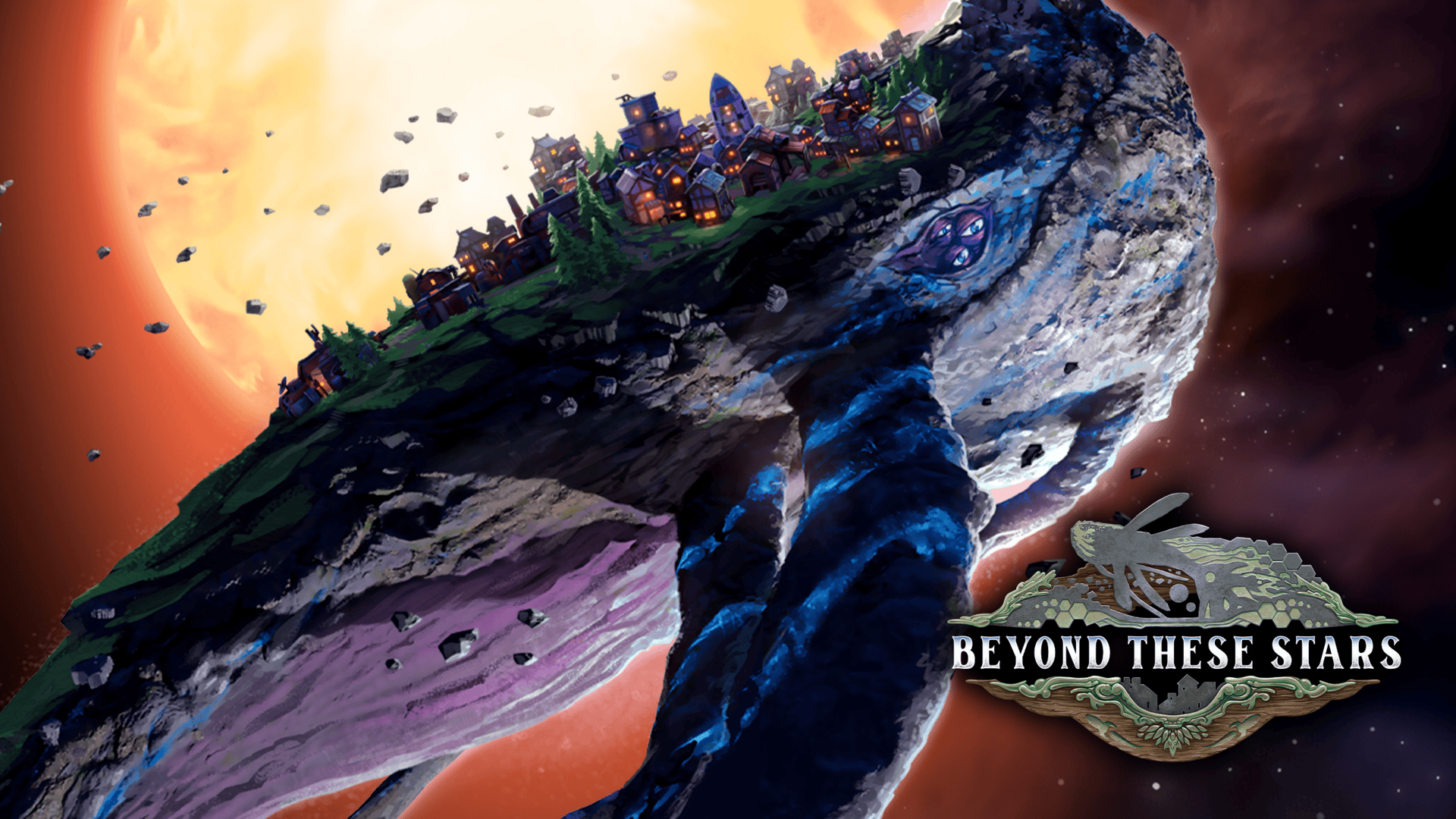
In Beyond These Stars, humanity has finally become the space-faring civilization that it has always desired to be—it just happens to be through an unconventional, cetacean method. The main crew in this colony simulator rides on the back of a world-devouring space whale. A sentient creature with thoughts, feelings, dead fauna and dried land, and sometimes a knack for aggressively teleporting through space. It’s a unique premise. An approach that grabbed my attention from the absurdity alone. But the most brilliant thing about Beyond These Stars is not its wacky setup, or even its intense resource chains that span the entire galaxy; it’s that every detail of the game hinges on a single thematic idea: what’s the true cost of progression?
Beyond These Stars is a resource management and colony simulation game that puts the player in charge of the Peeps, the humanlike civilization that Balancing Monkey Games introduced in their first release, Before We Leave. The major difference between the two games is the scale and the Peeps’ relationship to the aquatic, life-consuming creatures. In Before We Leave, players had to appease or avoid the whales to keep their colony safe. In Beyond These Stars, the Peeps have created a settlement on the back of Kewa, a friendly whale who has lost their memory, and use the creature as a medium to explore the ancient galaxy and its lost civilizations.
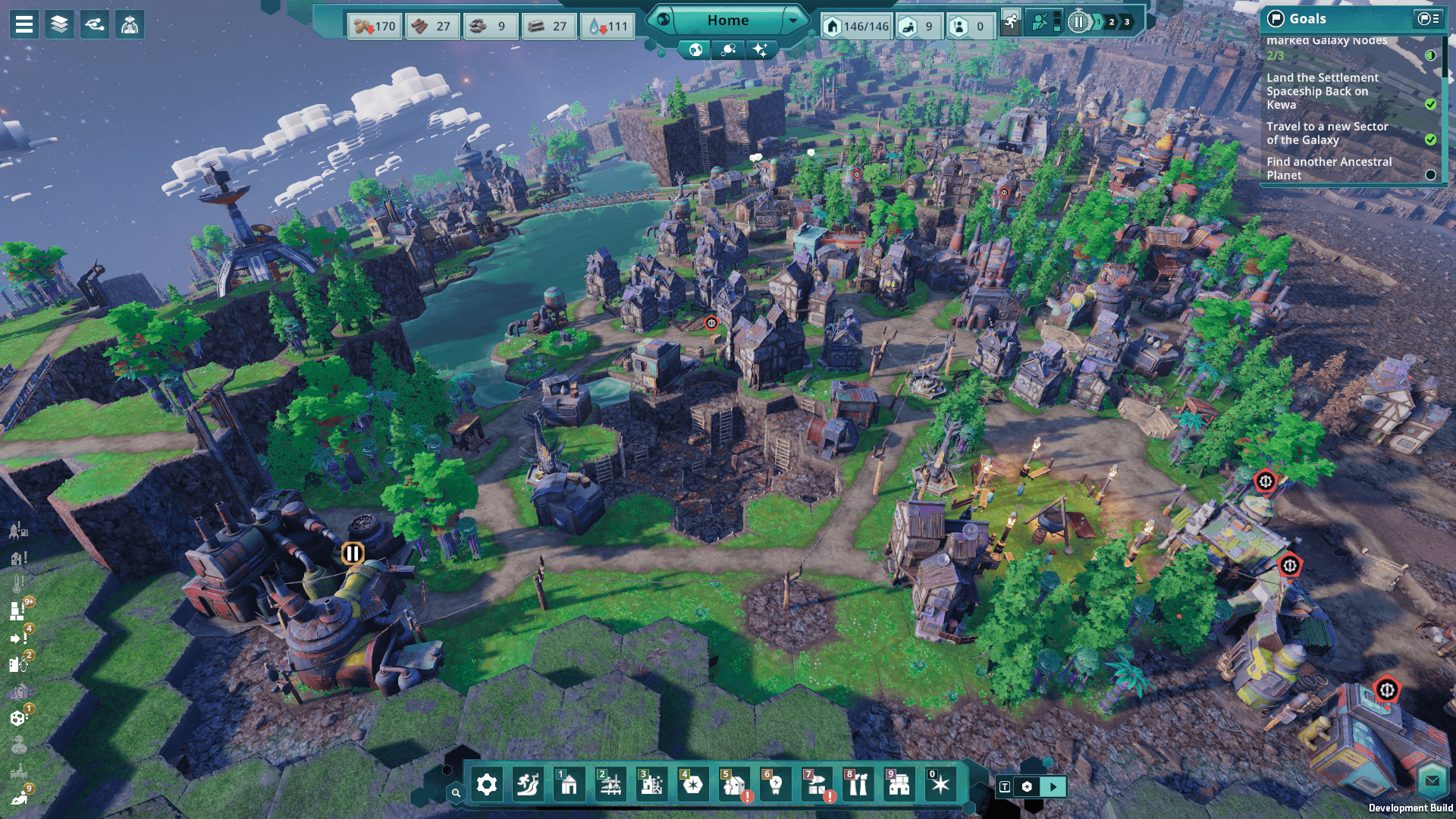
In the early hours, players will have to establish their initial colony as they start to utilize the resources on Kewa’s back. You need homes, water pumps, and farms to keep your Peeps alive and safe. And to do that you need wood, stone, and iron ore—a mine to extract the rocks, a smelter to turn the iron ore into molten metal, a cleaner to deal with the soot produced from the fiery pit of the smelter, and electricity to keep the power lines charging the grid. From the get-go, the chain of command is established. Every resource has a relationship with another, every building produces a vital product, and every product comes with a byproduct. Very quickly the web of resources expands, and the player will come to realize that progressing their civilization comes with severe environmental downsides if not handled properly.
Beyond These Stars reinforces its central theme through a couple of key mechanics. The two clearest examples are the production of byproducts and managing Kewa’s happiness. Almost every building, whether it be the smelter, the cement factory, or the more advanced blast mine, produces a secondary product alongside pollution. For example, using the sawmill to create wood planks also produces wood waste. If the sawmill fills up with wood waste, it can no longer operate, resulting in a roadblock in the chain of resources. Synergy exists between all buildings and if one goes down, it’s most likely the case that the rest will ultimately halt in their progress. This not only slows down the production of new technology and buildings, but can also cost the lives of your Peeps and lead to the collapse of your colonies.
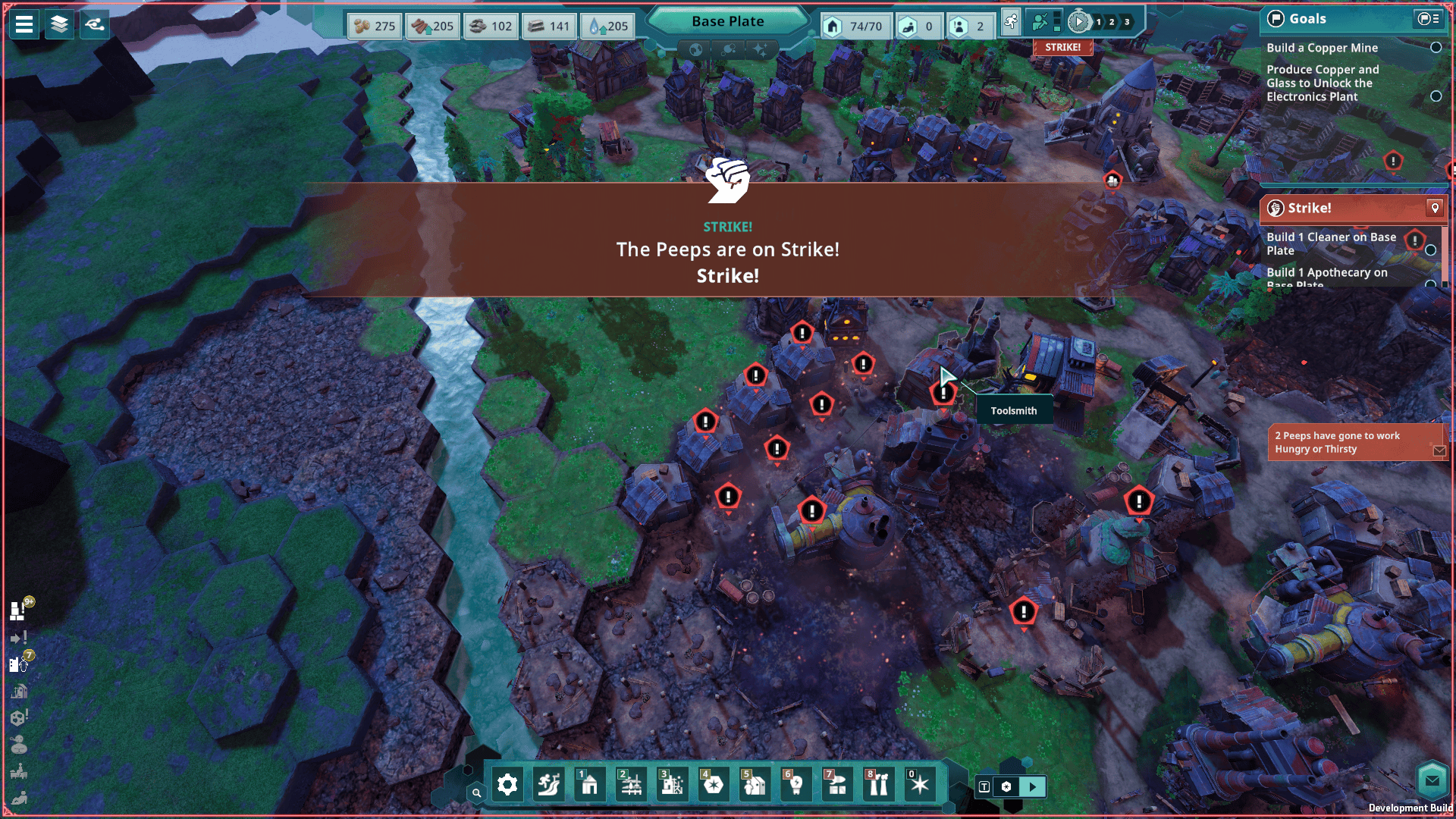
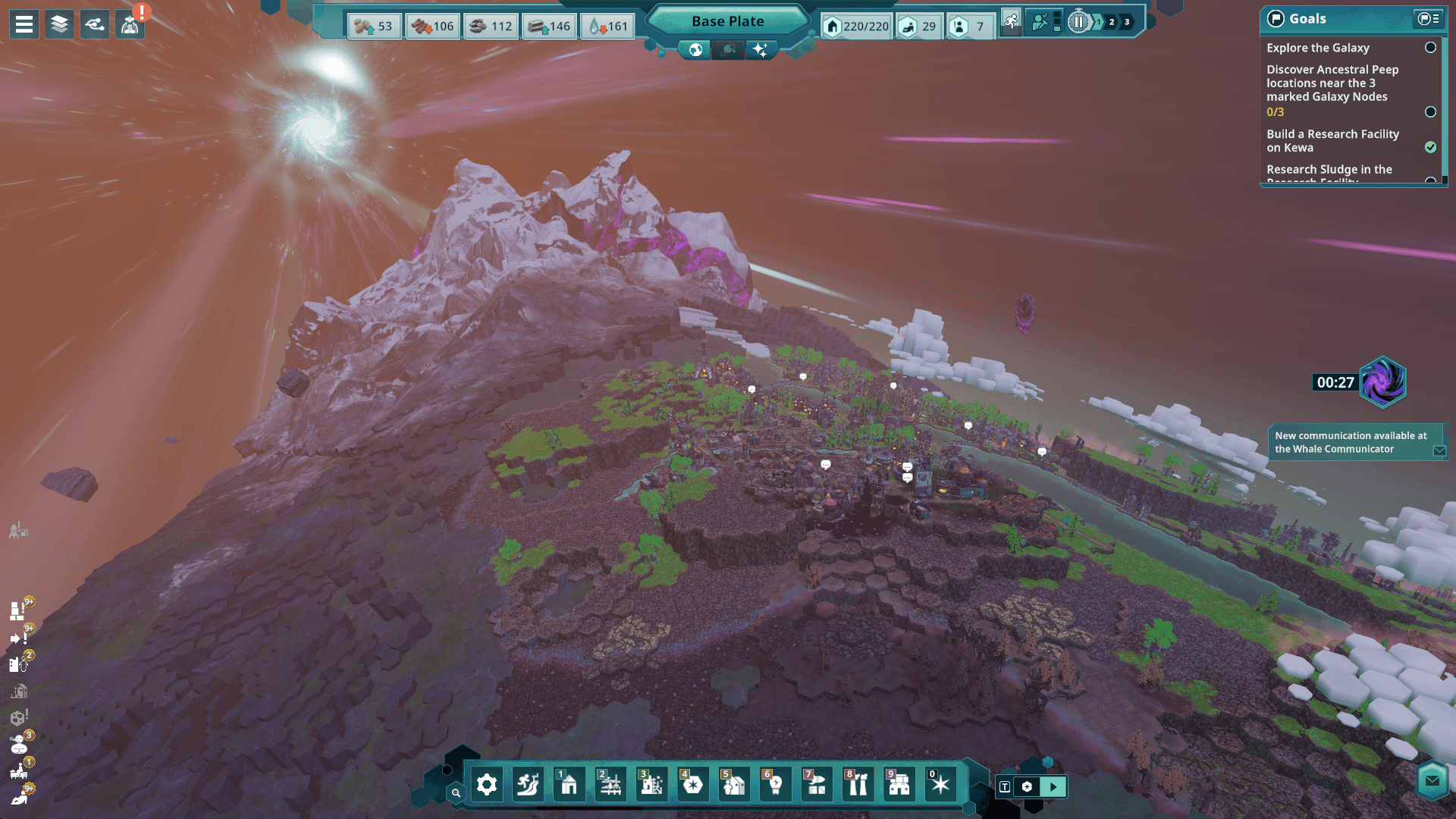
Pollution and toxic waste, typically produced by industrial buildings, harm Kewa’s happiness which can have its own unique consequences. If Kewa becomes too unhappy or uncomfortable, they can teleport across the galaxy without your input, resulting in asteroids destroying buildings and extreme temperatures damaging crops. This creates a symbiotic relationship between the player’s decisions and Kewa’s contentment. Can I produce enough electricity to develop the new research center without harming the whale’s ecosystem? Can I repurpose the soot created from my smelter to power my cleaners and avoid toxic outcomes? The dynamic between the player’s buildings, resources, and Kewa creates a highly engaging game loop. One that rewards strategic and attentive decisions. There’s not a moment where the player can sit back and let their colonies operate idly. The resource chain can always be improved and the threat of pollution is always looming.
The main vehicle to influence Kewa’s happiness, and to help return the creature’s memories, is through terraforming. Terraforming allows the colony to alter the whale’s main plate, where the first colony is established, to expand waterways, use compost to help grow fertile land, and plant seeds to cultivate thriving forests. Not only does this influence the colony’s relationship with Kewa, but it also increases the output of oxygen and habitable land on the whale’s back. At the surface level, terraforming is a fun way to manage the colony’s available landscape, but digging a little deeper, it’s another system entwined with the game’s themes and a great example of the cohesion and importance of managing all linked mechanics.
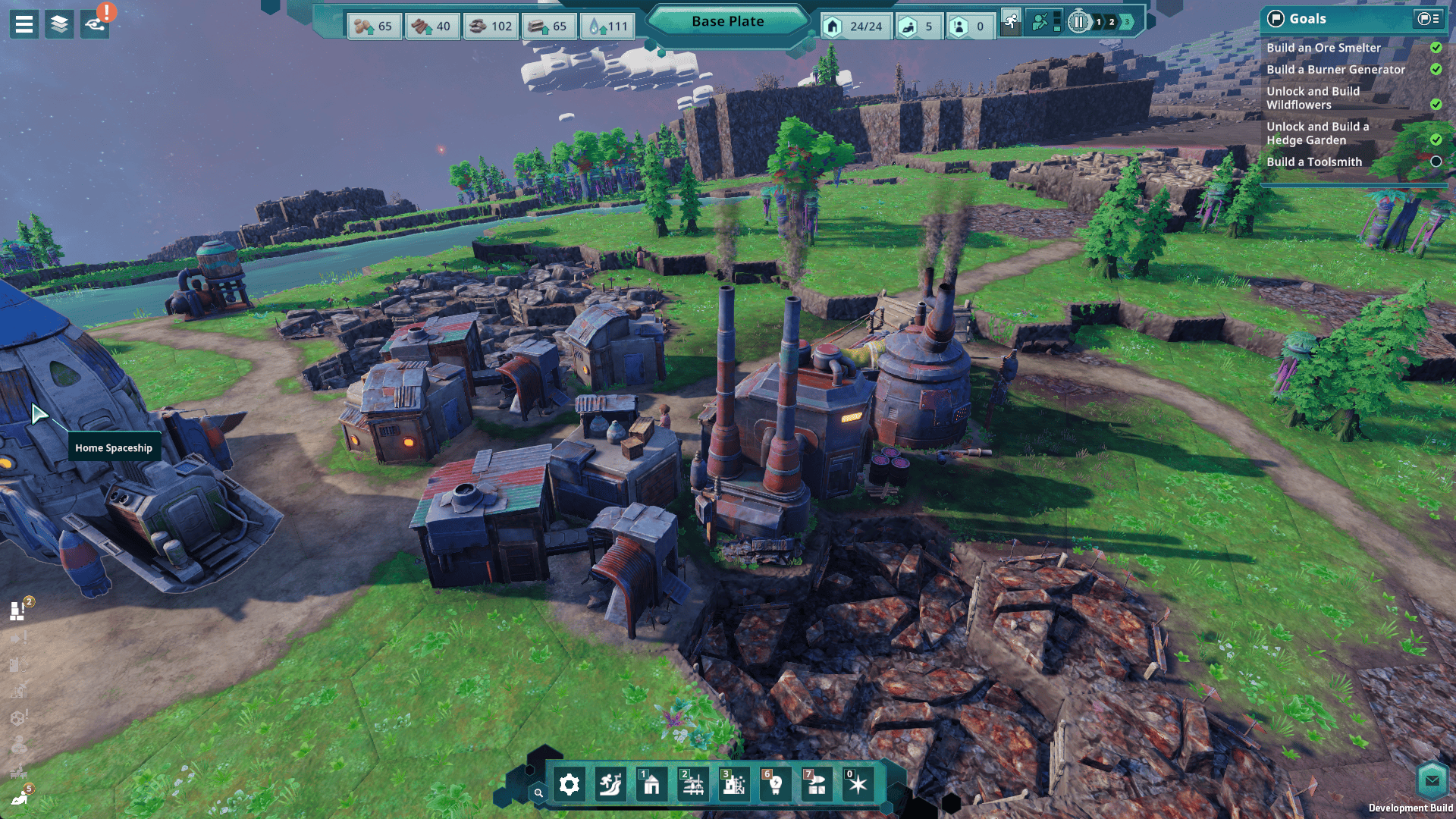
Everything I’ve described so far is resources, buildings, and capabilities the player will unlock in the first few hours. The scale of progression and management is massive in Beyond These Stars. I can not overstate how impressive it is that Balancing Monkey Games was able to create as many interconnected resources and synergistic systems as they have. It’s truly a feat and a great example of how to combine narrative and system design to produce a holistic product.
Kewa is where the colony simulation thrives. Space is where the exponential growth of resource management occurs. Players will settle on multiple planets, discover aliens and trade systems, establish spaceports and scout ships, and ultimately create highly interconnected shipping routes. Resources are limited, and expansion is needed for survival. This creates a strong contrast with the need to manage Kewa’s health and the safe growth of your civilization. The game urges you to be careful, knowing that at some point, you’ll need to get aggressive, explore other planets, and maybe cause harm along the way.
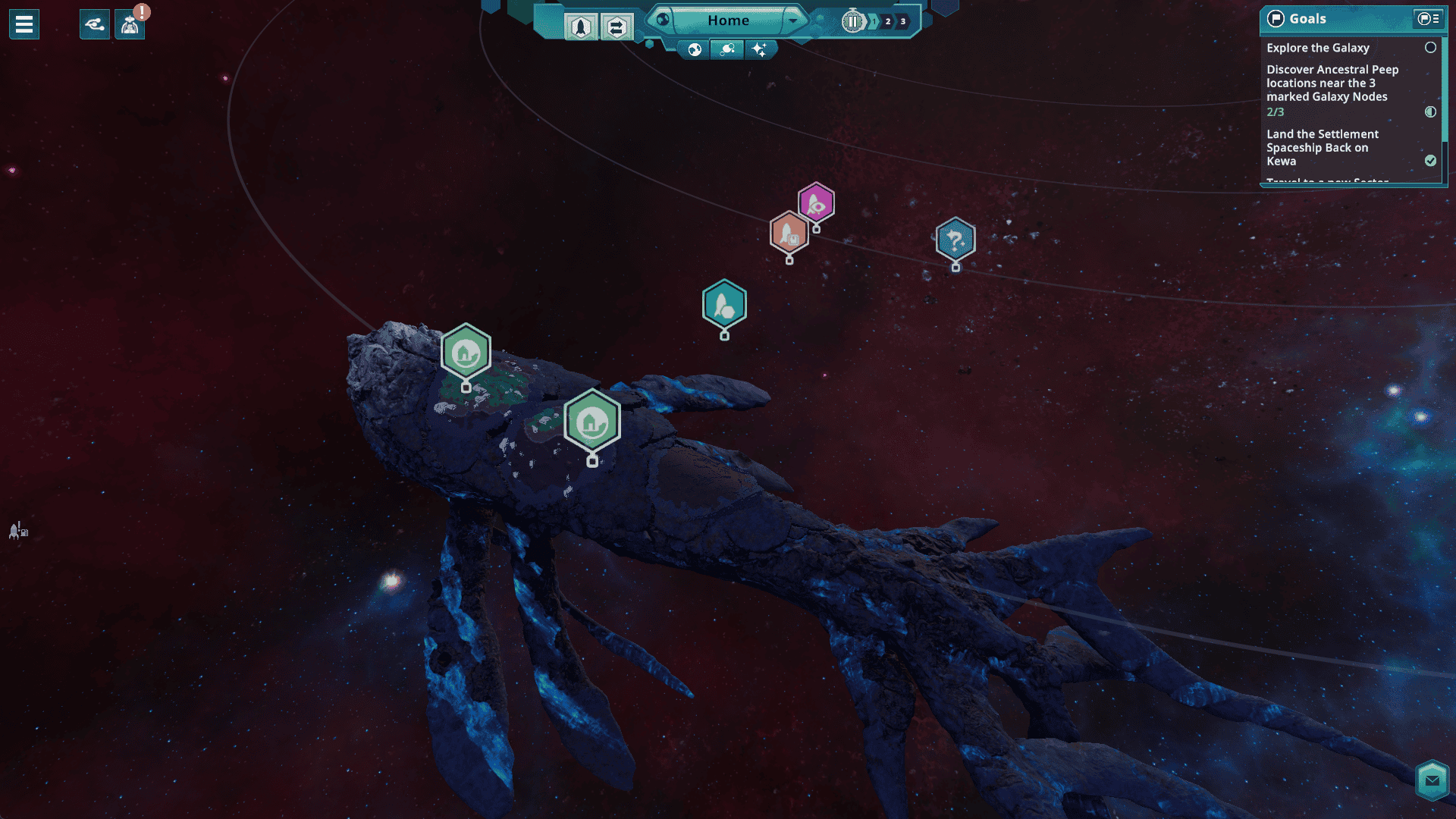
The game systems are not the only part to acknowledge the conundrum of survival and progression. There is a narrative backbone, a crew of several important members of the space colony, missions to be accomplished, and even occasional story decisions to make. With every narrative beat, you’ll have the biologist in the background arguing with another hard-headed scientist on how to approach a situation or the crew celebrating a major success. The characters themselves make the journey feel a little more than just a colony simulation. They allow the stakes to feel real as they start to acknowledge the severity of their decisions and the larger impact it could have on Kewa. Despite their simplicity, the static hand-drawn character models and brief scenes of dialogue anchored the themes of the entire experience.
With all that praise, Beyond These Stars is not entirely frictionless. The main example of this is the byproducts. It seems to be a very intentional decision to have waste and byproducts build up in response to the colony’s expansion. As stated before, it serves as a great thematic tie-in, but in practice that does mean byproducts will accumulate in large and aggressive amounts. At first, the player will not have the technology or the understanding of how to utilize the resources, which results in a ton of initial warehouses to store the products. From a balance perspective, that can feel a bit tedious at first. However, as the player unlocks new buildings throughout the game’s core skill tree, and as they build intricate trading routes, this issue resolves itself.
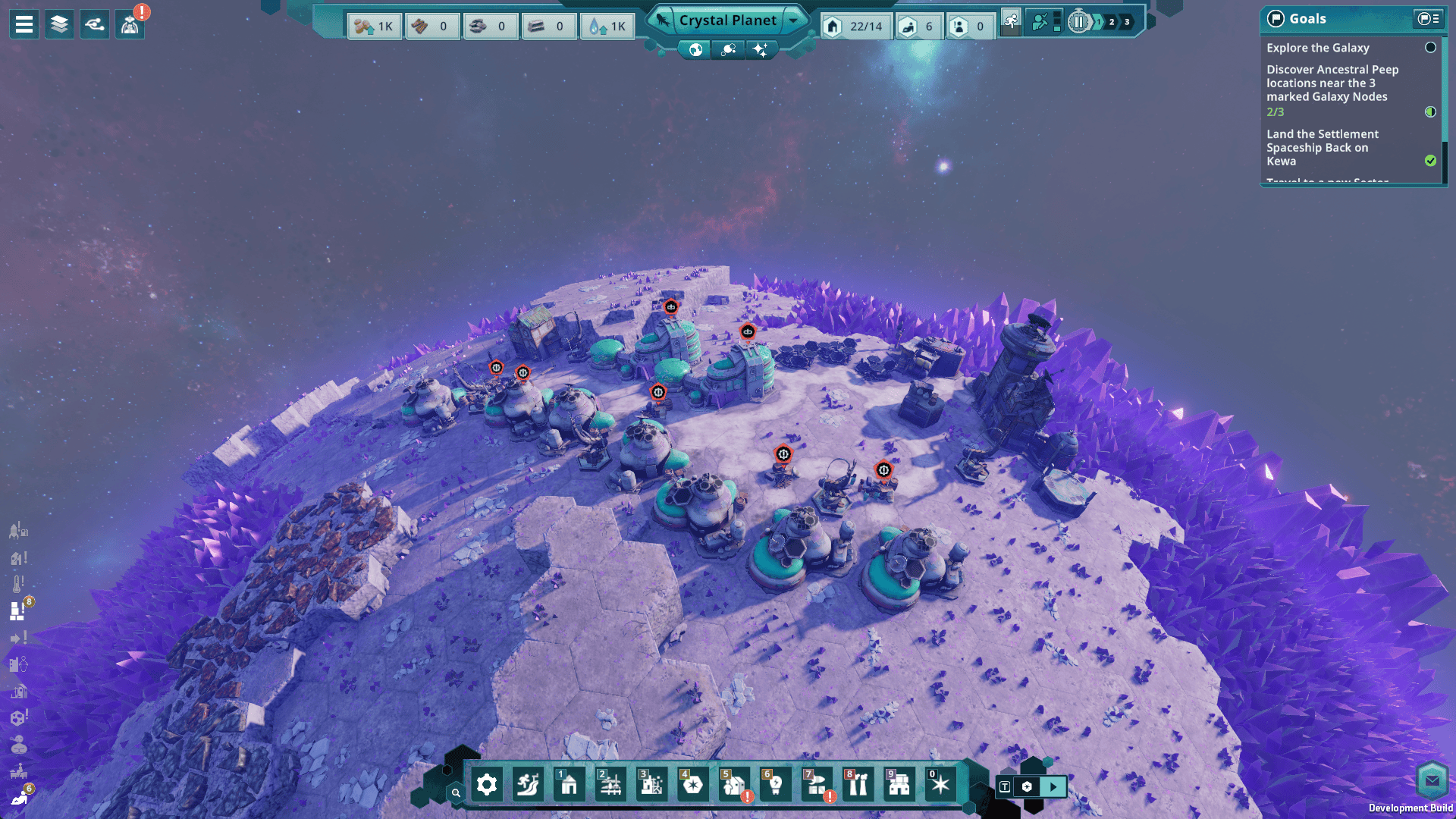
But as stated, this all seems to be intentional. Beyond These Stars wants you to struggle expanding, wants to emulate the actual feeling of progression, and the consequences of doing so too early. It is by no means an easy task to manage the Peep’s galactic development, and towards the end of the game, the sheer number of variables that need to be tracked can be overwhelming. It’s a resource simulation for the hardcore, but I respect it for that.
The only true negative of my experience was the bugs. On four different occasions my conversations with Kewa froze, which prevented me from advancing. I’m yet to see them fully resolved. The only workaround I found was to reload an old save and progress to another part of the galaxy first. Luckily, I’m a save freak and always have extra files, but this could be a huge pain if someone doesn’t have a backup save to go to. Despite wanting to give Beyond These Stars a higher score, it’s because of this that I can’t.
There are game modes outside of the story that players can also explore. One is a normal sandbox mode that essentially holds all of the same mechanics outside of the narrative beats. Another is a scenario mode that presents specific timed or trade-based challenges. Both are nice options for players who prefer to skip the story or want additional content once completing the main game. I’d argue that the narrative is an essential component to Beyond These Stars, but player flexibility is always appreciated.
Beyond These Stars is a thematically rich colony and resource simulation that masterfully ties its narrative themes into every one of its systems. Whether it’s producing electricity, managing the flow of water, or colonizing a new planet, it requires the player to be aware of the consequences of their actions. Despite its bugs, it’s an exceptional simulation, and its development team clearly has the potential to make its mark on the genre.
Daniel reviewed Beyond These Stars on PC with a provided review code. This review is based on the version of the game that was available at the time of writing, and our score will not be changed.
- Score
- 8/10 EXCELLENT - GAMEOBSERVER RECOMMENDS
- Summary
-
Daniel says: Beyond These Stars is an excellent colony and resource management simulation with deeply rooted themes and interconnected systems that shine in almost every moment. It's a great example of how narrative and system design can work together to create a holistic and rich experience.
- More
- GameObserver's Review Policy




 ObserverCrew Picks
 bserver
 bserver