Space exploration is one of our major dreams as a species, and video games have been a great medium to imagine what this dream could look like. From classic RPGs to sandbox automation games, there are a lot of ways to explore and play in these sci-fi universes. One of the more popular genres in this niche is survival. The idea of surviving on an alien planet just works so well both for the fantasy and for the core gameplay of the genre.
Honeycomb: The World Beyond is a sci-fi survival adventure game developed by Forzen Way and published by Snail Games USA. The game focuses on exploring an alien planet with bustling natural life, finding your footing and establishing a base of operations, and conducting research that can save Earth from environmental collapse.
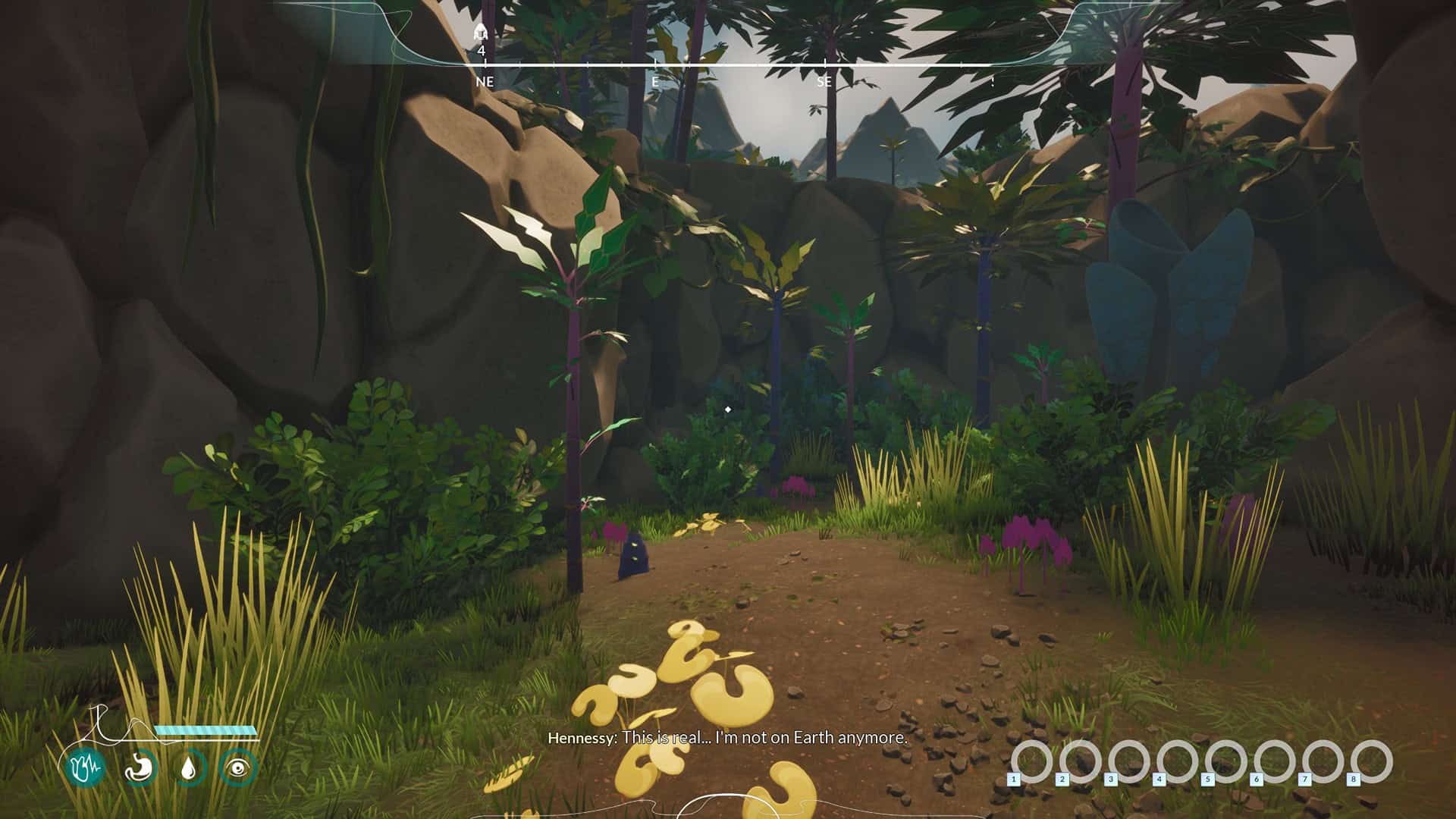
Honeycomb takes place in a future where Earth has been all but destroyed by environmental devastation. Humanity survives in isolated colonies in orbit, and a corporation trains scientists to travel to habitable planets to study local life and undo the damage done to Earth. We, the protagonist, are one of these scientists, Hennessy. We land on a strange planet and have to find the basic necessities to survive, and then go around discovering more about the surrounding flora and fauna.
The story is a core part of Honeycomb. This is not a sandbox survival game, so don’t expect the freedom that some other games in the genre offer. Honeycomb prioritizes a more prominent narrative structure, and you have clearer goals and destinations. The game is still open-world, and you are free to explore, but the progression is in the interest of the overall narrative goals.
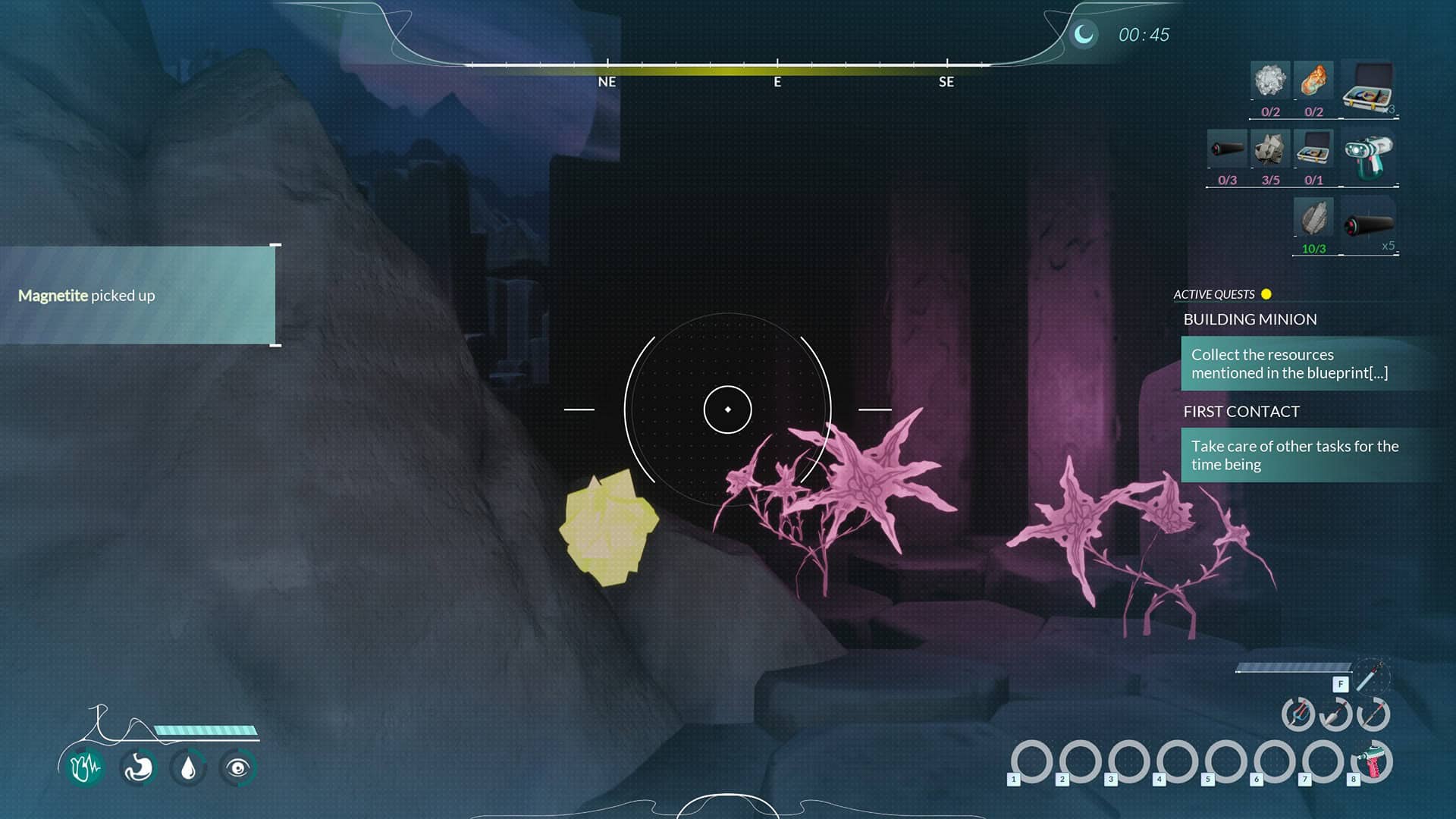
Exploration is the main draw of Honeycomb. Coming upon strange new plants or animals is satisfying, both in the sense of the game’s progression and their visual design. I loved discovering a new species, learning their behaviors and patterns, and sometimes even building trust and interacting with them. There are also a lot of cute, strange creatures that we can pet.
However, the graphical fidelity also comes with some drawbacks, as I faced some FPS drops when running the game on the highest quality. I have a relatively high-end PC, so I thought I could crank up some settings, but I had to revert to the default configuration after a while.
Honeycomb has a very atmospheric and immersive sound design as well. The music and natural background noises complement the feeling of exploring a strange alien planet. The voice performances of Hennessy and the AI companion that guides her avoid the feeling of being too lost or alone, giving a more positive vibe to the game.
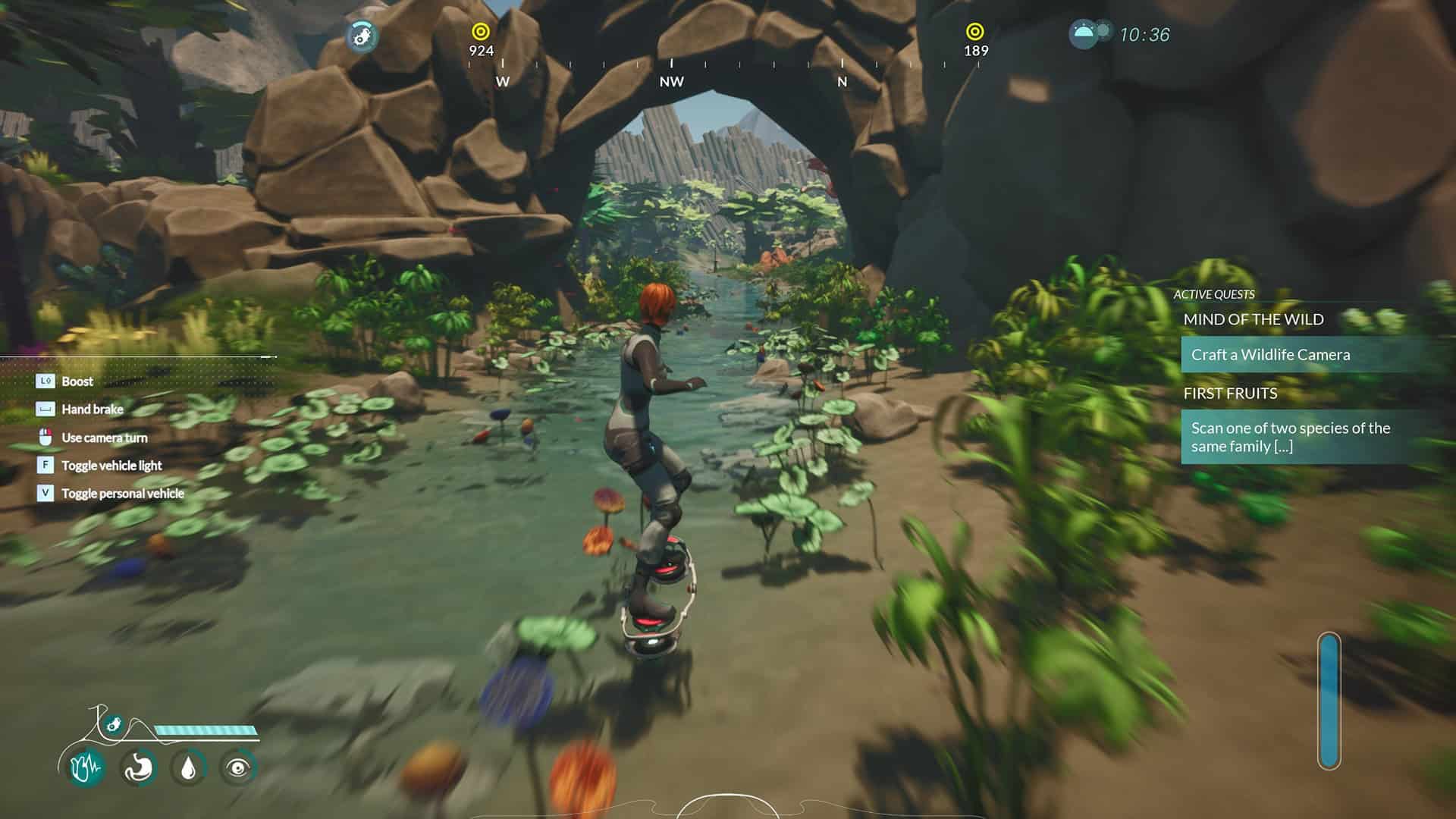
The main gameplay loop of Honeycomb is to explore and gather materials, unlock and build new technology, and then go back into the world to research the local wildlife using the new technology. The survival aspect of the game adds a layer of obstacles to this loop. You need clean water, nourishing food, a safe place to sleep, medicine to help with injuries, and devices to help with breathing the rather toxic air of the planet. It’s a long list of survival needs, and it is one of my main issues with the game.
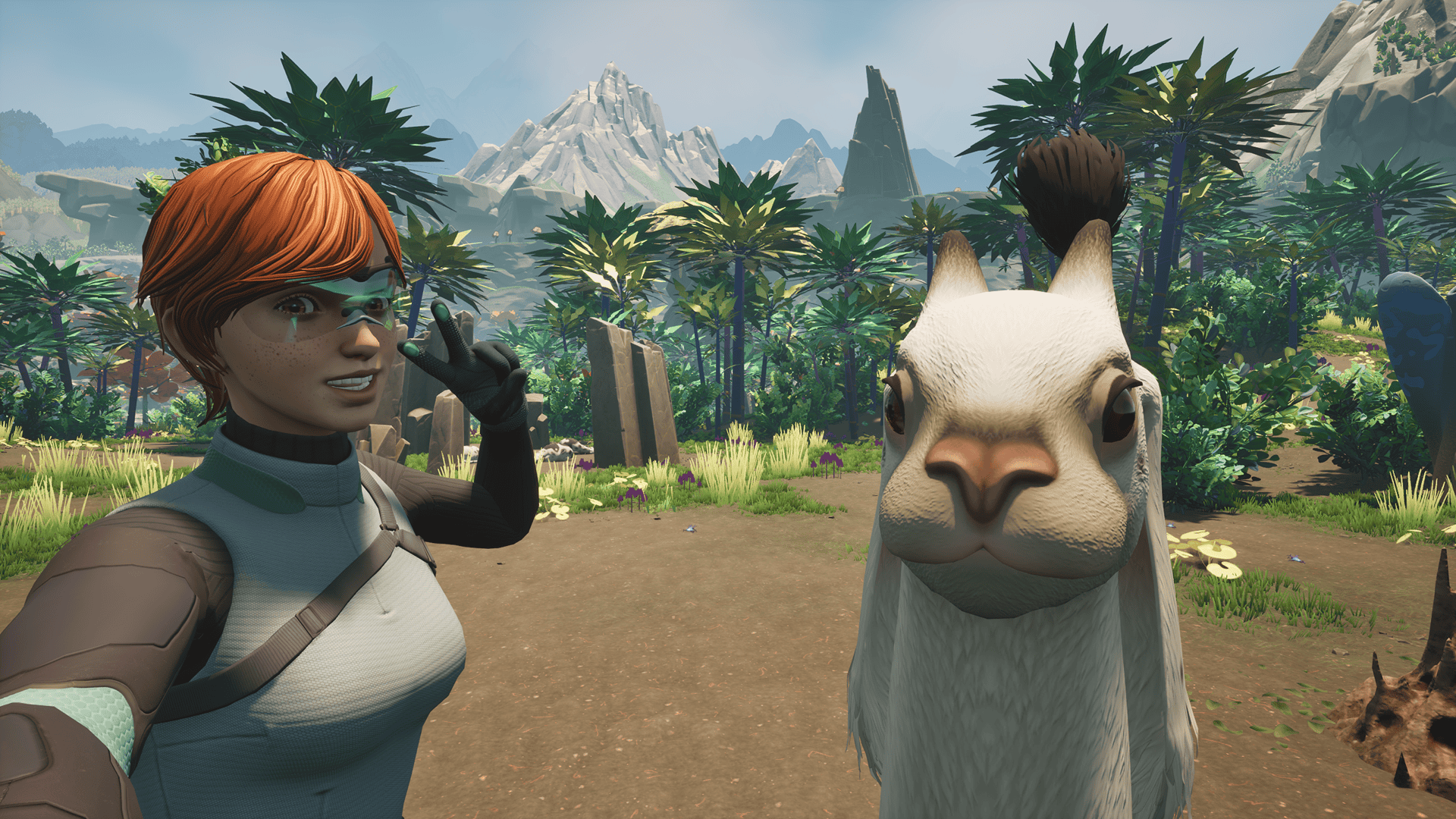
It makes sense for Honeycomb to have some survival mechanics; it fits the story, and some light survival elements can help the main gameplay experience, which, in my opinion, is exploration and interacting with the wildlife. But I felt the survival mechanics were too overtuned, taking away from the casual atmosphere of the game. The first hour can be really punishing before you establish a base and discover some basic crafts. But even after building water pumps and dispensers and having indoor farms, my basic needs still required the majority of my focus. The base-building mechanics look interesting, and there is some exciting potential to what you can do in the game, but navigating through the interface and using the system does feel a bit janky. Exploration is the best part of Honeycomb, but I couldn’t spend as much time as I wanted doing it due to the survival and crafting obstacles.
Honeycomb isn’t a long game. The world is relatively large, and there’s a lot to discover, but it’s not an endless sandbox survival. But the implementation of survival mechanics felt like they were there to pad out the timing and limit what I could do. I wanted to go explore and finish the next quest, but there was always something else on my mind; I don’t have enough food, I need to repair my tools, I have to go back to base and sleep, or I got attacked by an angry bird and don’t have bandages on me. These are all completely fine obstacles in a more hardcore survival experience, but I just don’t think it fits the vibe Honeycomb was going for. These elements are less punishing in the easier game modes, but I started my game on the second difficulty, which I assumed was the default, intended experience. The game doesn’t have the option to change the difficulty settings once you have already started, and I didn’t want to start over when I realized how punishing these aspects were.
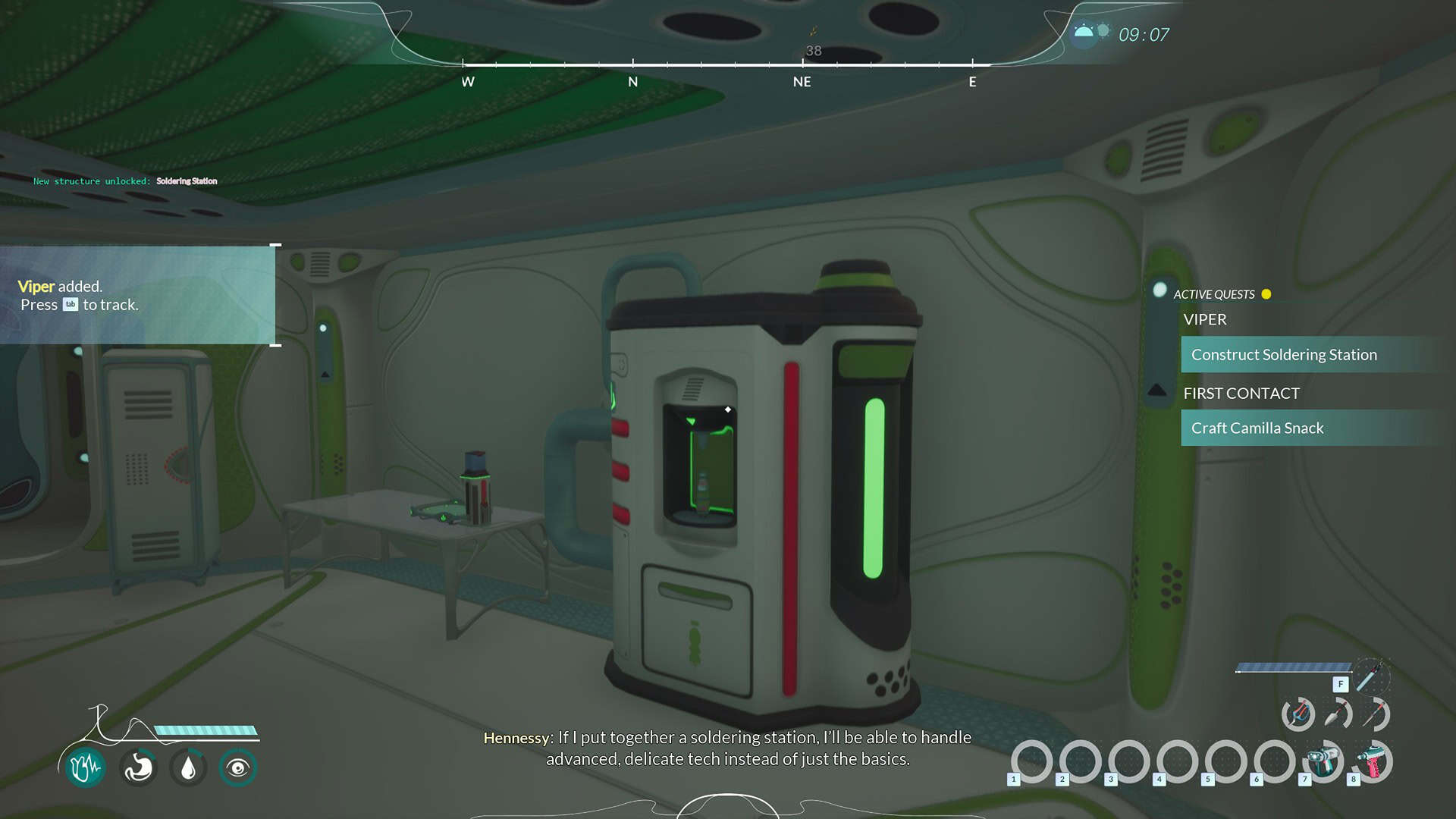
I enjoyed Honeycomb: The World Beyond despite the survival difficulty working against it. I know a lot of players won’t start on the easiest mode, so these issues might be more prominent for them. The fix is easy; just allow players to change the difficulty once they have started the game and have seen the survival mechanics in action. The developers have already pushed a few hotfixes, so I hope this issue can be solved as well. But in the meantime, if the atmosphere of Honeycomb is enticing to you and you want to try a shorter, more relaxing survival exploration game, start on the Scientist difficulty. Even as a veteran survival player, the second difficulty option took away from my experience of the game.
Nima reviewed Honeycomb: The World Beyond on PC with a provided review code. This review is based on the version of the game that was available at the time of writing, and our score will not be changed.
- Score
- 7/10 Solid - Nima Cautiosly Recommends
- Summary
-
Nima says: Honeycomb: The World Beyond is a survival exploration game with a large, gorgeous world to discover, and adorable creatures to interact with. It's a relatively short survival experience that focuses more on narrative and clear achievable goals. The survival mechanics acts as an obstacle, but are a bit too punishing in the default difficulty.
- More
- GameObserver's Review Policy




 ObserverCrew Picks
 bserver
 bserver