The beauty of an exceptionally executed bullet heaven is its ability to make the player feel in control, despite the on-screen chaos and passive shooting component. It can replace the agency of aiming a weapon with strategic positioning, power scaling and, in some instances, slotting the right ship part into your limited inventory to build a dynamic game loop. It can thread the needle between risk and reward, grueling difficulty and godlike strength. It’s a delicate dance. A dance with a ton of systems and fine-tuning needed to feel right. A dance that Ballast Games, a studio of only two developers, nailed on their first try despite a few technical rough edges.
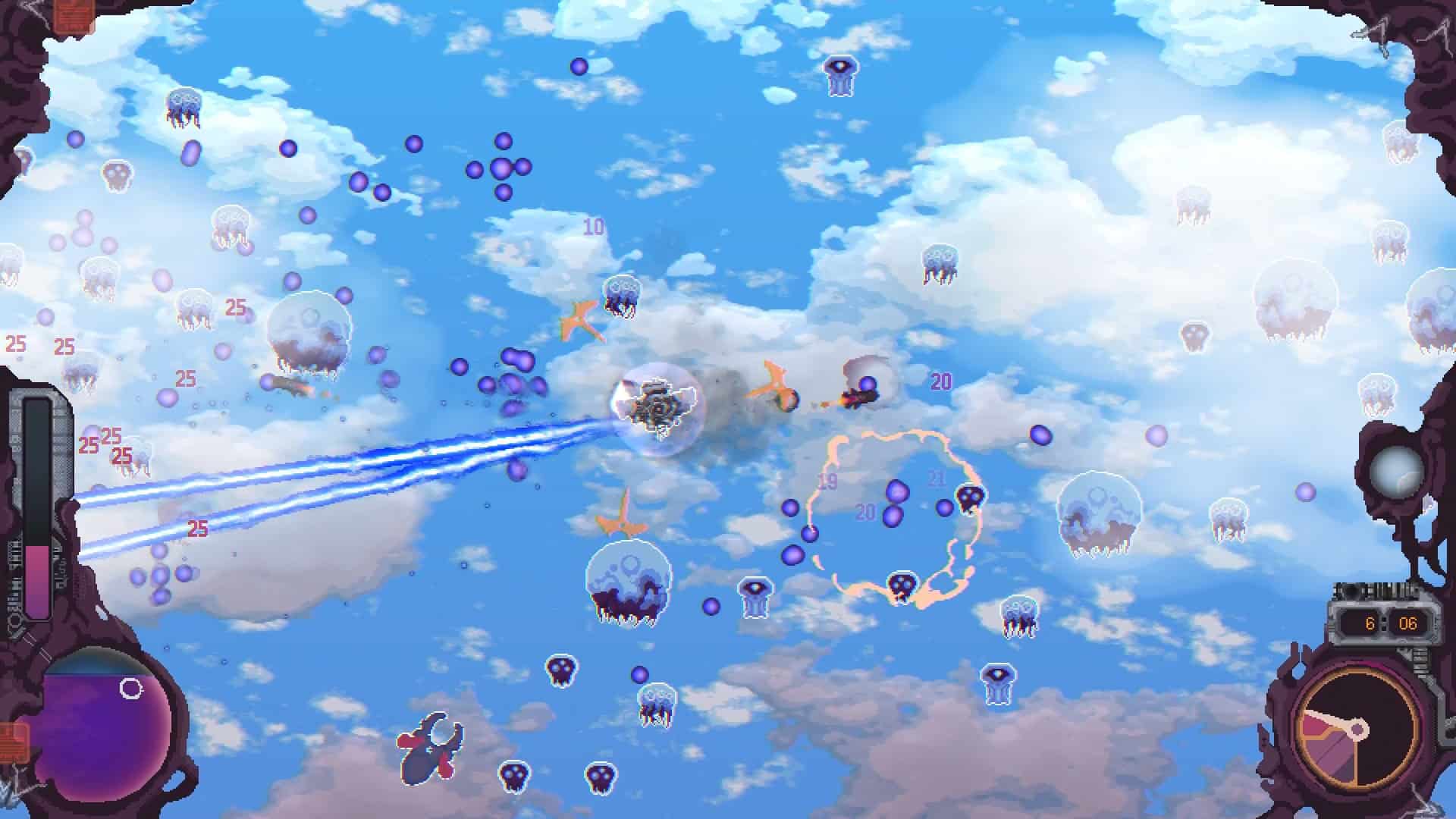
Cloudbreaker is a pixel-based bullet heaven roguelite that takes place in Haven—a large floating castle that relies on Bloil for its antigravity technology and food production. In recent centuries, the resource has grown scarce and society is on the brink of sinking to the ground. To ensure this mighty calamity is avoided, Haven has dispersed its Cloudbreakers to sift through layers of the atmosphere in search of a new Bloil Crystal while fighting off hordes of aquatic-inspired life forms.
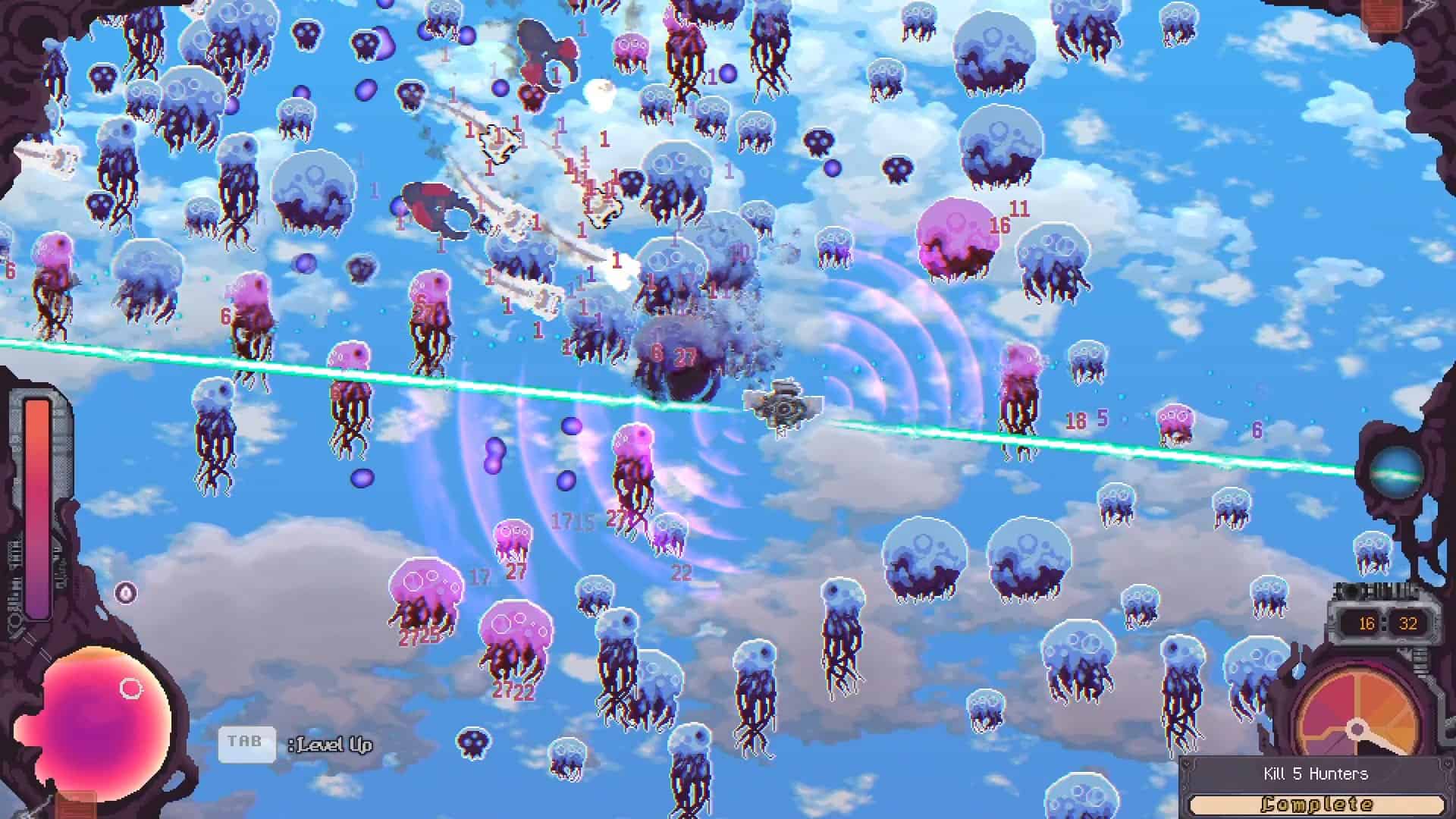
Cloudbreaker’s structure is very similar to many in the bullet heaven genre. It features three distinct maps, six unique airships, and a survival time limit of 20-minutes. The player will go up against increasingly difficult hordes of enemies as time progresses, and as they kill off more jellyfish and crazed mini-bosses, they will collect Bloil, which will allow them to level up their airships. Throughout each level, and about every six minutes, a formidable boss will appear. Conquer all three, reach the 20-minute time limit, and the player will successfully unlock the next map underneath Haven’s floating shadow.
Upon completing every map and unlocking every ship, there are two clear themes that set Cloudbreaker apart: player agency and risk versus reward. These are two ideas that can only coexist and find harmony through a large number of balanced systems.
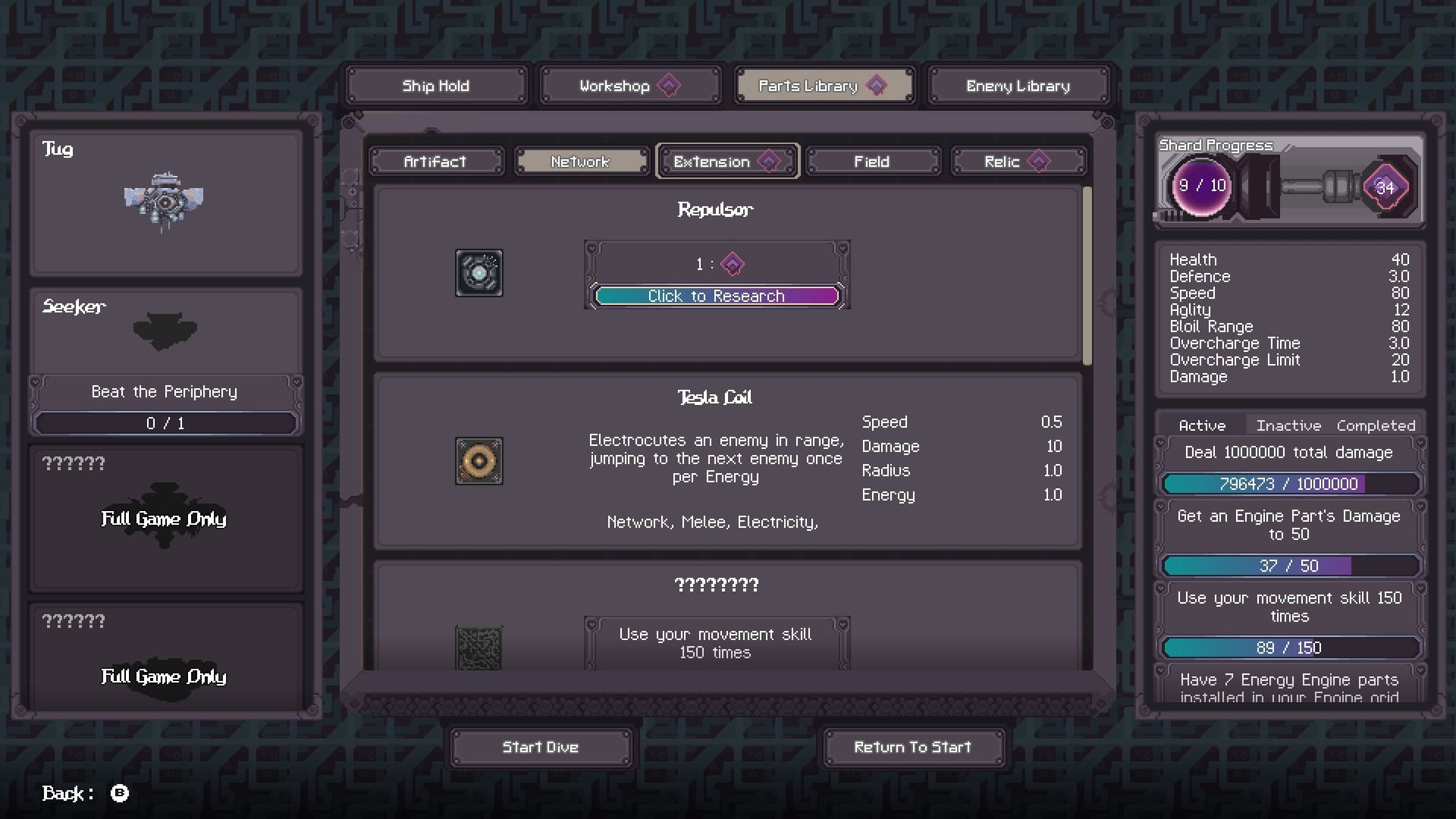
The first and most prominent feature to tackle these themes in Cloudbreaker is its inventory management mechanic. Every airship has a different size, a different inventory capacity, and each engine part the player unlocks has a unique shape and different use case. In total there are five categories of engine parts that can be randomly generated upon achieving the next level. These vary from adaptable weapons like directional lasers, networks of shields and electrical waves, to ancient relics with powerful game-altering abilities. With every level gained the player must make a choice about their inventory. Do I slot in the stronger engine part despite it taking up more space? Do I save room and gamble on getting a better component later down the road? Do I need a shield for safety or an infinite wall of asteroids to go on the offensive against the next boss?
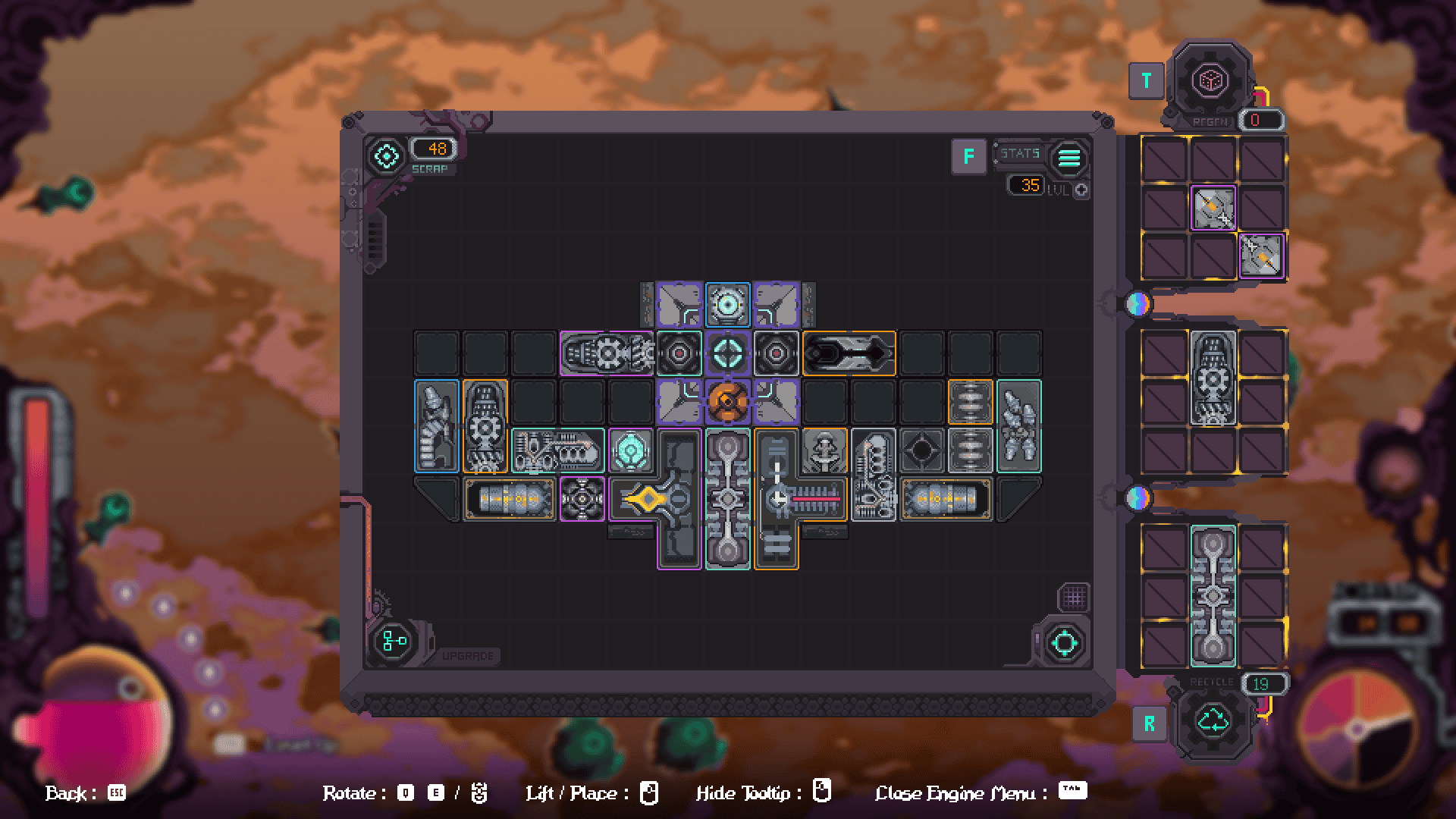
On top of this, the player can risk rerolling for new engine parts or completely scrap them to gain currency, which can be used to upgrade the adaptable weapons to feature new capabilities when gaining a level. This presents another layer of consideration when scaling levels. It requires the player to think of not only their existing inventory space, but also how to strategically upgrade their engine parts for future battles. Do I slot in a large, robust missile component now? Or do I scrap it and save up to upgrade my existing engine parts for the future?
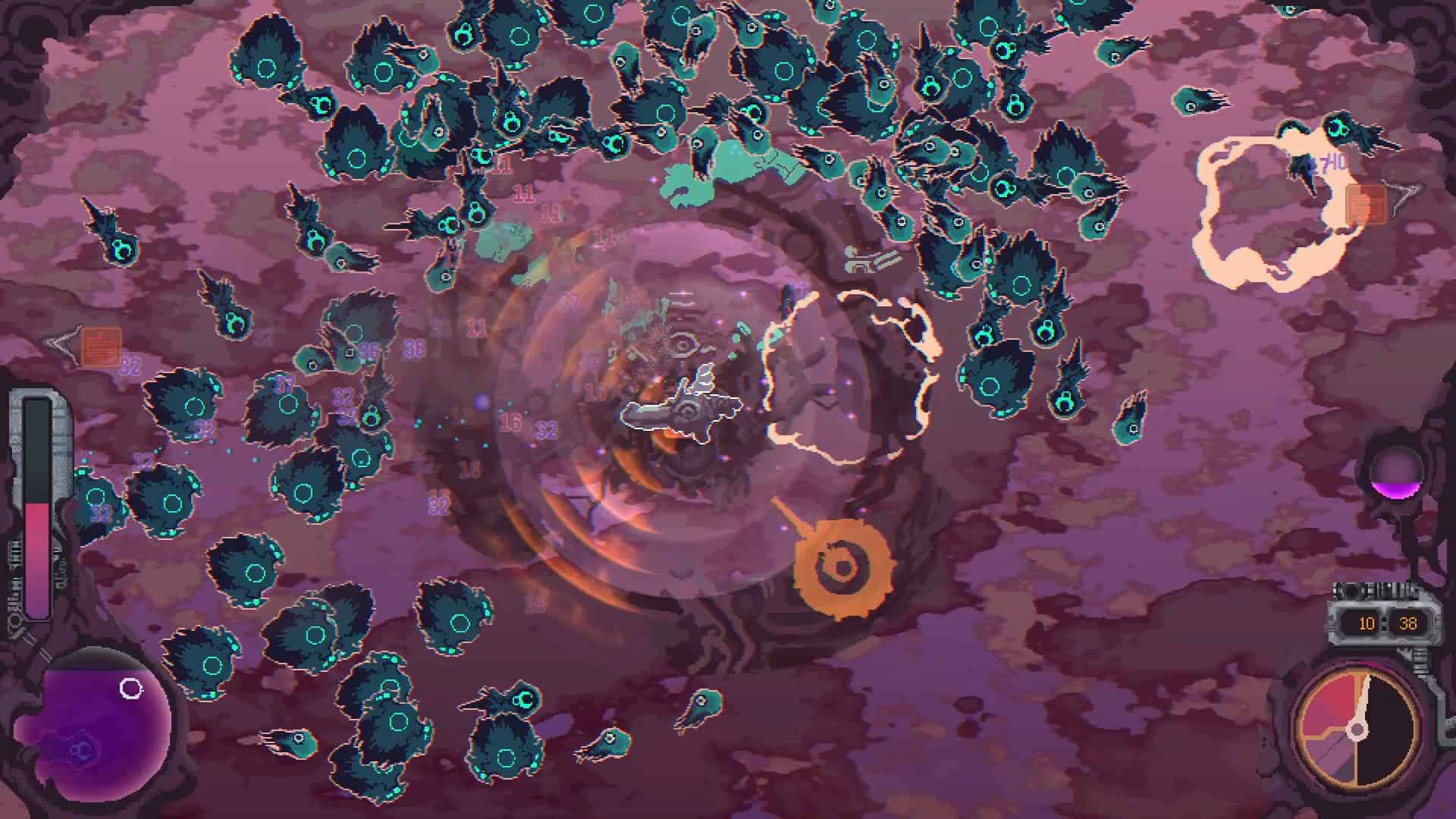
There is a constant stream of future-proofing and strategic thinking required to excel in Cloudbreaker. It creates an extremely active process of playing and counteracts the more passive nature of the bullet heaven genre. And when it’s said and done, and the player has picked a specific build and upgrade path to their liking, it’s one of the most fun and chaotic bullet heavens to fly around in, as the upgrade paths for each weapon can get a little absurd.
I personally fell in love with using the Orbiter, a small engine part that creates a damage zone around the airship, and upgrading it to the Solar System. The Solar System features a planet that has moons orbiting around it and deals a staggering amount of damage. Pair two of those together and I was almost unstoppable. Did I mention that players can also get an energy sword that circles around their ship and increases in speed with the airship’s movement? Don’t worry, I’ll get there.
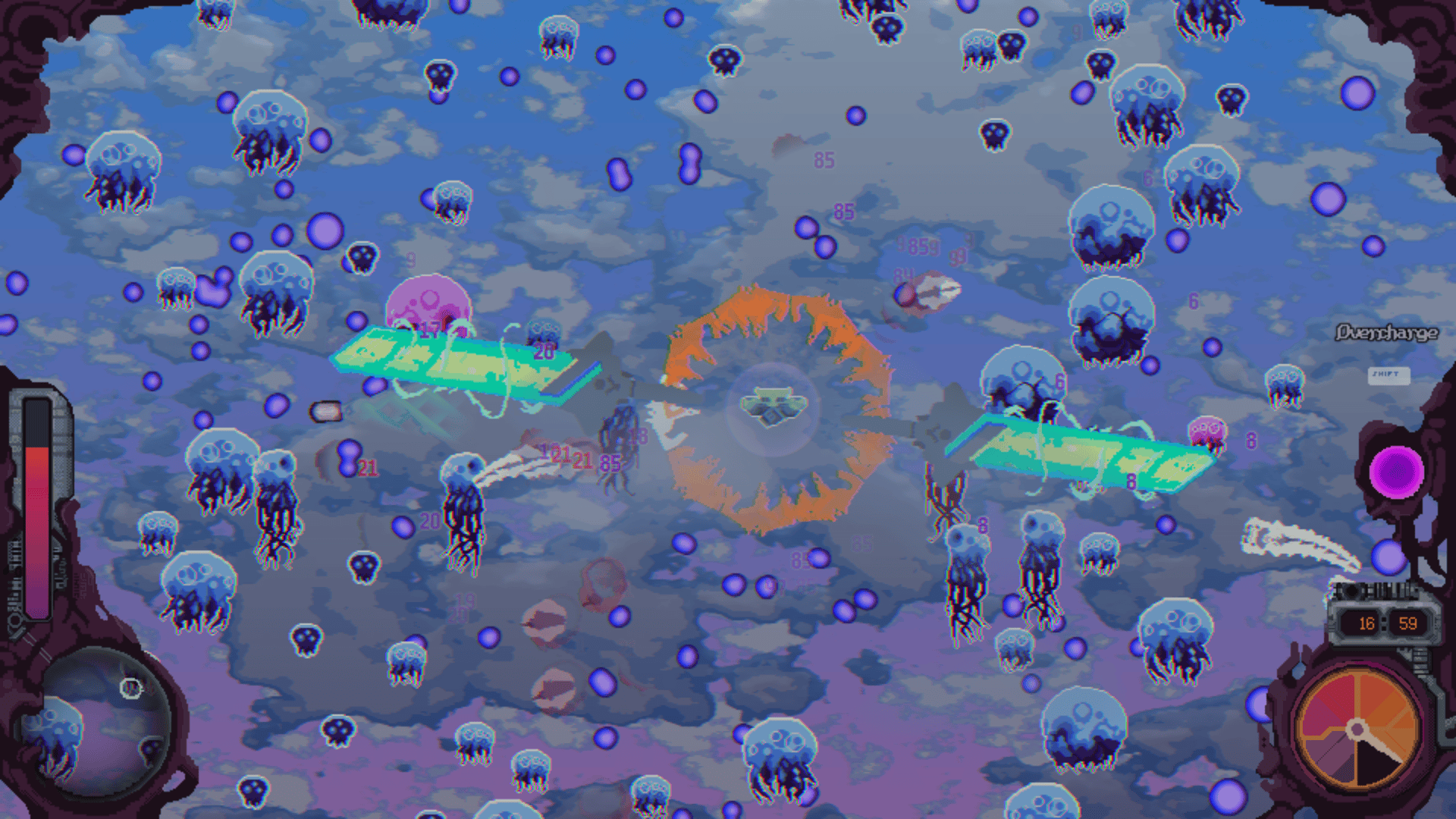
Another layer to consider is not leveling up at all and instead stacking experience points to help increase the drop-rate percentage of parts with higher stat values. This loops in the risk and reward elements alongside the active decisions around your ship build. Levels increase the airship’s power drastically, which is needed as every minute brings another swarm of stronger enemies, but if the player can stack six levels without claiming them, the chances to snag a legendary item is much higher. Every level comes with the tension of player options. Every level highlights the player’s control and the amount of risk they are willing to take for a better outcome.
But it doesn’t stop there. At the end of every run the player will take home Bloil shards that can be used to unlock additional airships, upgrade skill trees, and influence the roll percentage of a given engine part—once again, allowing the player to have more control over how to deal with the challenges of each future dive.
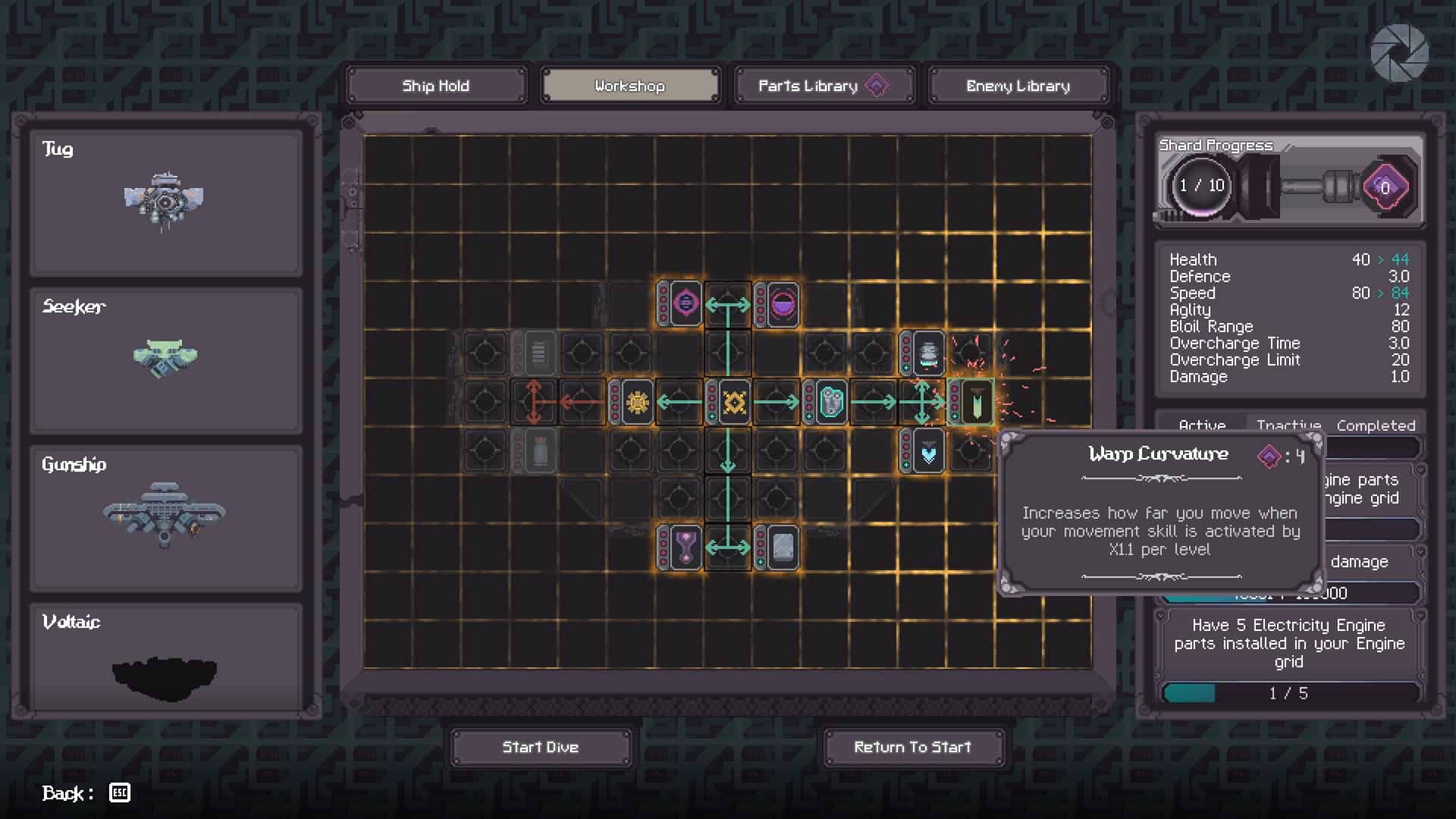
Every airship has a bespoke engine core—its main weapon—and a specific dash ability. These range from teleportation to extended boosts, and whirlwinds that can fend off groups of evil fish and flying monsters. For instance, the Seeker is a small, lightweight ship that can move faster and farther based on the number of enemies that surround it. Need to move quickly across the map? Risk using the boost through a large group of enemies to try and get to the other side safely.
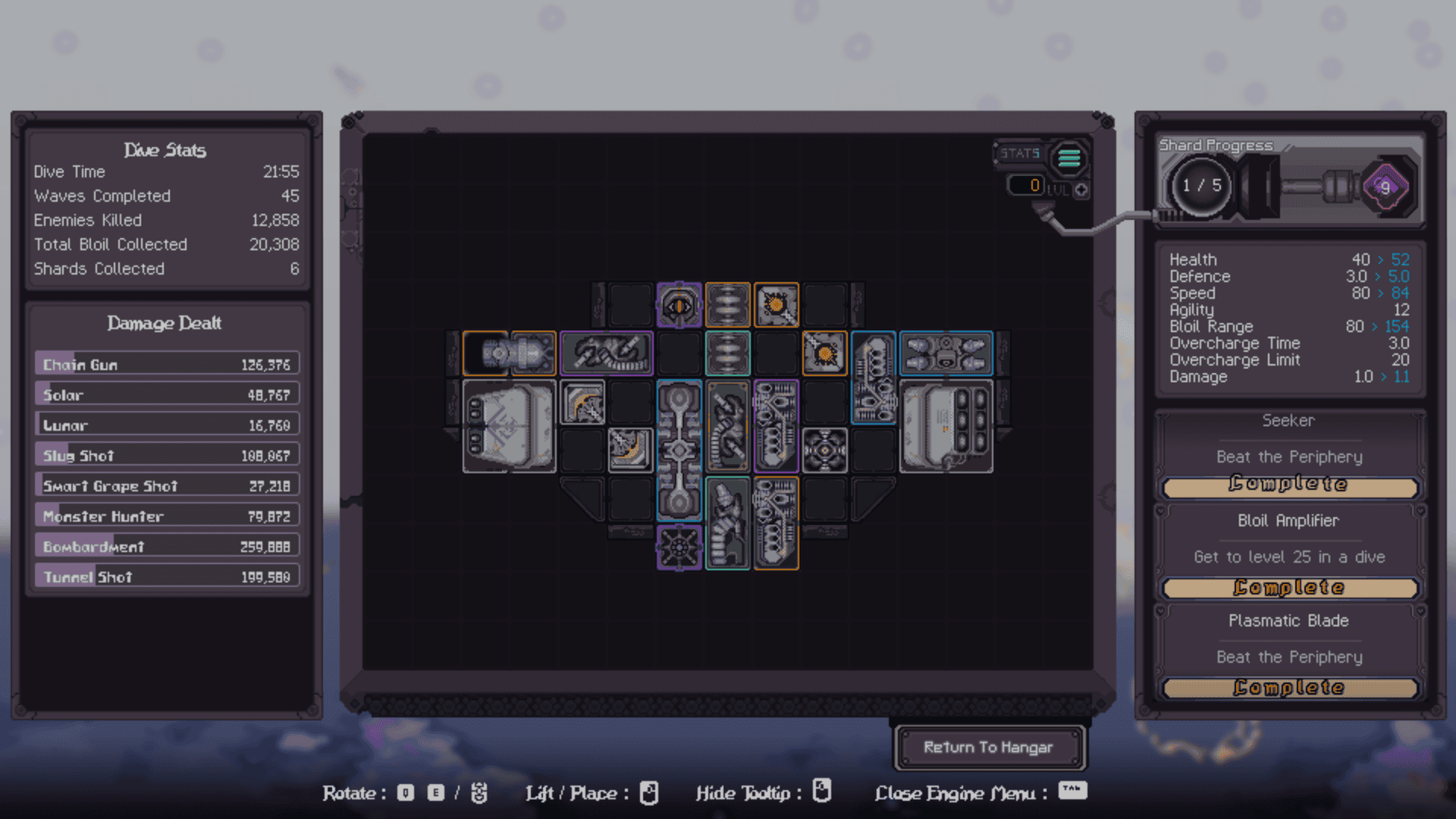
Some ships are slow, heavy and work extremely well with ranged weapons. Others, like the Seeker, are nimble and work effortlessly with melee-focused engine parts like the energy sword. Still need to move quickly through a large group of enemies? Attach a sword that increases in lethality based on movement speed, upgrade its output to two blades, and now the player can move from space to space with more reassurance. Every ship has its own dynamic, every engine part has its own benefits, and every new run allows the player to mix and match at their own leisure.
Another key aspect to highlight is the floating islands that are located on each map. Players won’t be flying aimlessly to avoid their foes, but instead traveling with intent to their next destination. Whether it’s a damage buff, a spot to heal, or a massive ancient structure that provides a powerful relic, there was always a place to be and strategy behind my direction. Once again, another dynamic to consider: I could easily travel from place to place with my lightweight Seeker, but with its lower health, could I make it there safely?
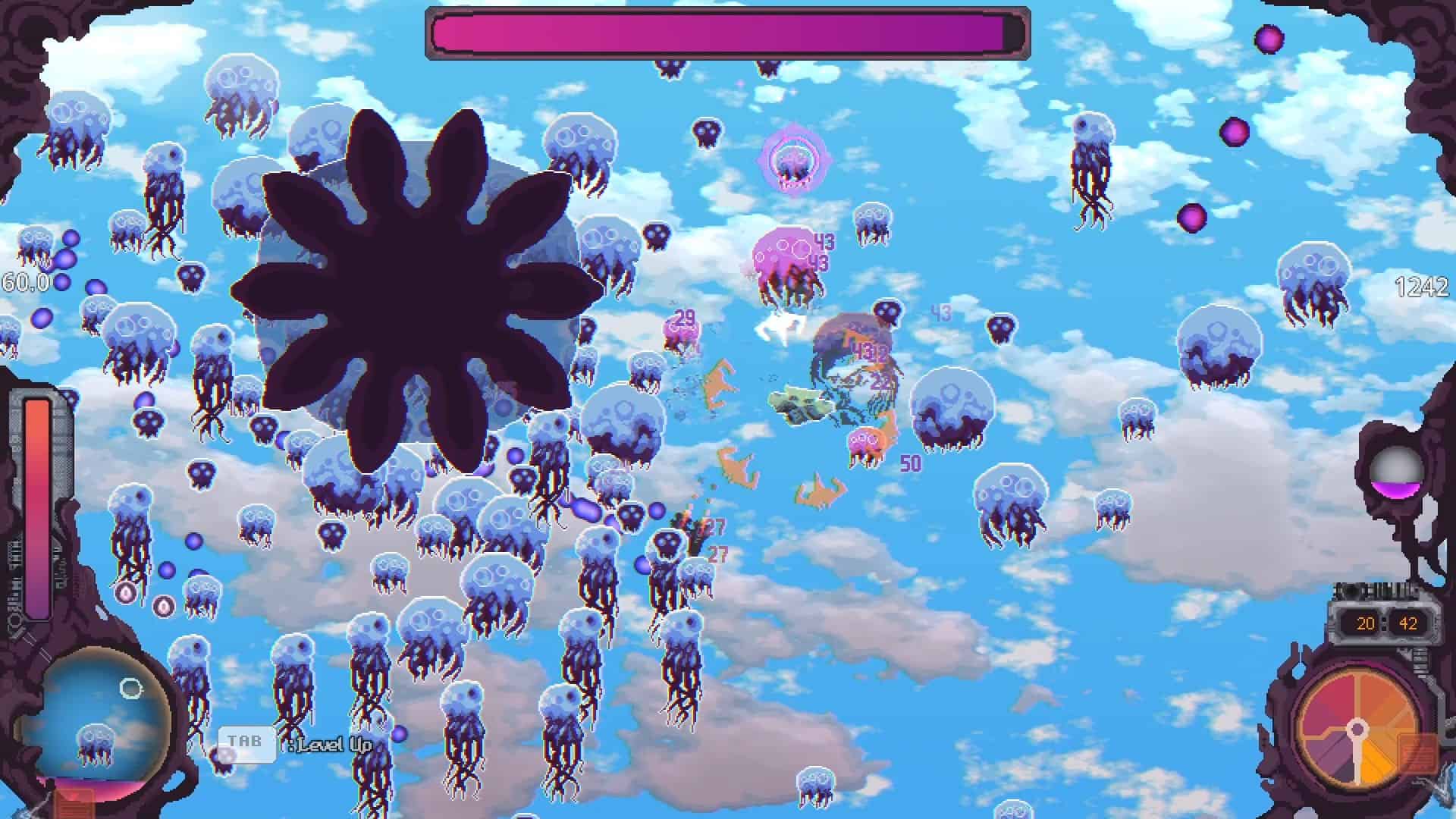
A small downside to the large number of systems at play is the learning curve that comes with them. I died over and over in the beginning until I slowly figured out what worked for me and where to go. But never once was I frustrated. It was the exact opposite. All I wanted to do was dive back in, try a new loadout and see if I could find more success. Maybe the energy swords were a bad move. Instead, I could invest in dropping explosive mines and upgrading my directional lasers to target the strongest enemy from a distance. Or maybe I adjust which ship I’m using—go for a massive airship that can teleport across the cloudy skies while shooting out titanium missiles that cause a rippling effect of explosions. The options are vast, and nothing feels better than finally finding an extremely overpowered build 15 hours in.
A great benefit of the inventory management system, and the general ability to upgrade, reroll, and influence RNG percentages, is that it never felt unfair when I died. It only felt like I had done something wrong in my decision process. Perhaps I didn’t upgrade my engine parts efficiently enough or I didn’t utilize my inventory capacity to the best of my ability. The biggest compliment I can give Ballast Games is that after 30 hours, all I want to do is dive back in and keep playing.
On the topic of replayability, once completing a run the player will unlock a modifier that can be applied to raise the difficulty of a given map. These can range from increasing the total enemy count to buffing elite foes’ total damage output. It’s a much needed feature that allows the game’s difficulty to scale nicely with the player’s growing abilities.
With every ship also comes a new way of playing. What worked with the Seeker won’t work with the highly directional Frigate. Instead, the player will need to spend a few additional hours mastering each ship’s specific movement style and learning which engine parts to slot in to increase its efficiency. In total, there is a good chunk of content here, and I could easily see myself dropping another 20 hours before stepping away.
Now there are some caveats to all this praise. The game is locked at 1080p and despite the beautiful pixel art, there does seem to be a layer of blur over the general game scene. Whether this was an artistic decision or not, as the pixel art does take on a painted quality to it, it does take some time to adjust. Visual cues are extremely important in bullet heavens and even the slightest distraction can mean the end of a run.
Additionally, I experienced two full game crashes at the end of the third level. It was a mighty blow to my progress, but a patch has been put in place that solves the technical issue. The performance woes did not spoil my experience, but it is something to be aware of when diving into Cloudbreaker.
Overall, Cloudbreaker is a great new entry into the bullet heaven genre. Ballast Games has managed to create a roguelite with an emphasis on player decision and agency, while pushing the genre forward with a distinct inventory management twist. For any fans of bullet heavens or highly strategic games, I’d recommend checking this one out.
Daniel reviewed Cloudbreaker on PC with a provided review code. This review is based on the version of the game that was available at the time of writing, and our score will not be changed.
- Score
- 8/10 Excellent - GameObserver recommends
- Summary
-
Daniel says: Cloudbreaker is a refreshing and innovative take on the bullet heaven formula. Its dedication to player agency and its unique inventory management system allows it to stand tall in an increasingly populated genre.
- More
- GameObserver's Review Policy




 ObserverCrew Picks
 bserver
 bserver