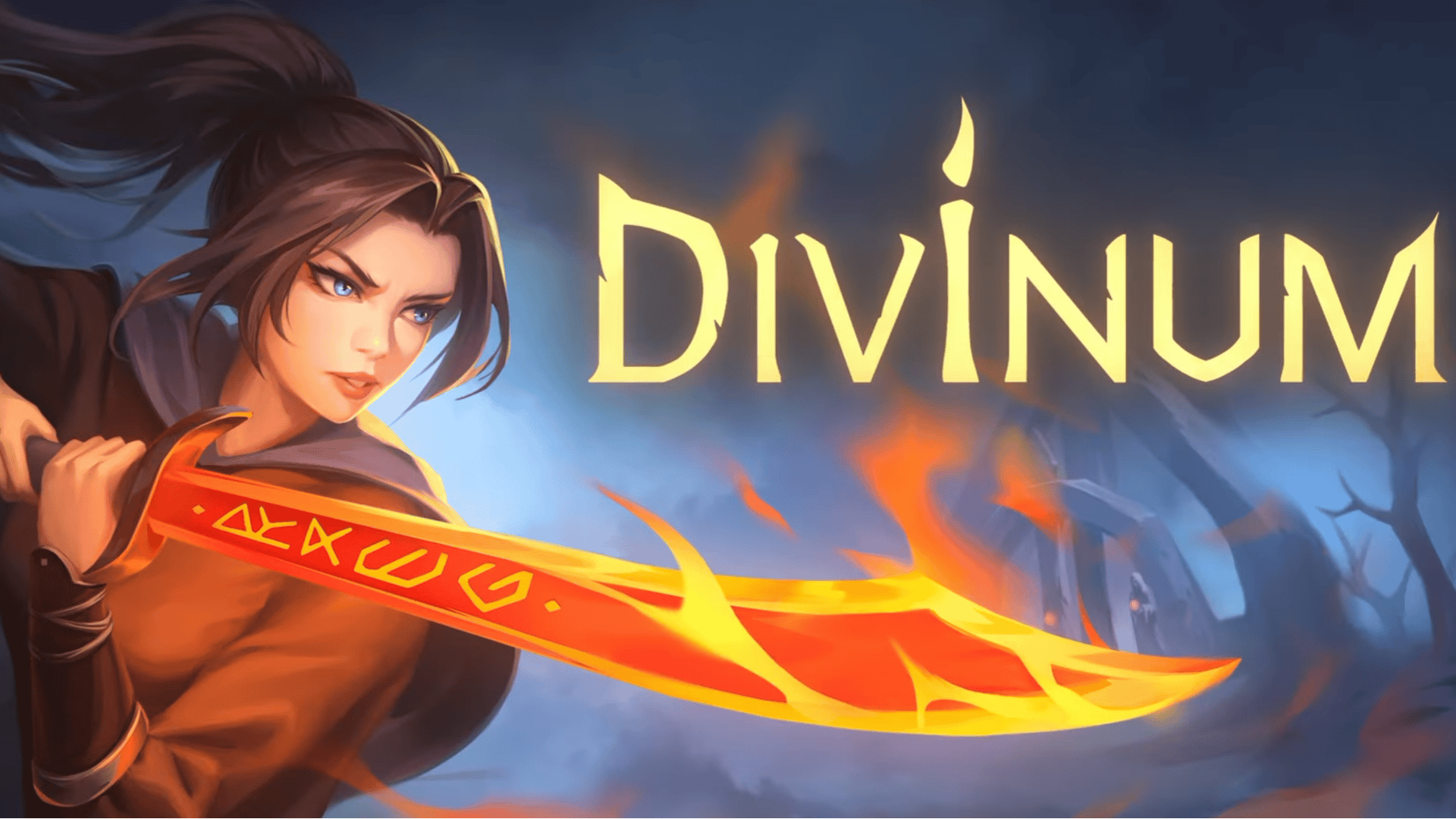
You are Fjor, a young Warden, tasked with protecting the people of your quiet northern island home, scouting for dangers and fighting off monsters and the occasional undead. It’s all part of the job description. One day the undead get extra rowdy and you volunteer to investigate, and find a hedge witch who has begun controlling the beasts for her own ends. As you defeat her, you see foreign ships pull up to shore. You rush home to save your village, but you cannot prevail against the invading army. You try and escape but eventually find your way to a dead end. As you fall seemingly to your death, you are saved at the last moment by a fiery power that bequeaths you its sword, tells you to find its brother, and save your home from an even greater evil than the invaders you fled from.
Such is the setup behind Sigil Games’ Divinum, a game that attempts to blend the elaborate and fast-paced combat styles of Devil May Cry with the exploration and platforming of the Metroidvania title, in a dark fantasy world inspired by European folklore. Its story is relatively simple and straightforward, but that’s all it needs to get things going.
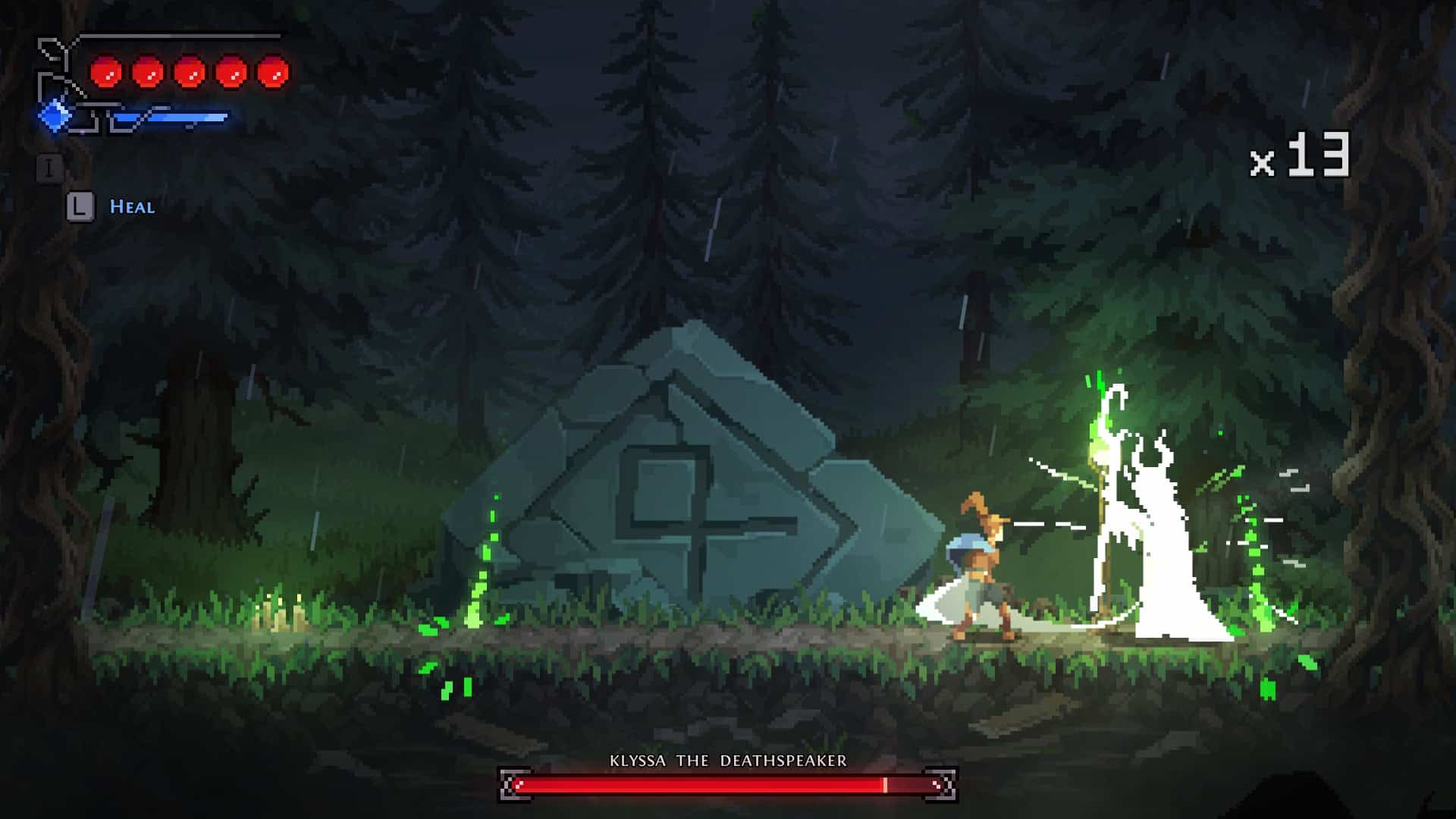
Fjor starts the game with her sword, which she can use to attack and guard, and if her timing is right, parry. She can also jump, mantle ledges, cling to and slide down walls, and has a dodge roll that lets her break into a run when held. She also has the ability to heal herself. Notably this is a skill, and it is powered by MP, which recharges over time and from attacking enemies. Notably, blocking and parrying also take MP, but to make up for it a perfect block will almost always stun an enemy, even a number of bosses. After defeating the first boss, Fjor gets access to additional skills, most of which must be found at specific points on her map, and the ability to purchase ability upgrades like reducing the cool down time between dodge rolls and the ability to use block midair. But the first ability to buy should almost certainly be the one to teleport between save spots. Buying abilities takes Sanctite, the in-game currency, and more powerful skills also require one or more Hero’s Sacraments. Sanctite can also be used to buy health and mana upgrades from vendors, as well as runes and, which can be equipped into rune slots (which can also be bought from vendors) to provide a variety of buffs and conditionals to Fjor’s attacks, skills, abilities, and movement.
The other thing you can equip is skills. As previously mentioned, healing is a skill in the game, meaning it can be equipped to one of two skill buttons. You start with heal and are given a fireball attack early on, but nearly every other skill in the game must be found at a skill shrine, and there’s plenty of variety here. In addition to heal and the fireball, there are skills that lay traps, launch enemies into the air, attack enemies above and behind while rising into the air, and deal more damage the more times they hit the same foe. When you get your second weapon, you also get an additional set of skills that can be equipped to that weapon.
Combat is fast-moving, favoring hitting enemies quickly with a skill and a few attacks, dodging out of the way or parrying an attack, and then unleashing on the foes again. Combat gets even more fun and frantic once you find an upgrade that turns your dodge roll into an eight way dodge dash. Plus there’s the fury mechanic, where you can take one (later two) of your skills and put them into special slots where they cannot be activated normally, in exchange for activating special versions of those skills when you do enough damage or block enough enemy attacks. For example, the fireball skill mentioned earlier starts launching homing fireballs with every attack, while the heal skill rapidly restores your MP. Combat can get very brutal, and there’s a good chance you will die. However, there’s no penalty for death; you just respawn back at the last save point, or just outside a boss arena if you die to a boss.
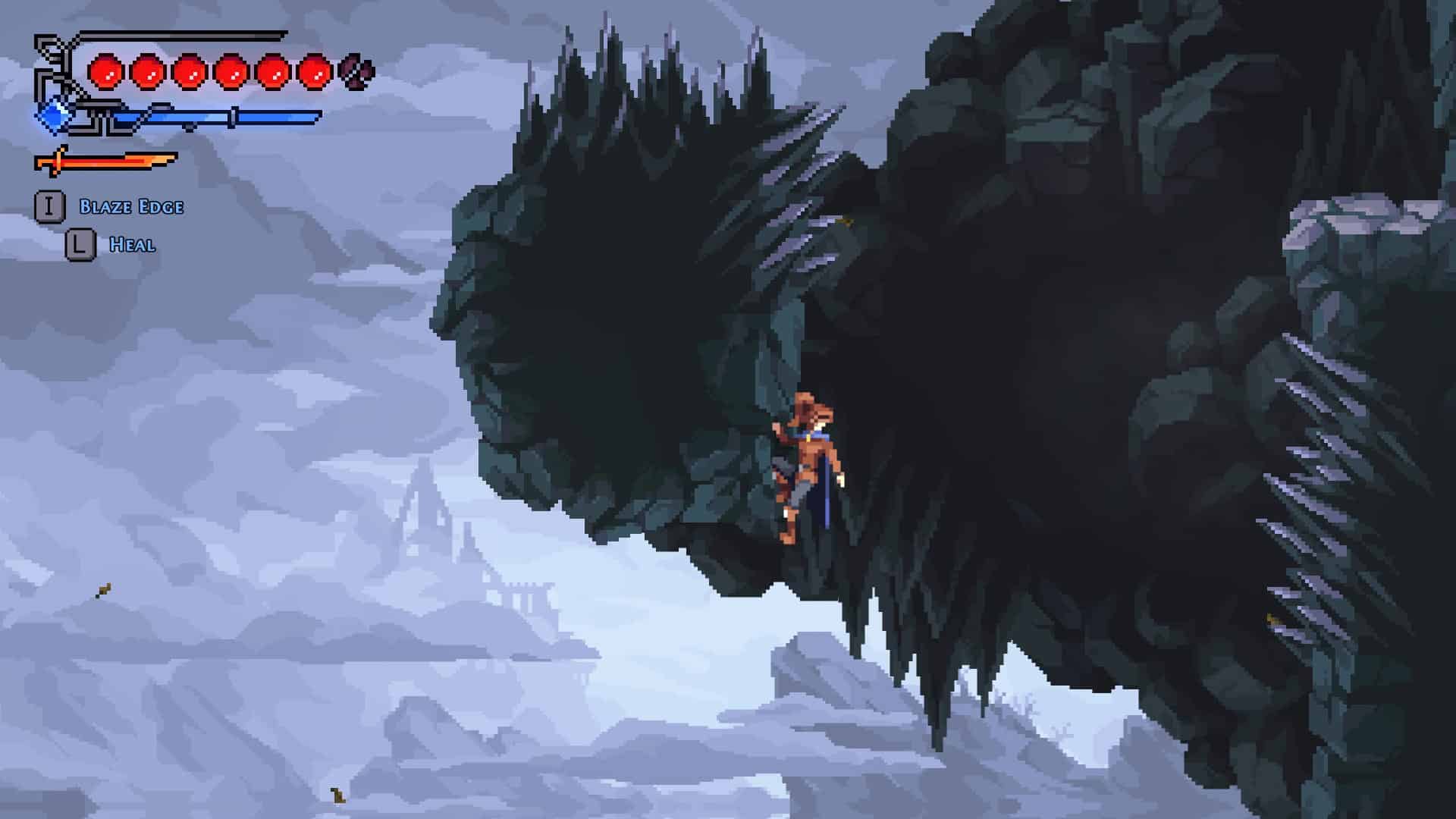
Like any good metroidvania protagonist, Fjor picks up more movement techniques as she explores. One of the first ones is the ability to wall jump, both between adjecent walls, but also up a single wall, which is a very lovely and convenient decision. It doesn’t trivialize navigation at all, either, because the world is laid out in a way that requires competent platforming, including long stretches involving precise platforming between spikes to find a new skill or life orb fragment. You never get a classic double jump as the air dash fills that function, but there is an ability to reset your air dash cooldown by attacking enemies. There are tons of secrets in the world, and exploration is generously rewarded. There’s even a secret sequence break to find.
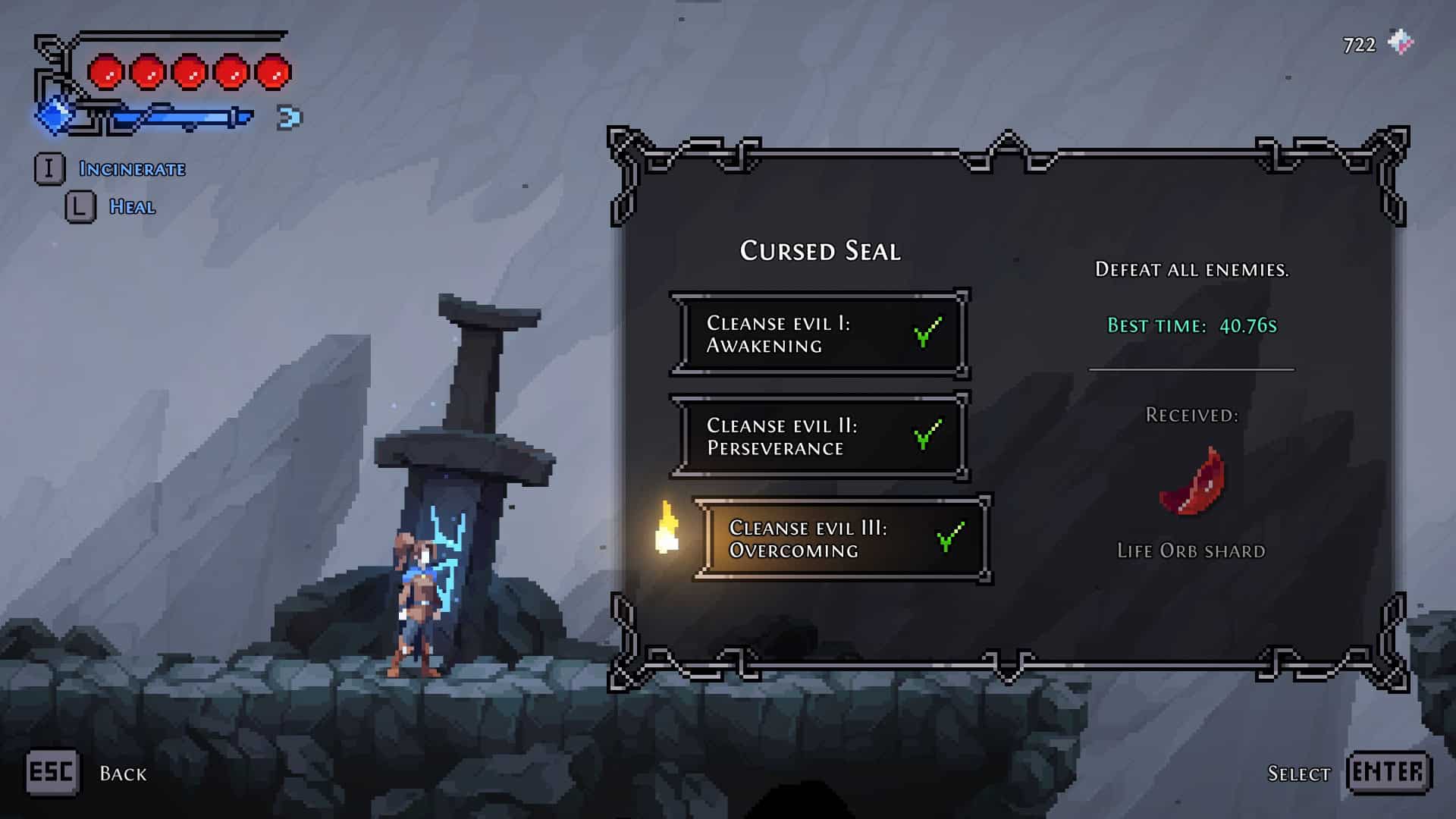
Of course, most of the secrets and upgrades don’t come freely; there’s usually a scripted combat encounter or difficult platforming section (or both) between you and the hidden prize. Sometimes these come in the form of explicit combat and platforming challenges, either to defeat a group of enemies in a tight arena as they keep spawning in over time, or a quick rush to collect checkpoints along a course within a short time frame. These challenges can be quite difficult, in the “one more try” variety. Especially since, if you fail, you just go back to the challenge marker with all your health and mana restored for another try.
Visually, Divinum uses a gorgeous pixel art aesthetic for everything, from your character to the enemies and bosses, and even the menus. It’s got just the right amount of color and detail. Fjor and enemies stand out from the background and from each other, which is important given how hectic combat can get, especially in the combat rooms and trials. Each boss also has a clear mechanical identity that sets it apart from other enemies.
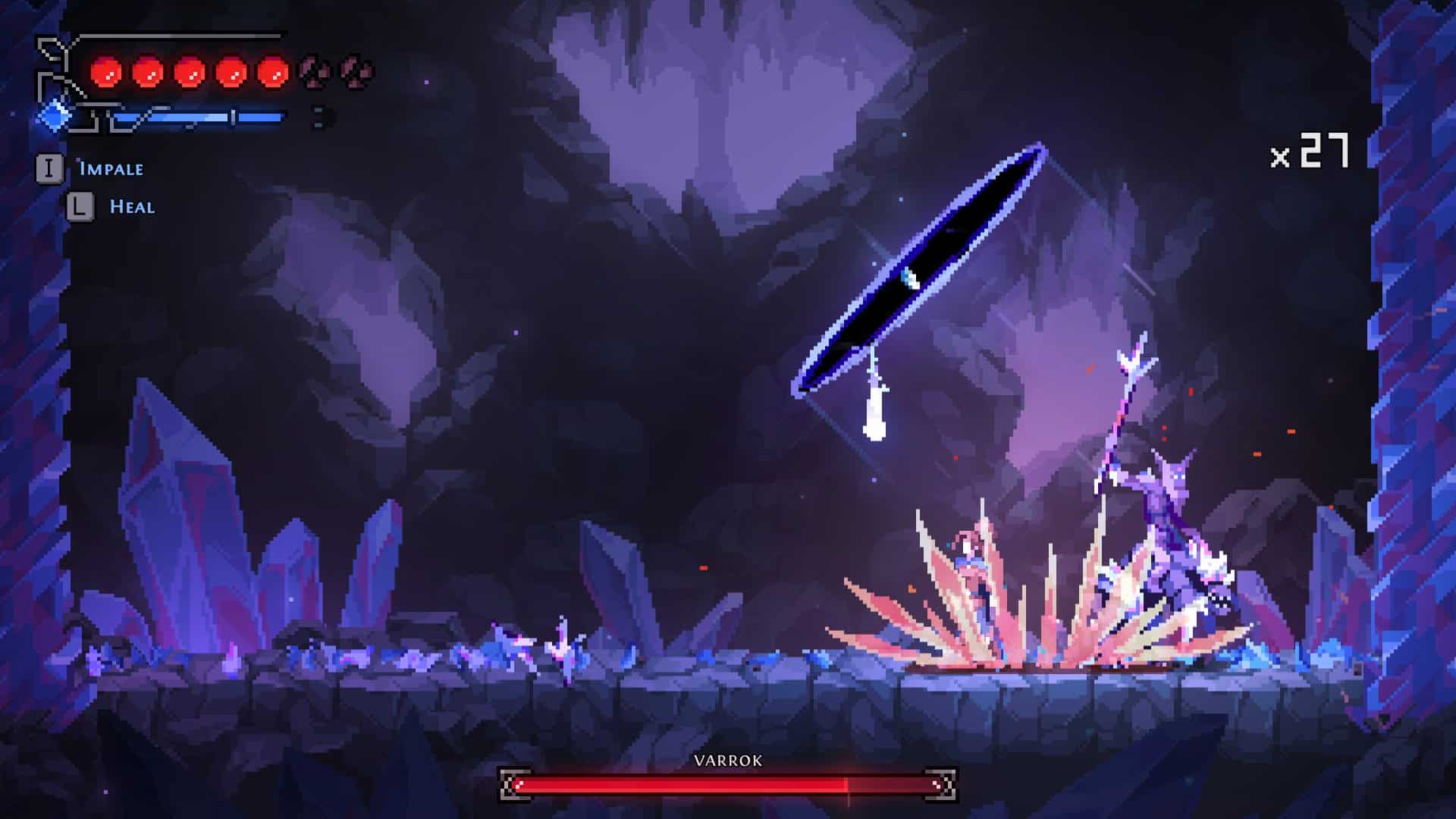
The one big complaint I have is that Divinum comes to a rather sudden end. While the actual final boss is quite a challenge and is satisfying to defeat, the game’s narrative up to that point feels like the final boss should have been the penultimate or even antepenultimate boss instead. While the ending is a bit short and anticlimactic, this is a first endeavor by a solo developer, and for that it’s an amazing outing. I can’t wait to see what Sigil Games will bring out next.
Tim reviewed Divinum on PC with with his own bought copy. This review is based on the version of the game that was available at the time of writing, and our score will not be changed.
- Score
- 7/10 SOLID - GAMEOBSERVER RECOMMENDS
- Summary
-
Tim says: Divinum is a masterfully made solo developer indie game. It has excellent combat and platforming, and a gorgeous dark fantasy pixel art aesthetic. Its only downside is its length, and that it could have used one or two more boss fights to properly wrap up its anticlimactic ending.
- More
- GameObserver's Review Policy


 ObserverCrew Picks
 bserver
 bserver