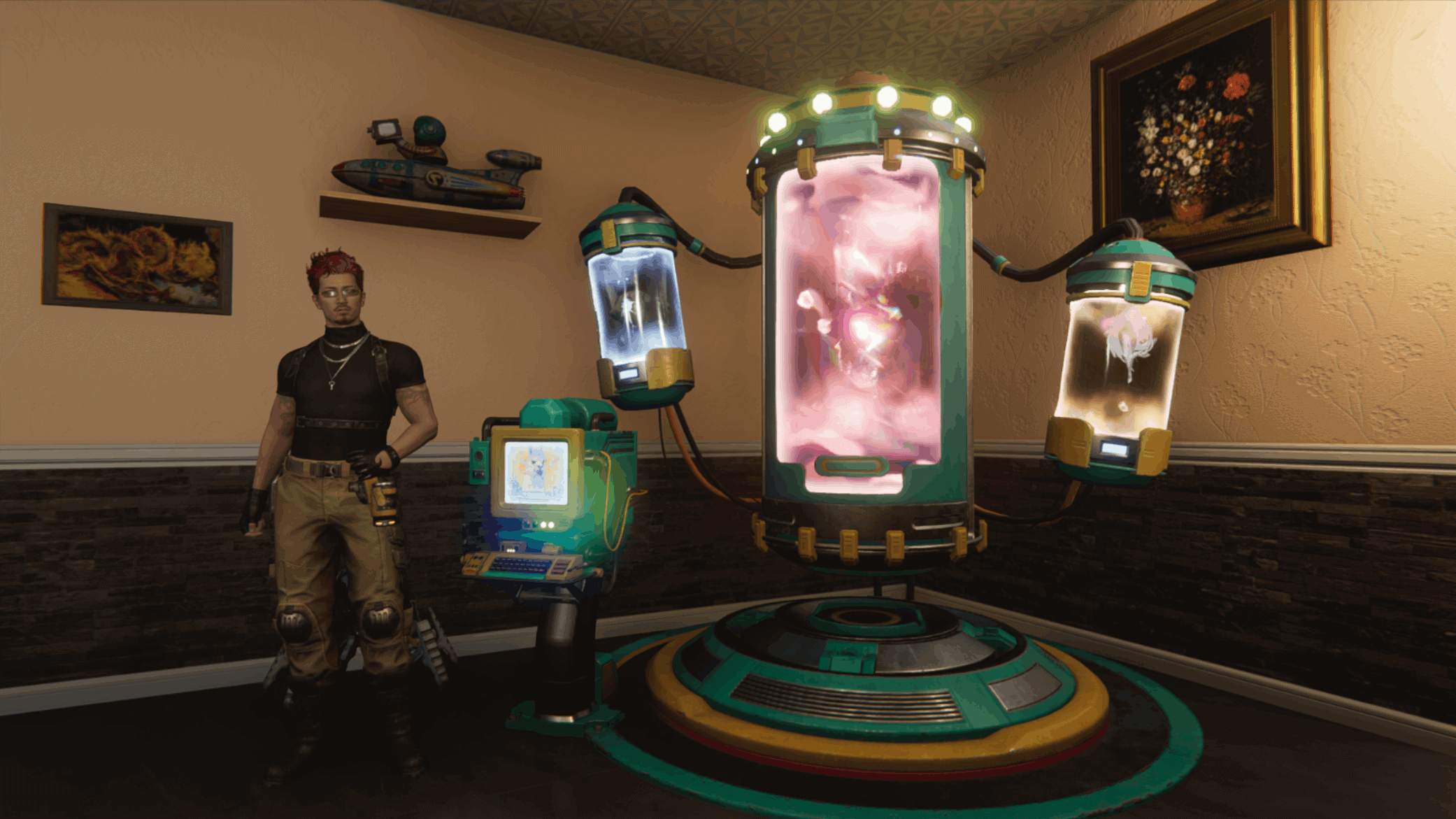
While it may seem obtuse and confusing at first, deviation fusion is relatively straightforward once you know the ins and outs, and it provides substantial benefits to those who understand the process. Whether you’re trying to get an unwanted trait off an otherwise decent deviation or fuse multiple traits onto one to create a perfect deviation, it’s a system worth learning if you don’t want to spend all your hard-earned energy links to have somebody else do it for you. Plus, fusion can be a pretty decent way of making energy links yourself, since many players don’t bother to learn how it works.
Like many things in Once Human, there’s a bit of RNG involved in fusing, but there are ways to mitigate the randomness to ensure the most likely outcome is a favorable one. Since acquiring specific deviations is also up to chance, as are the traits that come with them, it helps to know just what you’re getting into before exhausting the fusion chances of your deviations through trial and error. To that end, I’ll explain just how deviation fusion works in this guide, as well as provide some tips and tricks that aren’t readily apparent to newcomers.
How It Works
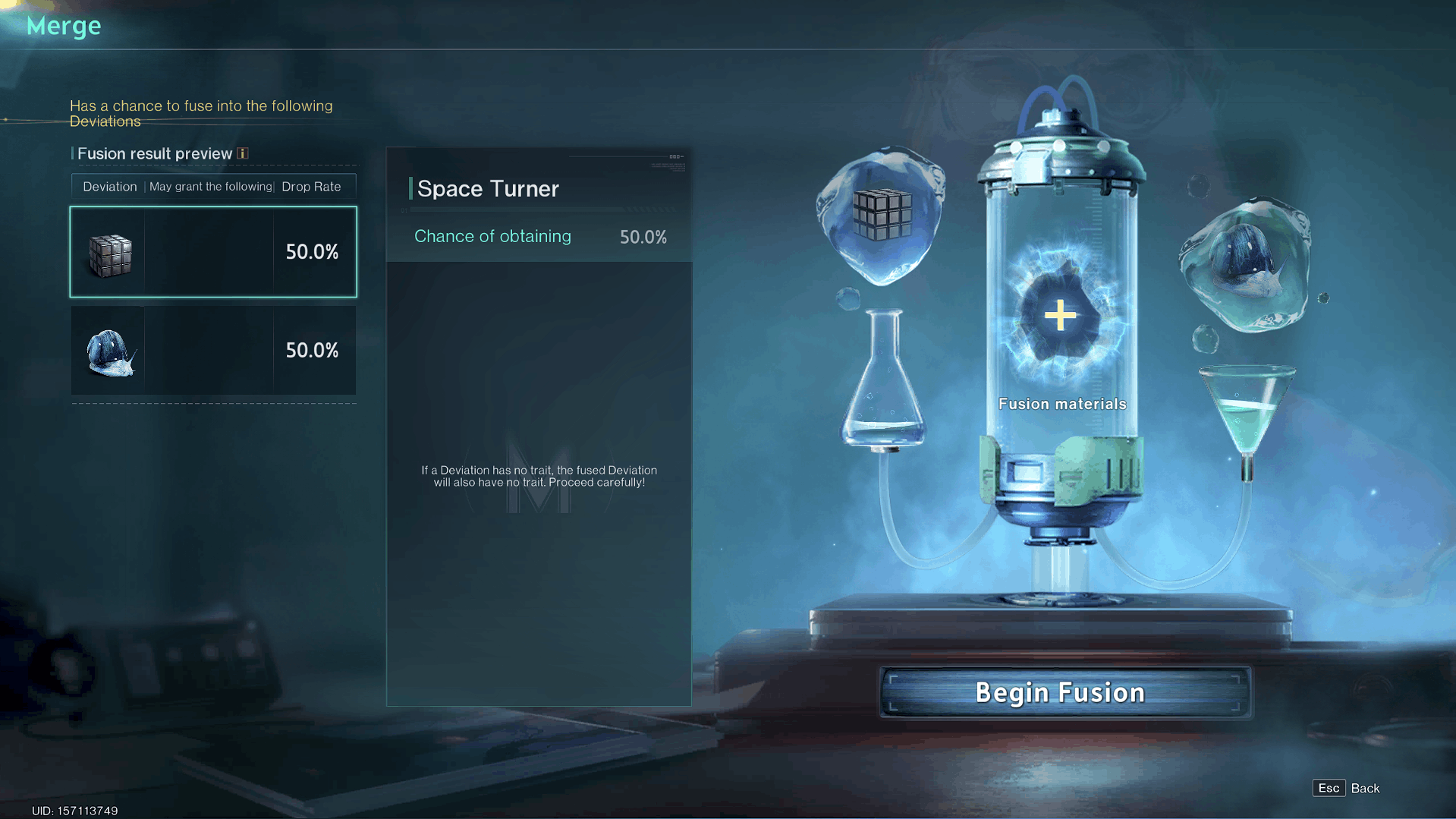
The gist of fusing deviations in Once Human is that you select two parent deviations to fuse into a single child, which has a chance of inheriting any traits the parents had. If both parents were the same kind of deviation, the child is guaranteed to be that kind as well, otherwise, it has a base 50% chance of becoming either. Since the skill and ability rating of the parents being fused directly impacts the inherited skill and ability rating of the child, it’s not always favorable to have two of the same parent if one has a substantially lower rating, which means you might sometimes use a higher-rating deviation of a different type even if you wouldn’t want the child to become that kind of deviation. In such cases, you can weigh the chance one way or the other by including the desired deviation as a fusion material in the center, of which you can have up to three.
Fusion materials aren’t strictly necessary, and their only purpose is to provide further weight towards the type of deviation produced and any inherited traits, since the skill and ability rating of fusion materials have zero impact on the inherited rating of the child. It’s worth noting that any deviations used as fusion materials are consumed the second you initiate the fusion, so it’s generally best to only use deviations with zero fusion chances remaining for this purpose. That’s not to say you can’t use a deviation with a fusion chance remaining if you really want to, but there’s really no downside to fusing it with another deviation first if both parents were going to be used as fusion materials anyway.
Tips & Tricks
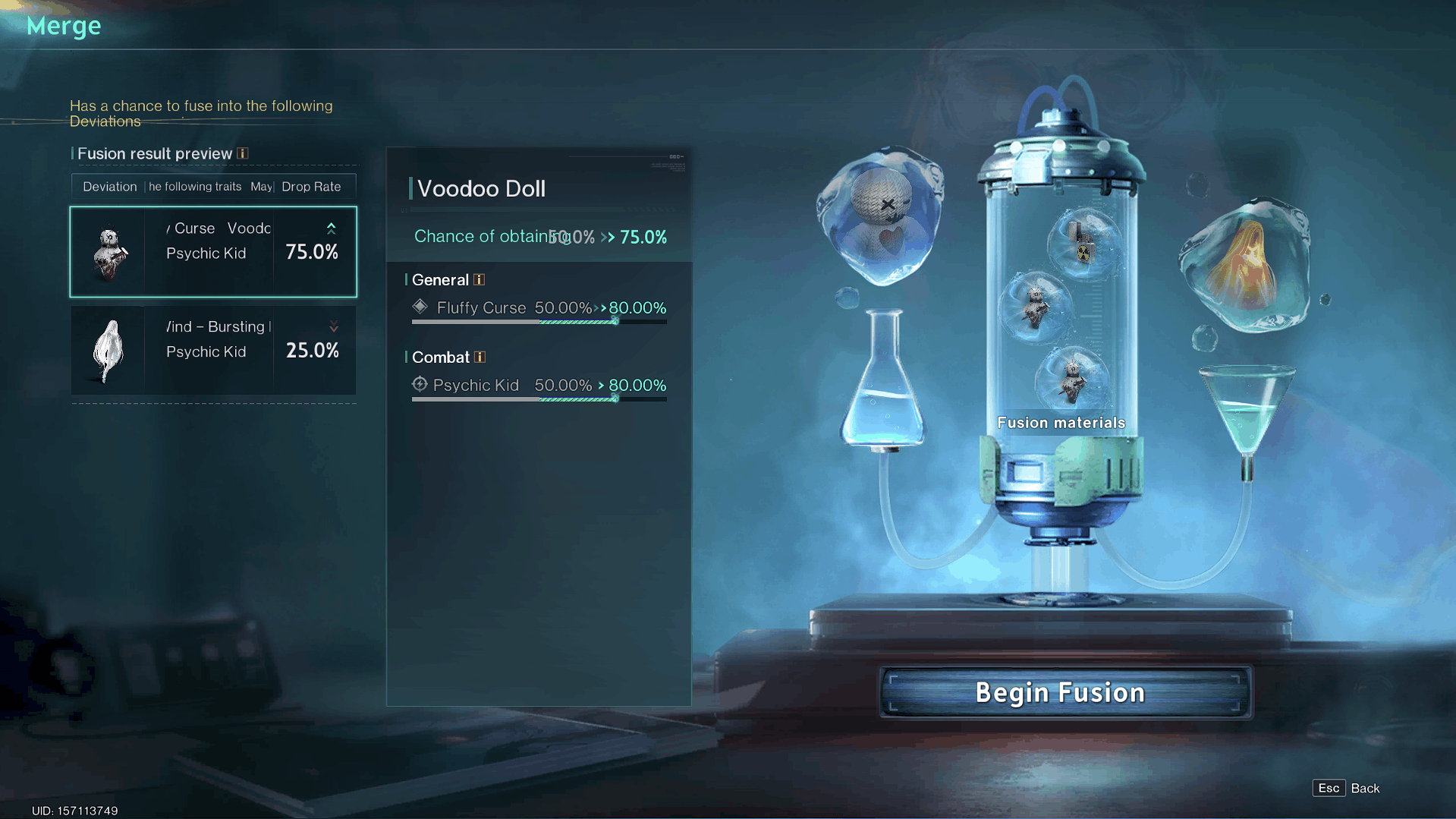
Some of the most valuable fusion materials you’ll find are “clean” deviations, which are just deviations that lack any traits. Beyond simply helping determine the kind of deviation produced by the fusion, clean deviations used as fusion materials increase the likelihood of any non-competing traits (i.e., only a single trait per category) being inherited by 10% per clean deviation, up to 80% from a base of 50%. Using clean deviations is an ideal way to transfer rare traits onto a fusion child, which itself can be further duplicated to create a healthy supply of rare-trait deviations. It’s useful to have multiple backups since an 80% chance is bound to fail eventually, in which case you’d be resigned to using a rare-trait deviation with 0 fusion chances remaining as a fusion material to attempt to create another, an attempt which would be limited to a 70% chance since one of the fusion material slots is already taken up by the rare-trait deviation itself.
Once you have a decent supply of rare-trait deviations, you can either sell the extras or use them as materials to create more powerful deviations with multiple traits. Creating a “perfect” deviation is often a multi-step process requiring you to first create multiple deviations with the desired traits. For instance, a perfect Voodoo Doll has an ability/skill rating of 5/5 with the Fluffy Curse, Psychic Kid (or Crack Shot, depending on build), and Moonlight Assault traits. With only three fusion material slots, it’s impossible to guarantee all those traits wind up on a Voodoo Doll without first creating a deviation with two of the three desired traits. You would start with two Fluffy Curse Voodoo Dolls as parents to ensure the child inherits Fluffy Curse (each parent being 5/5 for the optimal chance of the child being 5/5), while using two wolves as fusion materials for a 100% chance of Moonlight Assault. You would then only need to use two Psychic Kid Deviations and a single wolf as fusion materials in the next fusion, with the parents being the previously created Voodoo Doll with Fluffy Curse plus Moonlight Assault and another Fluffy Curse Voodoo Doll.
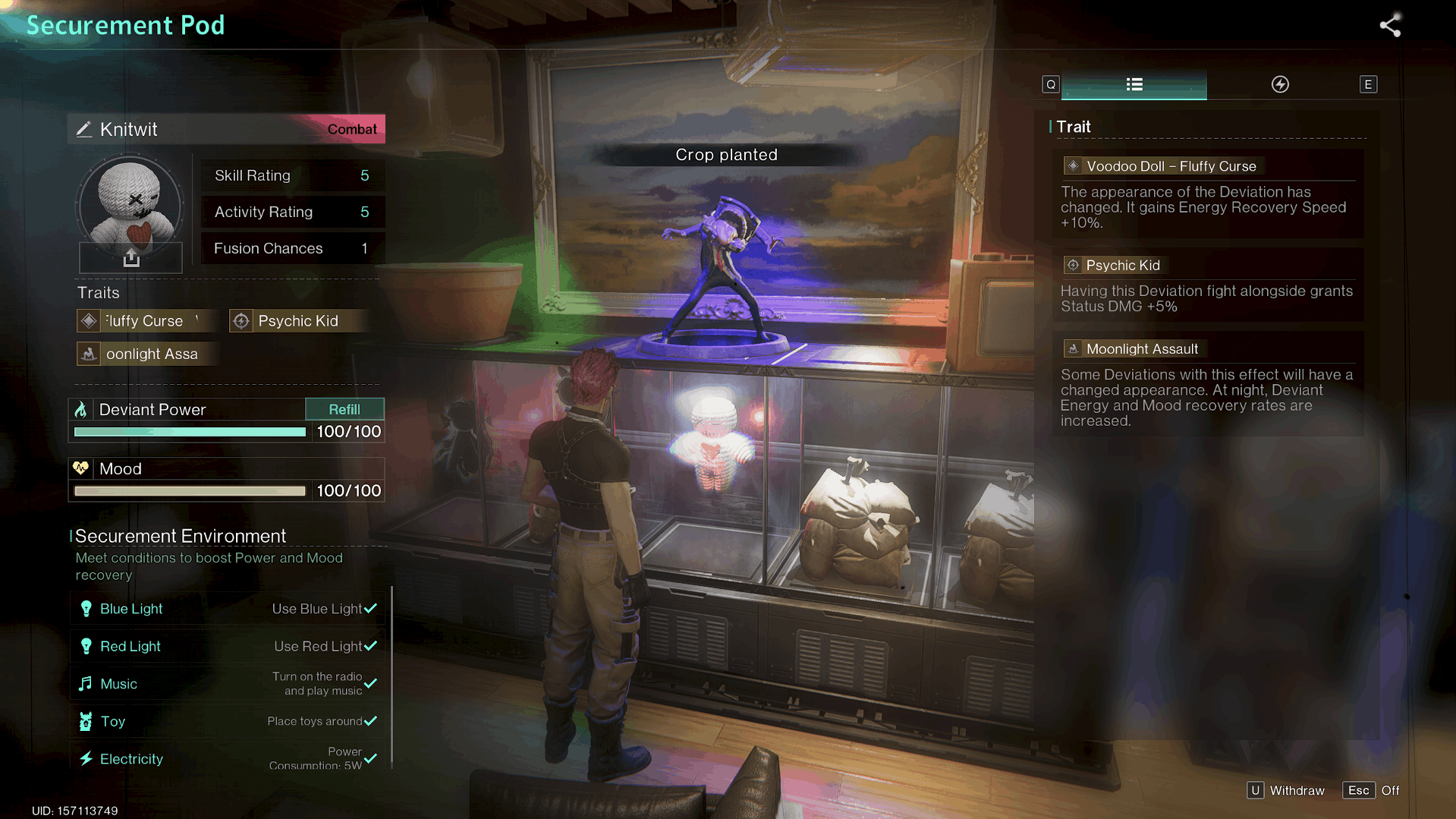
Beyond stockpiling clean deviations to duplicate rare traits, it can be helpful to hold onto deviations with deviated appearances, as well. They’re useful as fusion parents when transferring rare traits, for one, but can also be used to remove unwanted general traits from deviations that are otherwise decent. Say you’ve got a deviation that has a bad trait like Feeling Blue 3 plus a desirable trait like Psychic Kid, as well as a random deviation with a deviated appearance trait. Since deviations can only have one trait per category, you can fuse them for a flat 50/50 chance of the child inheriting either Feeling Blue 3 or the deviated appearance trait. You’ll also want to use clean deviations of the same type as the parent with the deviated appearance as fusion materials, to both increase the likelihood of the child being that deviation (since deviated appearances are unique to each deviation) as well as upping the chance of inheriting the desirable trait.
And that about covers all there is to know about fusing deviations in Once Human! We encourage you to leave a comment below if you know any other tips or tricks that weren’t mentioned in this guide, or if you have any general questions about the fusion process! Keep checking GameObserver for more Once Human guides and news!


 ObserverCrew Picks
 bserver